Communication Through Breath: Aerosol Transmission
Exhaled breath can be used in retrieving information and creating innovative communication systems. It contains several volatile organic compounds (VOCs) and biological entities that can act as health biomarkers. For instance, the breath of infected …
Authors: Maryam Khalid, Osama Amin, Sajid Ahmed
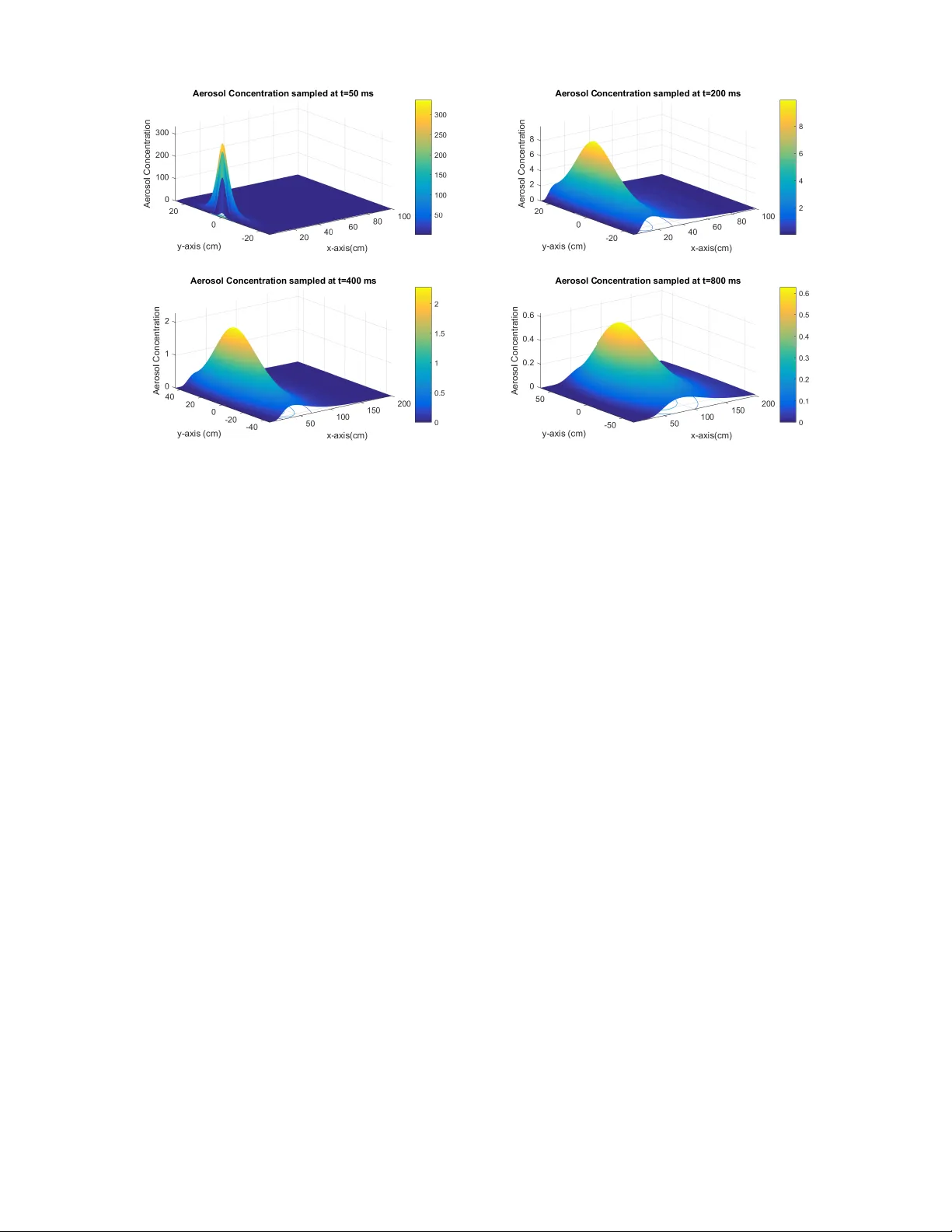
1 Communication Through Breath: Aerosol T ransmission Maryam Khalid, Osama Amin, Sajid Ahmed, Basem Shihada and Mohamed-Slim Alouini Abstract —Exhaled br eath can be used in retrieving informa- tion and creating inno vativ e communication systems. It contains several volatile organic compounds (V OCs) and biological entities that can act as health biomarkers. F or instance, the breath of infected human contains a nonnegligible amount of pathogenic aerosol that can spread or remain suspended in the atmosphere. Theref or e, the exhaled breath can be exploited as a source’ s message in a communication setup to r emotely scan the bio- information via an aerosol transmission channel. An overview of the basic configuration is presented along with a description of system components with a particular emphasis on channel modeling. Furthermore, the challenges that arise in theoretical analysis and system development are highlighted. Finally , several open issues are discussed to concretize the proposed communi- cation concept. Index T erms —Aerosol transmission, br eath communication, molecular communication (MC), viral aerosol detection, human bond communication (HBC). I . I N T R O D U C T I O N Information and communication technology (ICT) has in- spired the development of numerous non-con v entional appli- cations and broadened the scope of communication systems to versatile horizons. Recently , HBC has been introduced under the ICT umbrella to create comprehensiv e access to the fiv e human senses through v arious communication technologies [1]. The objectiv e of this article is to add an extra member to the existing pool of human body’ s features that can be tapped as a potential information reservoir . The exhaled breath contains biomarkers that can be used in se veral bio-inspired applications such as monitoring health-care and detecting diseases. Therefore, we propose, for the first time, a holistic communication system that exploits the human breath as a sour ce of information . Human breathing is a process that inv olves the interaction of internal organs (Lungs) with the atmosphere. Thus, it is very likely that the exhaled breath contains footprints from inside the body . It can contain not only particles from the respiratory tract but also blood-borne compounds that enter the exhaled breath during exchange taking place in the alveoli [2], [3]. A recent revie w study identified 872 V OCs in the respiration of health humans [3]. Interestingly , the V OCs are shaped according to the human health, age, diet, sex, body fat, M. Khalid is with Department of Electrical and Computer Engineering, Rice Univ ersity , Houston, TX 77005 USA. E-mail : maryam.khalid@rice.edu. O. Amin, B. Shihada and M.S. Alouini are with CEMSE Division, King Abdullah Uni versity of Science and T echnology (KA UST), Thuwal, Makkah Province, Saudi Arabia. E-mail: {osama.amin, basem.shihada, slim.alouini}@kaust.edu.sa. S. Ahmed is with Electrical Engineering Department, Information T echnol- ogy Univ ersity , Lahore 54000, Pakistan. Email: sajid.ahmed@itu.edu.pk. Fig. 1: Breath communication systems overvie w . height, beha vioral/lifestyle differences, and other biological characteristics [3]. Se veral efforts in medicine and clinical research made use of the breath biomarkers and developed methods for sampling and analyzing the exhaled breath [4]– [6]. For instance, the presence of viruses such as human in- fluenza A [4] and foot-and-mouth disease [5] in exhaled breath has been confirmed through dif ferent experiments conducted on the exhaled breath. Moreover , the Breast/Lung cancer and other diseases can be diagnosed by detecting volatile org anic compounds in exhaled air [6]. In this article, we exploit the inhaled and exhaled breath in a novel way that would lead to versatile macro-scale applications. Instead of sampling and analyzing the exhaled air on lab-scale en vironments, we propose considering it as a component of a communication system where the scope expands to the complete process of information exchange as depicted in Fig. 1. As a candidate communication technology , MC is considered due to its compatibility with biological entities, where molecules or chemical signals are deployed as information carriers [7]. Thus, adopting breath as an infor - mation source in an MC setup introduces a new dimension to the areas of chemical-signaling communication and HBC. In the rest of this article, we focus the discussion on the potential and feasibility of breath as an information source and introduce it in the context of an MC system in a generic manner . T o establish a detailed picture of our proposed idea, we explore aerosol transmission in depth. In particular, we consider pathogenic aerosols that are virus-laden micro-sized droplets which remain suspended in air and are responsible for diseases spread as sho wn in Fig. 1. Sneezing, coughing, talking and breathing are some of the originating sources for these aerosols. For ease of understanding, we gather these 2 Fig. 2: Breath communication system components. four mechanisms under one umbrella and refer to them as exhaled br eath . It is worth to mention that the same concept can be used in analyzing the communication scenario through inhalation while taking into consideration the effect of human body interaction. In Section II, we provide an overvie w of the breath-based communication system, followed by a detailed discussion on channel modeling in Section III. Then, a case study on Gaussian dispersion models is discussed while high- lighting the possible challenges in Section IV. Several open research issues are discussed in Section V followed by the conclusion in Section VI. I I . B R E AT H C O M M U N I C A T I O N S Y S T E M : S Y S T E M O V E RV I E W In this section, we present the basic components of a communication system where the aerosol acts as the infor- mation carrier . Similar to traditional communication systems, the setup is composed of three blocks, biological transmitter , biological recei ver , and transmission channel as shown in Fig. 2. A. Biological T ransmitter The focus of this article is on information extraction from exhaled breath, where the human plays the role of a transmit- ter . Throughout the breath communication system, dif ferent types of messages can be transmitted and retrie ved to reflect human health information and characterize sev eral biological features [3]. T wo critical factors at the transmitter side can affect the communication system design and performance. The first factor is the transmitter mobility status, where having a stationary emission source simplifies the analysis and design [8]. Howe ver , having mobile transmitters requires special consideration in terms of velocity and location tracking. The second factor is having multiple humans, which con verts the single-input communication system into multiple-input ones. This scenario becomes further challenging when the goal is to detect a single type of aerosol (virus or VOC) emitted from different transmitters. As such, the communication system can suffer from interference that needs distinctive designs to identify the intended transmitter . Howe ver , based on the capabilities of existing bio-sensors, detecting different types of aerosol leads to a fav orable scenario called “orthogonal transmission and detection scenario” as long as there is no reaction between these aerosol streams. B. Biological Receiver The second component of the system is the receiv er which is a bio-compatible machine as depicted in Fig. 2. The receiv er should detect and decode the information sent out by the biological transmitter . The detecting machine is considered one of the most significant components in the proposed system, where the researchers have high designing freedom degree. For instance, this machine can be placed in a room or entry points, or it can be mobile to monitor particular diseases ov er a wider region. The applications can go be yond diseases diagnosis, and the machine could serve as a dedicated device for a particular user (source) that performs v arious jobs such as health monitoring, mood estimator , etc., where it is part of a network that records and analyzes receiv ed data. In addition to detection, we also propose that the recei ving machine can play a more active role and intelligently respond to decoded messages. For instance, in response to positive virus detection, it can release chemicals or antibodies that limit the spread of that particular virus/disease. The applications that spring out from the development of such machines can be micro or macro-scale. Howe ver , the aerosols that the machine would be dealing with are micro-sized, and thus the capabilities of these receiv ers depend on adv ancements in nanotechnology or nanomachines in particular . In the context of virus-laden aerosol detection or a reception process in general, MC receivers are particularly relev ant [9]. As discussed in [8], the reception process can be broken do wn into three stages: sampling the breath, sensing/detecting the viral aerosols through biosensors and making an appropriate decision. The commercially a vailable samplers are based on the principle of electrostatic precipitation and can sample nanosized particles in the air with 80-90% ef ficiency . Biosen- sors are de vices that sense the presence of specific biological entities and translate them into processable information/signal such as voltage or current in electrical biosensors. An MC receiv er based on nanoscale Silicon Nanowire (Si-NW) FET has been discussed in detail in [10]. These transistors hav e antigens placed on Nanowire channel, and binding ev ents between these antigens and virus result in a conductance change across the source-drain channel of the transistor . The concept of orthogonal detection can be used in identifying different types of viruses using Si-NW FET when se veral kinds of antibodies are used [10]. W e belie ve that the high selectivity and sensitivity of these MC receiv ers makes them perfectly suitable for our setup and their existence not only boost the feasibility of our proposed concept but also takes us closer to realizing a fully-functional and robust system. The biosensor is followed by another smart block (controller) which is the brain of our system and is programmed by estimation and decision making algorithms to achie ve the end goals. Similar to the transmitter , both the mobility and the quantity of the receiver units play an important role in determining the machine’ s capabilities. For the initial study , the receiv er can 3 be assumed to be a stationary device at a fixed location. Then, for advanced designs, the recei ver can be mobile by attaching it to a drone or robot; then its path can be further controlled and optimized according to different parameters such as the density of crowd/sources. In the case of a network of multiple receiving machines, each unit can sync with other devices and collaborate to perform a joint detection. As a result, the system can ha ve accurate localization, impro ved co verage, and reliable detection capabilities especially if the resources are tuned. C. T ransmission Channel The transmission channel captures the impact of ev erything between the biological transmitter and receiv er . From com- munication systems perspectiv e, it is the most critical com- ponent since it accounts for all physical characteristics of the communication medium that can obstruct the message from reaching the desired destination. The aerosol transmission is significantly affected by the distance from the source and the receiver for a specific emitted aerosol volume. Since, the propagation of aerosol is governed by dif fusion mechanism, it has limited propagation distance [7]. One way to extend the travel distance is to employ artificial wind to wards the re- ceiv er’ s direction. Different studies show a positiv e correlation between the presence of wind and distance traveled by virus- laden aerosols [11], [12]. Thus, for particular applications, it is recommended to design artificial wind along with appropri- ate detection set-up to improve the propagation range/trav el distance and guarantee deli vering the biological information. The wind velocity plays an essential role in determining the range limitations of the proposed setup where it is responsible for an advection propagation that needs to be incorporated in channel modeling. Since channel modeling in volves fluid transport which is itself an extensi ve, we discuss it separately in the next section. I I I . A E R O S O L C H A N N E L M O D E L I N G An accurate channel model is essential for not only the- oretical analysis but also for the design of an optimum receiv er/detector . The model describes the dynamics that are responsible for driving the message from the source to the receiving machine. W e be gin this section with some basic definitions and e xplain the basic terminology before outlining the modeling process itself. As mentioned earlier , the (artificial) wind acts as the carrier that plays a crucial role in transporting aerosols to remote machines. This aerosol transportation is an example of fluid flow where two major processes are responsible for the motion of aerosols known as advection and diffusion. The advection (also known as con vection) is due to the wind that can be parameterized by wind v elocity . As for the diffusion, it is broken do wn into two types, molecular diffusion, and turb ulent diffusion. The inherent tendency of molecules to reach an equilibrium results in thermal motions known as molecular diffusion. Whereas, the diffusion or mass transfer that results from turbulent eddies is known as turbulent dif fusion. The diffusion process is characterized by diffusi vity coefficient and the flux changes due to molecular diffusion can be approximated by Fick’ s law [13]. It must be noted that from the perspecti ve of aerosol communication proposed in this work, where advection plays a significant role, molecular diffusion is ne gligible compared to turb ulent diffusion and is often ignored in the modeling process. On the contrary , diffusion-based MC focuses on molecular diffusion only , and the modeling process is primarily based on Fick’ s law . These differences in the fluid dynamics result in entirely different models for the two channels. For ease of analysis, it is also assumed that the changes in density in flow field are negligible making the flo w incompressible . The mathematical model aims to deriv e the aerosol con- centration along dif ferent system stages. T o this end, we use the law of mass conservation to describe the system dynamics that result from the introduction of single or multiple aerosol sources into the system. Sometimes, these aerosols are subjected to elimination from the system by some inactiv ation process such as the absorption at ground or collection at the receiv er side. T o analyze the behavior of aerosol motion in both spatial and temporal domains, we use the well-known Navier -Stokes equation that can be combined with the conti- nuity equation to describe the system mathematically . These partial dif ferential equations are subjected to some initial and boundary conditions and are solved to yield an expression for aerosol concentration, which is not a straightforward process in general [8], [13], [14]. A. Deterministic Modeling Dev eloping deterministic models for the channel inv olves solving the previously discussed partial differential equation sets (Navier-Stok es and continuity equations) considering boundary and initial conditions. There are two scenarios for the deterministic modeling: steady state and transient analysis. As for the former on e, ha ving defined a simplified set of boundary conditions and approximating breathing as a constant contin- uous source at a fixed location, the solution is presented by Gaussian Plume model [8]. In this model, the concentration profile at a fixed point along the do wnwind direction (line of sight from source to machine) takes a Gaussian shape along the centerline. Moreov er , as we mov e a way from the source in the downwind direction, the standard deviation increases. Thus, it is like a set of Gaussian curves (in y − z plane) of increasing variance stacked along x -axis as we move aw ay from the source towards the detector direction. As for the transient analysis, we analyze the concentration change due to a single breath, cough or sneezing. The solution of this scenario is presented by Gaussian Puff model [14] and will be illustrated graphically in Section IV . B. Stochastic Modeling The inherent randomness of a fluid motion complicates the computation of particles’ concentration with certainty . Moreov er, the flow-dependent nature of turb ulent motion and its non-linear behavior make it extremely difficult to reach a tractable ideal model [13]–[15]. The most straightforward approach, in this case, is to follow a random walk model, while the most complicated one is to deriv e a solution to a set of stochastic differential equations. Deri ving a close form 4 Aerosol T ransmission Channel Modeling Deterministic (Mean) Channel Models Gaussian Plume Model (Steady State Response) Gaussian Puff Model (Instantaneous Response) Stochastic Channel Models Eulerian Fluid Flow Lagrangian Fluid Flow The system is defined by : § Navier - Stokes Equation § Equation of Continuity Fig. 3: Overvie w of aerosol communication channel modeling. expression or the density function of this random process is a challenging problem. Therefore, we resort to following the trajectory of fluid elements at each point in time to simulate the turbulent flow [13]–[15]. The dispersion of particles results from a random velocity component that is composed of drift (mean) and stochastic variations. The simplified Gaussian plume model giv es an analytical solution that pro vides a mean concentration profile. Howe ver , for accurate simulation of physical systems with fluid flow , stochastic models are required. There are two commonly used computational models based on the fluid flow specifications known as Lagrangian and Eulerian [13], [14]. The Lagrangian approach focuses on particles directly by tagging and tracking them to monitor the properties of interest such as location, v elocity , etc. On the other hand, the Eulerian approach considers a fixed frame of reference or control volume acr oss which the properties of the fluid are tracked. Instead of properties of indi vidual particles, the Eulerian approach tracks the behavior of it’ s markersas fluid flows across them. Thus, the computation boils do wn to solving appropriate dif ferential equations for marked locations at each sampling instant. When dealing with statistical analysis, again the same two approaches are followed. In the Eulerian approach [13]–[15], the starting point is a set of instantaneous dif ferential equations which are used to deriv e other equations gov erning the known statistics (mean and v ariance of velocity). The models for unknown quantities based on the known statistics are already provided which are used to reach a set of closed equations for these unknowns. The Lagrangian approach focuses on fluid properties such as velocity , and computes the location of particles based on the statistical description of these properties and conserv ation equations. I V . V I R A L A E R O S O L T R A N S M I S S I O N A N D D E T E C T I O N Throughout this section, we consider a case study of de- tecting a virus from the aerosol of infected human breath. T o understand the implications of the channel behavior of the proposed communication system, we need to understand the “symbol” analogy to the con ventional communication system. In this example, the aerosol concentration from a single source ov er time defines the symbol that carries the useful informa- tion. Similar to communication systems, where the impulse response is used to characterize the channel behavior , we consider an impulse source in the spatiotemporal dimension. T o this end; we consider an instantaneous transmitter of height H is located at the origin and releases a large number of aerosols Q in the air at time t = 0 . The concentration of aerosols is computed by Gaussian puf f model and sampled at 50, 200, 400 and 800 milliseconds (ms) as depicted in Fig. 4. It is assumed that major wind component is along x -axis (down- wind direction) and other components (crosswind direction) are ne gligible. At 50 m s , we observe that the aerosol particles are concentrated around the source location, i.e., the origin. Other aerosol samples mov e forward along the downwind direction and spread ov er the spatial domain with decreased peak values. Therefore, the breath communication occurs over a dispersiv e fading channel with long-tail shape, which causes interference between symbols from current sources and the ones that existed in the system before, and latency . In other words, the channel has frequency selectiv e characteristics that can impose intersymbol interference (ISI) on different adopted systems. Additionally , we find that the viral aerosol concentration can be still detected for a longer time after the infected human leav es the test room [8]. Unlike electromagnetic signals that trav el at a speed of light, the aerosol droplets ha ve very slow propagation speeds with a lag of seconds, which requires special design consideration. The proposed system can suffer from sev eral types of challenges that should be ef fectiv ely treated before system realization. 5 Fig. 4: Aerosol concentration sampled at different times in x − y plane along z = H for Q = 40000 , wind speed 1m / s and diffusivity coefficient of 0 . 03m 2 / s . A. Researc h and Development Challenges At this point, we highlight the main challenges that need to be addressed in designing breath-based human-to machine communication systems. 1) Dynamic Nature of Biological T ransmitter: Compared to the conv entional system, the proposed breath communication system has different transmission features. The unexpected body activity grants dynamic transmitter characteristics that affect the communication link quality . Although the breathing process is a continuous regular process, the exhaled breath might not be the same at all times e ven for the same human due to different activities. Thus, both the ISI and sampling time change and cannot be easily determined. Besides, it is also possible that the desired markers ratio in the exhaled breath v aries so much and leads to false results. 2) Detecting Multiple Sour ces: The existence of multiple sources that release the same or different types of viral aerosol presents a challenge on the recei ver side. Firstly , assume that two sources release the same kind of viral aerosols. Achiev- ing accurate detection requires de veloping complex detection techniques to mitigate the possible interference between these sources. Secondly , if the sources release different types of viral aerosols, it is important to study possible interaction between them in the atmosphere before they reach the receiver side. Therefore, to design a robust receiver , it is compulsory to study the dynamics of transmitting entities and model both the v ariations and interactions. This challenging task requires not only probing into literature from fluid dynamics but also biology . Howe ver , if there is no interaction between the viral aerosols, then the detection will not be affected thanks to the orthogonal transmission. 3) T ransmission Limitations: Controlling the transmitter flow rate, encoding, message duration, and emission frequency is sev erely limited in the proposed communication system compared with the conv entional one. W e find that the receiv er might be blind to the biological transmitter in most of the applications. These restraints on transmitting data control and knowledge of transmitted sequence put an additional burden on the recei ving device and intensify the design process. 4) Analytical Channel Models: The mathematical model for the viral aerosol transmission and detection is obtained by solving a set of partial differential equations under some as- sumptions and boundary conditions that simplify the analysis as mentioned in Section III. The deri vation process can change dramatically if either the assumptions or conditions is relaxed. For example, the walls can either absorb or reflect the aerosol with varying degrees, which can change the deriv ed model entirely . Moreover , closed form solutions may not be possible, which complicates system analysis and design. Moreov er , the estimation of system parameters, such as the diffusi vity coefficient, is another big challenge. 5) Synchr onization: Adjusting the time alignment to a specific reference is necessary to establish reliable communi- cation links. The machine should know when the transmitter started talking to decode the receiv ed signal correctly . Syn- chronization is accomplished by a master clock or a training- based approach as in conv entional communication systems. Howe ver , the situation is not clear for this proposed setup, and therefore, the design of an appropriate synchronization mechanism is itself a big challenge. V . O P E N I S S U E S The newly proposed concept in this article is still in its early research stages with some promising results [8]. There are sev eral grey areas that need clarifications and numerous open issues that require inv estigations to provide solid foundations before the de velopment phase. 6 Fig. 5: Summary of open issues in research and development. A. How “ideal” an ideal system should be? It is a common practice in science to assume some ideal conditions that simplify the analysis. As mentioned in III, the commonly deployed Gaussian plume or puff channel models are deri ved under simplifying assumptions such as incom- pressible flow , boundaryless en vironment, and flat ground. Howe ver , the practicality of these simplifications is still not clear and needs a debate. Thus, it is essential to develop flexible models that maintain a balance between analytical complexity and closeness to the real-life scenario. B. Choices of stochastic channel model Stochastic channel modeling is described from the per- spectiv e of atmospheric dispersion in Section III. In this context, we can deplo y computational fluid dynamics using the Eulerian or Lagrangian method to simulate aerosol dispersion. Each method has its benefits and limitations that are not stated due to space constraints. Ho wever , the choice between the two models is still an open question. Moreov er, modeling of external and internal noise at machine is also an unexplored area. C. T wo-way communication The receiving machine can act as an active de vice and respond in a particular manner after decoding the message embedded in e xhaled breath as discussed in Section II. This concept paves the way for two-way communication between the machine and biological transmitter through half or full duplex systems. Some of the crucial challenges associated with realization of such systems are interference mitigation and latency minimization. T o deal with these problems, we need to consider interdisciplinary research between ICT , fluid dynamics and biological fields. For example, the machine can release a predesigned V OC that triggers the inner human body to release another/same V OC as a response to the transmitted message. D. Defining performance metrics Performance metrics are used to characterize and measure system functionality in delivering required services. For in- stance, the throughput is used to quantify the communication channel ability in transmitting high data rates, whereas energy efficienc y is adopted as an energy-aw are metric to monitor energy consumption and harvesting along transceivers. In the proposed system, we need to choose or define metrics that can accommodate se veral applications en visioned from the concept of breath communication. For instance, in virus diagnosis application, we can use both miss-detection and false-alarm probabilities to measure the system performance. E. Coexistence with e xisting technologies As a vital participant in the HBC, the breath communication systems need to be integrated with other systems in the internet-of-ev erything (IoE) network. Exchanging information between IoE network and the proposed biological system is challenging and requires in-depth in vestigations. The proposed integration can help in providing a lot of remote access services in sev eral fields like medicine and environmental science. F . Simulation and validation Before the de velopment of a real-life breath-based com- munication system, a light-weight, flexible, and po werful simulation software is required. There are sev eral open-source software, such as ANSYS, which are av ailable for fluid flow simulations. Ho wever , the choice of the appropriate software model that accurately describes the proposed system is not clear . Besides, there is a need to dev elop mechanisms to validate the models and simulation setup. G. Privacy and security The direct in volvement of humans in the proposed commu- nication system raises security concerns on the personal data. The receiv er is vulnerable to attacks from malignant machines that not only put user data at risk but also pose threats to system functionality . Therefore, there is a need to design a biocompatible lightweight and ef fective security system that can provide an authorization frame work to secure personal data pri vacy . V I . C O N C L U S I O N W e hav e proposed communication through breath as a new enabler paradigm for the HBC. The human breath acts an information source that reports biological characteris- tics through exhalation and communicates with human body through inhalation. W e have analyzed the proposed concept as a communication problem and explored the system architec- ture. Furthermore, we hav e highlighted se veral challenges and open research issues concerning communication perspective. 7 Howe ver , to master the research in this direction, interdis- ciplinary research should be conducted to integrate concepts from ICT , fluid dynamics and biology . Thus, we expect to ha ve interactiv e communications between human and machines that can encode and decode human breath resulting in a wide range of innov ativ e applications. R E F E R E N C E S [1] S. Dixit and R. Prasad, Human Bond Communication: The Holy Grail of Holistic Communication and Immersive Experience . John Wile y & Sons, 2017. [2] A.-C. Almstrand, “ Analysis of endogenous particles in exhaled air, ” PhD thesis, Institute of Medicine at Sahlgrenska Academy , Uni versity of Gothenbur g, Gothenburg, Sweden„ 2011. [3] B. de Lacy Costello, A. Amann, H. Al-Kateb, C. Flynn, W . Filipiak, T . Khalid, D. Osborne, and N. M. Ratcliffe, “ A revie w of the volatiles from the healthy human body , ” J. Breath Resear ch , vol. 8, no. 1, p. 014001, 2014. [4] P . Fabian, J. J. McDe vitt, W . H. DeHaan, R. O. Fung, B. J. Co wling, K. H. Chan, G. M. Leung, and D. K. Milton, “Influenza virus in human exhaled breath: an observ ational study , ” PloS one , vol. 3, no. 7, p. e2691, 2008. [5] Z. Xu, F . Shen, X. Li, Y . W u, Q. Chen, X. Jie, and M. Y ao, “Molecular and microscopic analysis of bacteria and viruses in exhaled breath collected using a simple impaction and condensing method, ” PLOS ONE , vol. 7, no. 7, pp. 1–8, 07 2012. [6] W . Miekisch, J. K. Schubert, and G. Nöldge-Schomburg, “Diagnostic potential of breath analysis–focus on volatile organic compounds. ” Clinica Chimica acta; Intern. J. Clinical Chemistry , vol. 347 1-2, pp. 25–39, 2004. [7] N. Farsad, H. B. Y ilmaz, A. Eckford, C.-B. Chae, and W . Guo, “ A com- prehensiv e survey of recent adv ancements in molecular communication, ” IEEE Commun. Surve ys Tuts. , vol. 18, no. 3, pp. 1887–1919, 2016. [8] M. Khalid, O. Amin, S. Ahmed, and M.-S. Alouini, “System modeling of virus transmission and detection in molecular communication channels, ” in IEEE Intern. Conf. Commun. (ICC18) . Kansas, USA: IEEE, 2018, pp. 1–6. [9] M. Kuscu and O. B. Akan, “On the physical design of molecular communication receiv er based on nanoscale biosensors, ” IEEE Sensors J. , vol. 16, no. 8, pp. 2228–2243, 2016. [10] F . Shen, M. T an, Z. W ang, M. Y ao, Z. Xu, Y . Wu, J. W ang, X. Guo, and T . Zhu, “Integrating silicon nanowire field effect transistor , microflu- idics and air sampling techniques for real-time monitoring biological aerosols, ” Envir onmental science & technology , vol. 45, no. 17, pp. 7473–7480, 2011. [11] X. W u, Y . Lu, S. Zhou, L. Chen, and B. Xu, “Impact of climate change on human infectious diseases: Empirical evidence and human adaptation, ” Envir onment International , vol. 86, pp. 14 – 23, 2016. [12] P .-S. Chen, F . T . Tsai, C. K. Lin, C.-Y . Y ang, C.-C. Chan, C.-Y . Y oung, and C.-H. Lee, “ Ambient influenza and avian influenza virus during dust storm days and background days, ” En vironmental health perspectives , vol. 118, no. 9, pp. 1211–1216, Sep. 2010. [13] S. B. Pope, T urbulent Flows . Cambridge Univ ersity Press, 2000. [14] S. P . Arya, Air pollution meteor ology and dispersion . Oxford Univ ersity Press New Y ork, 1999, vol. 310. [15] G. I. T aylor, “Diffusion by continuous movements, ” Pr oceedings of the london mathematical society , vol. 2, no. 1, pp. 196–212, 1922. Maryam Khalid received the BSc. Degree from Univ ersity of Engineering and T echnology , Lahore, Pakistan in 2015 and the MS degree from Lahore Univ ersity of Management Sciences (LUMS), Pakistan in 2017. Currently , she is a PhD Student at Electrical and Computer Engineering Department at Rice Univ ersity , Houston, USA. She is a recipient of John Clark, Jr . Fellowship A ward, K2I Computational Science and Engineering Fellowship, LUMS Merit award and se veral other National level distinctions and awards during her studies in Pakistan. She received a Gold Medal and was placed on Dean?s Honor list in her MS at LUMS. Her research interests include Communication systems, Signal Processing and their applications in bio-inspired domains. Osama Amin (S’07, M’11, SM’15) received B.Sc. degree in Electrical and Electronic Engineering from Aswan Univ ersity , Aswan, Egypt, in 2000, M.Sc. degree in Electrical and Electronic Engineering from Assiut Uni versity , Assiut, Egypt in 2004 and Ph.D. degree in Electrical and Computer Engineering, Univ ersity of W aterloo, Canada in 2010. In June 2012, he joined Assiut Univ ersity as an Assistant Professor in the Electrical and Electronics En- gineering department. Currently , he is a research scientist King Abdullah Univ ersity of Science and T echnology (KA UST), Thuwal, Makkah, Kingdom of Saudi Arabia. His general research interests lie in communication systems and signal processing for communications with special emphasis on wireless applications. Sajid Ahmed completed his PhD in Digital Signal Processing at the King’ s College London and Cardiff University , UK in 2005. Presently , he is a faculty member in the Information T echnology Univ ersity (ITU) Lahore, Pakistan. Before, Joining ITU, he was a researcher at the Queen’s University Belfast and the University of Edinburgh, and research scientist at the King Abdullah University of Science and T echnology (KA UST), Thuwal, Kingdom of Saudi. Dr . Ahmed’ s current research interests include the linear and non-linear optimization techniques, low complexity parameter estimation for communication and radar systems, and wa veforms design for MIMO radar. He is a Senior member of IEEE. Basem Shihada is an associate and founding professor of computer science and electrical engineering in the Computer, Electrical and Mathematical Sciences & Engineering (CEMSE) Division at King Abdullah Univ ersity of Science and T echnology (KA UST). Before joining KAUST in 2009, he was a visiting faculty at the Computer Science Department in Stanford Univ ersity . His current research covers a range of topics in energy and resource allocation in wired and wireless communication networks, including wireless mesh, wireless sensor , multimedia, and optical networks. He is also interested in SDNs, IoT , and cloud computing. In 2012, he was ele vated to the rank of Senior Member of IEEE. Mohamed-Slim Alouini (S’94-M’98-SM’03-F’09) was born in T unis, T unisia. He receiv ed the Ph.D. degree in Electrical Engineering from the California Institute of T echnology (Caltech), Pasadena, CA, USA, in 1998. He served as a faculty member in the University of Minnesota, Minneapolis, MN, USA, then in the T exas A & M University at Qatar, Education City , Doha, Qatar before joining King Abdullah University of Science and T echnology (KA UST), Thuwal, Makkah Province, Saudi Arabia as a Professor of Electri- cal Engineering in 2009. His current research interests include the modeling, design, and performance analysis of wireless communication systems.
Original Paper
Loading high-quality paper...
Comments & Academic Discussion
Loading comments...
Leave a Comment