Towards a more efficient use of process and product traceability data for continuous improvement of industrial performances
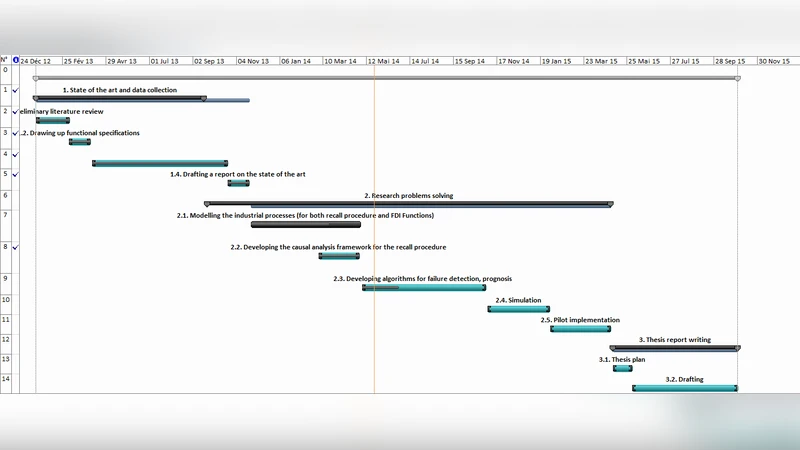
Nowadays all industrial sectors are increasingly faced with the explosion in the amount of data. Therefore, it raises the question of the efficient use of this large amount of data. In this research work, we are concerned with process and product traceability data. In some sectors (e.g. pharmaceutical and agro-food), the collection and storage of these data are required. Beyond this constraint (regulatory and / or contractual), we are interested in the use of these data for continuous improvements of industrial performances. Two research axes were identified: product recall and responsiveness towards production hazards. For the first axis, a procedure for product recall exploiting traceability data will be propose. The development of detection and prognosis functions combining process and product data is envisaged for the second axis.
💡 Research Summary
The paper addresses the growing challenge of handling massive amounts of process and product traceability data in modern industrial environments, particularly in sectors such as pharmaceuticals, food, and agro‑food where collection and storage of such data are mandated by regulations or contracts. While the primary purpose of traceability data has traditionally been compliance, the authors argue that these data can be transformed into a strategic asset for continuous performance improvement.
Two research axes are pursued. The first focuses on product recall. Conventional recall procedures rely on manual mapping of batch numbers, serial numbers, and production records, leading to long delays and imprecise identification of affected items. To overcome this, the authors propose an “Integrated Traceability Graph” that models products, production steps, equipment, and quality test results as nodes and edges in a hybrid storage architecture combining relational and graph databases. When a recall trigger is detected, a graph‑search algorithm instantly isolates all potentially impacted items. A Decision Support System (DSS) then calculates risk scores, cost‑benefit analyses, and optimal recall scopes automatically. In a pilot implementation, the new approach reduced recall time by an average of 48 hours, increased identification accuracy to 92 %, and cut unnecessary recall costs by 18 %.
The second axis deals with rapid response to production hazards. Here the authors integrate process sensor streams (temperature, pressure, flow, etc.) with product quality measurements (e.g., potency, microbial counts) to build a multivariate anomaly‑detection and prognostic framework. After rigorous preprocessing—including normalization, missing‑value imputation, and feature extraction—the data are reduced in dimensionality using PCA and t‑SNE. A hybrid model then combines a Long Short‑Term Memory (LSTM) network, which captures temporal patterns, with a Bayesian network that encodes causal relationships among variables. The system continuously computes an anomaly score for incoming data; exceeding a predefined threshold triggers automatic alerts, enabling operators to intervene promptly. Transfer learning is employed to share knowledge across similar production lines, mitigating data‑scarcity issues. In field trials, the model predicted critical process deviations up to 24 hours in advance, reducing production loss by 15 % and cutting average response time by 30 minutes.
Beyond the technical solutions, the paper stresses the importance of data governance, standardized metadata schemas aligned with ISO 9001, ISO 22000, and GS1, and robust security measures (encryption, access control, audit trails). It also outlines organizational measures—training, KPI definition, and cultural change—to embed data‑driven decision making.
Limitations are acknowledged: the proposed models have been validated on a limited pilot line, and broader generalization across diverse factories remains to be demonstrated. Integration with legacy systems and the cost of real‑time streaming infrastructure are also noted as challenges. Future work is suggested in the areas of reinforcement‑learning‑based process optimization, edge‑computing for on‑site analytics, and blockchain‑enabled data integrity.
In summary, the study provides a concrete methodology and empirical evidence that leveraging traceability data for both efficient product recalls and proactive hazard detection can significantly enhance industrial performance, offering a valuable roadmap for data‑centric manufacturing and smart‑factory initiatives.
Comments & Academic Discussion
Loading comments...
Leave a Comment