Iterative phase retrieval in coherent diffractive imaging: practical issues
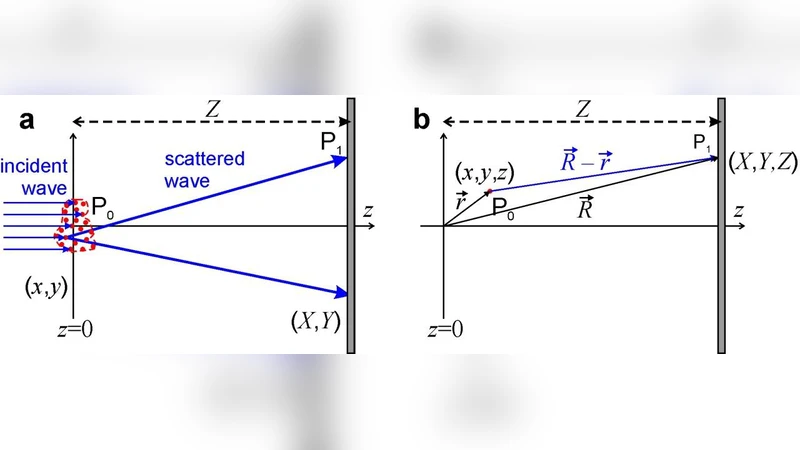
In this work, issues in phase retrieval in the coherent diffractive imaging (CDI) technique, from discussion on parameters for setting up a CDI experiment to evaluation of the goodness of the final reconstruction, are discussed. The distribution of objects under study by CDI often cannot be cross-validated by another imaging technique. It is therefore important to make sure that the developed CDI procedure delivers an artifact-free object reconstruction. Critical issues that can lead to artifacts are presented and recipes on how to avoid them are provided.
💡 Research Summary
The paper provides a comprehensive, practice‑oriented guide to iterative phase retrieval in coherent diffractive imaging (CDI), covering everything from experimental setup to final image validation. It begins by outlining the physical parameters that must be chosen carefully to satisfy the Nyquist sampling condition: wavelength, sample‑to‑detector distance, detector pixel size, and object size must be balanced so that high‑frequency information is not lost. The authors stress that the dynamic range of the recorded diffraction pattern is often limited; therefore, appropriate intensity scaling (logarithmic or non‑linear compression) and noise‑reduction filtering are essential before feeding the data into the reconstruction algorithm. Over‑exposure leads to irreversible loss of high‑frequency components, so exposure time and detector gain should be optimized via pre‑experiment simulations.
The core of the manuscript compares two widely used iterative algorithms: Error‑Reduction (ER) and Hybrid Input‑Output (HIO). ER offers stable convergence but is prone to becoming trapped in local minima, whereas HIO alternates between enforcing the measured Fourier magnitude and applying real‑space constraints (non‑negativity, support) to improve global search capability. The authors recommend a feedback parameter β in the range 0.7–0.9 for HIO and suggest a hybrid schedule where HIO iterations are periodically interrupted by a few ER steps (“cross‑correction”) to reduce residual error. Multi‑start strategies and random perturbations of the support region are advocated to test robustness against initial‑condition bias.
A substantial portion of the work is devoted to identifying common sources of reconstruction artifacts and prescribing concrete remedies. Incorrect support definition is highlighted as a primary cause of ringing near object edges (if support is too small) or amplified background noise (if support is too large). The recommended practice is to begin with an oversized support and shrink it iteratively using the “shrink‑wrap” technique, which updates the support based on the current object estimate’s amplitude threshold. Improper normalization can either suppress genuine signal details (over‑regularization) or destabilize convergence (under‑regularization); the authors advise monitoring error metrics such as R‑factor and χ² at each iteration and adjusting the normalization strength when abrupt metric changes occur. Missing data points in the diffraction pattern should not be filled by simple interpolation; instead, they should be left as free variables that the algorithm determines under the imposed constraints. Non‑linear scaling must be undone or compensated during reconstruction to avoid phase distortion, and the feedback parameter β, support size, and iteration count must be tuned to avoid stagnation or divergence.
For validation, the paper proposes a multi‑metric approach: (a) R‑factor (Fourier magnitude error), (b) Pearson correlation coefficient between successive reconstructions, (c) phase difference in Fourier space, and (d) cross‑validation using independent simulated datasets. Crucially, the authors emphasize reproducibility: running the reconstruction with several random seeds, different algorithmic variants, and varied support initializations, then comparing the resulting images. Statistical averaging of these independent reconstructions yields a final image with reduced random artifacts and increased confidence, which is especially important when no alternative imaging modality is available for ground‑truth verification.
The manuscript concludes with case studies demonstrating that applying the prescribed recipes dramatically reduces artifacts such as ringing, speckle noise, and phantom features, while achieving sub‑10‑nm resolution on realistic experimental data. Overall, the paper serves as a practical handbook for CDI practitioners, translating theoretical insights into actionable protocols that ensure artifact‑free, high‑fidelity object reconstructions.
Comments & Academic Discussion
Loading comments...
Leave a Comment