Structural Damage Identification Using Piezoelectric Impedance Measurement with Sparse Inverse Analysis
The impedance/admittance measurements of a piezoelectric transducer bonded to or embedded in a host structure can be used as damage indicator. When a credible model of the healthy structure, such as the finite element model, is available, using the impedance/admittance change information as input, it is possible to identify both the location and severity of damage. The inverse analysis, however, may be under-determined as the number of unknowns in high-frequency analysis is usually large while available input information is limited. The fundamental challenge thus is how to find a small set of solutions that cover the true damage scenario. In this research we cast the damage identification problem into a multi-objective optimization framework to tackle this challenge. With damage locations and severities as unknown variables, one of the objective functions is the difference between impedance-based model prediction in the parametric space and the actual measurements. Considering that damage occurrence generally affects only a small number of elements, we choose the sparsity of the unknown variables as another objective function, deliberately, the l0 norm. Subsequently, a multi-objective Dividing RECTangles (DIRECT) algorithm is developed to facilitate the inverse analysis where the sparsity is further emphasized by sigmoid transformation. As a deterministic technique, this approach yields results that are repeatable and conclusive. In addition, only one algorithmic parameter, the number of function evaluations, is needed. Numerical and experimental case studies demonstrate that the proposed framework is capable of obtaining high-quality damage identification solutions with limited measurement information.
💡 Research Summary
The paper presents a novel framework for identifying structural damage using the impedance (or admittance) measurements of a piezoelectric transducer bonded to or embedded in a host structure. When an accurate finite‑element (FE) model of the undamaged structure is available, the change in the transducer’s impedance spectrum caused by damage can be treated as a diagnostic signal. However, high‑frequency analysis typically involves thousands of FE elements, while the available measurement data are limited to a few frequency points, rendering the inverse problem severely under‑determined. The authors address this fundamental difficulty by formulating damage identification as a multi‑objective optimization problem that simultaneously minimizes (i) the discrepancy between model‑predicted and experimentally measured impedance values and (ii) the sparsity of the damage vector, expressed as the ℓ₀‑norm (the count of non‑zero damage variables). The sparsity objective reflects the realistic assumption that damage usually affects only a small subset of structural elements.
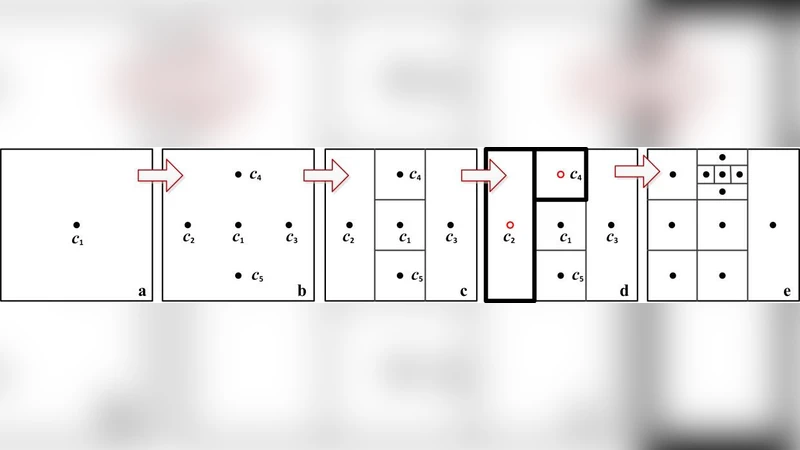
To solve the bi‑objective problem, the authors develop a deterministic multi‑objective version of the Dividing RECTangles (DIRECT) algorithm. DIRECT is a global‑search method that recursively partitions the decision space into hyper‑rectangles, evaluates the objective functions at the centre of each rectangle, and refines the most promising regions without requiring gradient information. Because the ℓ₀‑norm is discrete and non‑continuous, the authors introduce a sigmoid transformation: each damage variable xᵢ is mapped to σ(α·xᵢ), where σ is the logistic function and α is a large positive constant. As α → ∞, σ(α·xᵢ) approaches a step function that approximates the ℓ₀‑norm while remaining continuous, allowing DIRECT to handle the sparsity objective directly.
A key advantage of the proposed approach is its deterministic nature. The algorithm requires only a single user‑defined parameter—the total number of function evaluations (NFE). Consequently, repeated runs with the same NFE produce identical Pareto fronts, ensuring repeatability and eliminating the stochastic variability common in evolutionary or swarm‑based methods. Moreover, the limited parameter set simplifies practical deployment, as users can control computational effort by adjusting NFE alone.
The methodology is validated through both numerical simulations and laboratory experiments. In the numerical case, a synthetic aluminum plate model is damaged at a few elements, and only 10–15 frequency points of impedance data are supplied to the inverse analysis. The multi‑objective DIRECT algorithm generates a Pareto set that includes several solutions closely matching the true damage locations and severities, demonstrating that high‑quality identification is achievable even with sparse data. In the experimental case, a real piezoelectric transducer is bonded to an aluminum plate, controlled damage is introduced, and the impedance spectrum is measured. Applying the same algorithm yields a Pareto front where the sparse solutions correctly pinpoint the damaged region while maintaining low model‑measurement error. Comparisons with non‑sparse (ℓ₂‑norm‑only) approaches show that enforcing sparsity dramatically reduces the number of falsely identified damaged elements without sacrificing accuracy.
Overall, the paper makes four principal contributions: (1) it recasts piezo‑impedance‑based damage identification as a bi‑objective problem that balances fidelity to measured data with a sparsity prior; (2) it introduces a sigmoid‑based continuous approximation of the ℓ₀‑norm, enabling deterministic global optimization; (3) it provides a practically simple algorithm that requires only the number of function evaluations as a tuning parameter; and (4) it validates the approach on both simulated and real structures, confirming that reliable damage localization and quantification are possible with limited measurement information. The proposed framework therefore offers a robust, repeatable, and computationally efficient tool for structural health monitoring, especially in scenarios where sensor bandwidth and measurement time are constrained.
Comments & Academic Discussion
Loading comments...
Leave a Comment