Wanted Dead or Alive Extraterrestrial Life Forms (Thermodynamic criterion for life is a growing open system that performs self-assembly processes)
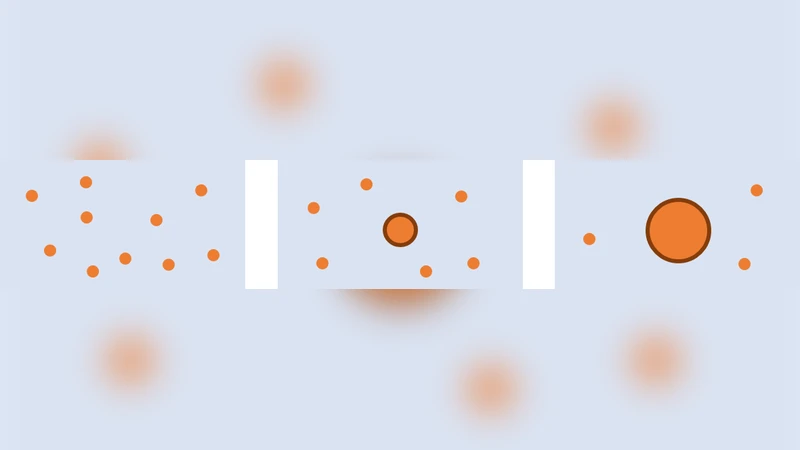
For more than 100 years, humanity (both specialists and enthusiastic laics) has been searching for extraterrestrial life hoping we are not alone. The first step in the quest for extraterrestrial life is to define what and where exactly to look for. Thus, the basic definition of living matter is a conditio sine qua non for the quest. The diversity of species on Earth is so large that our quest for extraterrestrial life cannot be limited to forms and shapes present and known to us from our environment. However, there are two formal conditions that must be fulfilled in order for something to be assumed as living matter. First, it should represent a growing open thermodynamic system (in biological terms - a cell), and thus be a system out of equilibrium. Second, it must perform synthesis, self-assembly and accumulation processes (in biological terms to grow, maintain homeostasis, respond to environment, reproduce, exchange matter and energy, evolve). Populated planets are consisted of two components: biosphere and its environment (geosphere, hydrosphere and atmosphere). Living matter and its environment are out of equilibrium. Thus, the candidate planets are dynamic inhomogeneous systems for two reasons. First, a planet receives energy from its star, which leads to disequilibrium for external reasons. Animate matter contributes to disequilibrium for internal reasons: accumulation of matter and self-assembly. In practice, for a screening, an astrobiologist should search for increase in inhomogeneity on a candidate planet.
💡 Research Summary
The paper by Marko Popovic proposes a thermodynamic definition of life that expands beyond Earth‑centric criteria and offers new guidance for the search for extraterrestrial biosignatures. The author begins by noting the lack of a universally accepted definition of life, citing a workshop where 78 scientists produced 78 different answers. While the NASA working definition—“a self‑sustaining chemical system capable of Darwinian evolution”—is widely used, it is argued to be incomplete because it assumes Earth‑like chemistry, water as a solvent, and Darwinian evolution as the sole mode of adaptation.
Popovic therefore defines life as “a growing open thermodynamic system that performs self‑assembly processes.” This definition adds three explicit conditions to the NASA statement: (1) the system must be open, exchanging matter and energy with its surroundings; (2) it must be out of thermodynamic equilibrium, continuously growing; and (3) it must be capable of self‑assembly, i.e., the formation of a boundary that separates the system from its environment. The author maps the seven commonly cited biological properties (cellular organization, reproduction, growth, energy use, response to environment, homeostasis, evolution) onto corresponding thermodynamic analogues, showing that all known terrestrial life can be described in purely physical terms.
Two broad categories of life are distinguished: (a) primitive forms lacking informational content (e.g., coacervates, primordial vesicles) that satisfy the basic thermodynamic criteria; and (b) more complex forms that incorporate genetic information and can undergo Darwinian evolution. Both categories may exist in gaseous or liquid phases; solid‑state life is deemed implausible. The temperature must be above absolute zero, and the presence of a fluid capable of dissolving self‑assembling molecules is identified as the essential precondition for abiogenesis. Water is presented as just one possible solvent; any fluid that allows amphiphilic molecules to form membranes or inverse micelles could support the emergence of cellular structures.
The practical implication for astrobiology is a shift from searching for water and specific organic molecules to detecting signatures of non‑equilibrium and increasing inhomogeneity on planetary surfaces or atmospheres. Examples include the simultaneous presence of O₂ and CH₄, which would require a continuous source to maintain a disequilibrium state, and the detection of chemical gradients that cannot be explained by abiotic processes alone. The paper highlights experimental work on inverse micelles in organic solvents, where peptide synthesis and other reactions occur more efficiently than in bulk water, illustrating how alternative solvent systems could host life‑like chemistry.
Finally, Popovic proposes a concise definition: “A self‑sustaining, self‑assembled and growing open chemical system, capable of Darwinian evolution.” He emphasizes that mathematical modeling based on non‑equilibrium thermodynamics will be essential for quantifying these concepts and for interpreting future observational data. While the theoretical framework is compelling, the paper acknowledges that quantitative metrics for self‑assembly, growth rates, and the degree of disequilibrium remain to be developed, and that distinguishing biological disequilibrium from purely geological or atmospheric processes will be a major challenge.
In summary, the work reframes the search for extraterrestrial life in terms of universal thermodynamic principles, broadening the range of environments considered habitable and suggesting concrete observational proxies (chemical disequilibrium, spatial inhomogeneity) that could be pursued with current and upcoming telescopic facilities.
Comments & Academic Discussion
Loading comments...
Leave a Comment