What might matter in autonomous cars adoption: first person versus third person scenarios
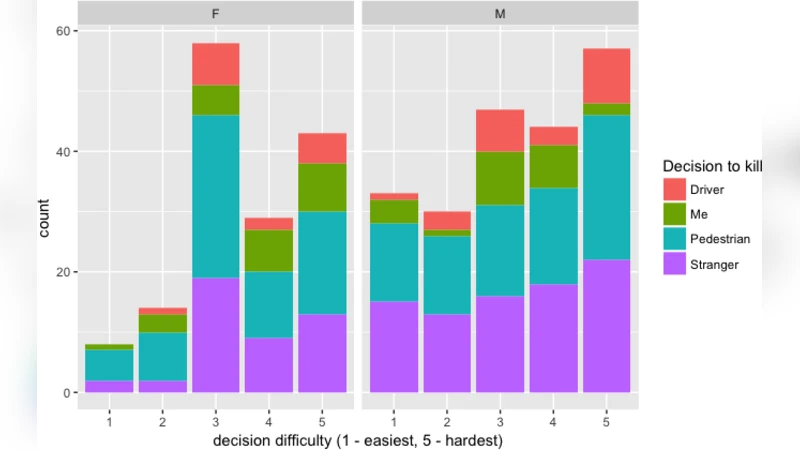
The discussion between the automotive industry, governments, ethicists, policy makers and general public about autonomous cars’ moral agency is widening, and therefore we see the need to bring more insight into what meta-factors might actually influence the outcomes of such discussions, surveys and plebiscites. In our study, we focus on the psychological (personality traits), practical (active driving experience), gender and rhetoric/framing factors that might impact and even determine respondents’ a priori preferences of autonomous cars’ operation. We conducted an online survey (N=430) to collect data that show that the third person scenario is less biased than the first person scenario when presenting ethical dilemma related to autonomous cars. According to our analysis, gender bias should be explored in more extensive future studies as well. We recommend any participatory technology assessment discourse to use the third person scenario and to direct attention to the way any autonomous car related debate is introduced, especially in terms of linguistic and communication aspects and gender.
💡 Research Summary
The paper investigates how the framing of ethical dilemmas influences public attitudes toward autonomous cars (AC). Drawing on a sample of 430 Czech respondents recruited online between June 2015 and April 2016, the authors examined four meta‑factors: psychological traits (Big Five and Temperament and Character Inventory), practical experience (whether the respondent is an active driver), gender, and the rhetorical framing of the dilemma (first‑person vs. third‑person). Participants completed demographic questions, indicated their driving status, answered a classic trolley‑problem scenario and a modified autonomous‑car scenario, and took two standardized personality inventories.
Two versions of the dilemma were presented. The first‑person version placed the respondent directly in the driver’s seat (“you are driving the car that faces an unavoidable crash”), while the third‑person version described the situation from an external viewpoint (“a car faces an unavoidable crash”). In both cases participants chose between sacrificing a single pedestrian or a group of five pedestrians.
Statistical analysis began with chi‑square tests comparing the proportion of utilitarian (save the many) choices across the two framings. A logistic regression model then incorporated gender, driving status, and personality scores to assess their moderating effects. The key findings are: (1) the third‑person framing yielded a significantly higher proportion of utilitarian choices, suggesting that distancing the respondent reduces emotional bias and promotes more analytical reasoning; (2) gender differences were pronounced, with men more likely than women to choose the utilitarian option; (3) active driving experience did not significantly affect choices; (4) among the Big Five traits, higher openness and agreeableness were associated with a greater likelihood of non‑utilitarian (protect the single) decisions in the third‑person condition; (5) TCI dimensions of cooperativeness and persistence also showed significant effects.
The authors argue that these results have practical implications for policy makers, technology assessors, and designers of public engagement tools. They recommend using third‑person scenarios in surveys and deliberative processes to obtain less biased, more reflective public input on autonomous‑vehicle ethics. The observed gender effect signals the need for more gender‑sensitive research and possibly tailored communication strategies.
Limitations include the geographic concentration of the sample (Western Czech Republic), the hypothetical nature of the dilemmas (which may not translate into real‑world driving behavior), and the lack of a foreign‑language comparison that could further illuminate language‑based framing effects. The paper calls for future work employing multilingual surveys, immersive driving simulations, and longitudinal tracking to deepen understanding of how framing, personality, and demographic factors interact in shaping public acceptance of autonomous cars.
Comments & Academic Discussion
Loading comments...
Leave a Comment