Mathematical Modeling of Routes Maintenance and Recovery Procedure for MANETs
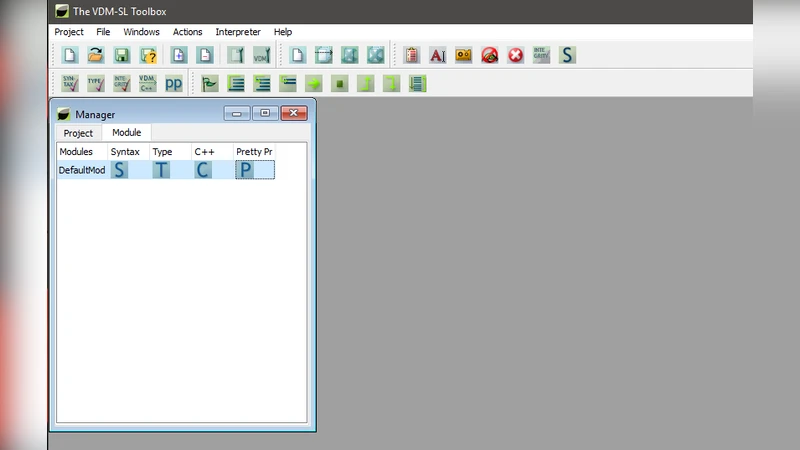
Routing is one of the most mysterious issues from the birth of networks up till now. Designing routing protocols for Mobile Ad hoc Networks (MANETs) is a complicated task because unpredictable mobility patterns of mobile nodes greatly effect routing decisions. Various routing protocols are designed to improve this very problem. Different simulator based routing protocols are designed but these protocols might fail during deployment because of the testing procedures of simulators. In this study, a novel formal model for routes management is proposed for MANETs. Formal methods are the most novel techniques based purely on mathematics and are used for the verification, validation of critical systems/models and guarantee the correctness and completeness of hardware/software systems. The proposed routing model is a complete and detailed graph based logical model defined in VDM-SL (formal language) and then verified and validated by using VDM-SL toolbox.
💡 Research Summary
The paper addresses the critical problem of route management and recovery in Mobile Ad‑hoc Networks (MANETs) by applying formal methods, specifically the Vienna Development Method – Specification Language (VDM‑SL). The authors begin by highlighting the inherent difficulty of designing routing protocols for MANETs: node mobility is unpredictable, topology changes are frequent, and many existing protocols are validated only through simulation tools that cannot guarantee logical correctness in real deployments. This is especially problematic for safety‑critical applications such as military communications or disaster response, where a routing failure can have severe consequences.
A review of related work shows that most prior efforts fall into three categories—proactive, reactive, and hybrid routing—while formal verification has been attempted using abstract languages like Z. The authors argue that Z’s high level of abstraction makes it unsuitable for describing detailed route‑maintenance operations such as bogus‑route deletion and recovery. Consequently, they propose a more concrete, graph‑based formal model using VDM‑SL, which offers richer data‑type definitions and the ability to express both static and dynamic aspects of the network.
The core of the contribution is a complete VDM‑SL specification that models every element of a MANET relevant to routing. Basic types are defined (e.g., Mobile as a token, Mid as a real identifier, Routestatus as
Comments & Academic Discussion
Loading comments...
Leave a Comment