Can Euroscepticism Contribute to a European Public Sphere? The Europeanization of Media Discourses about Euroscepticism across Six Countries
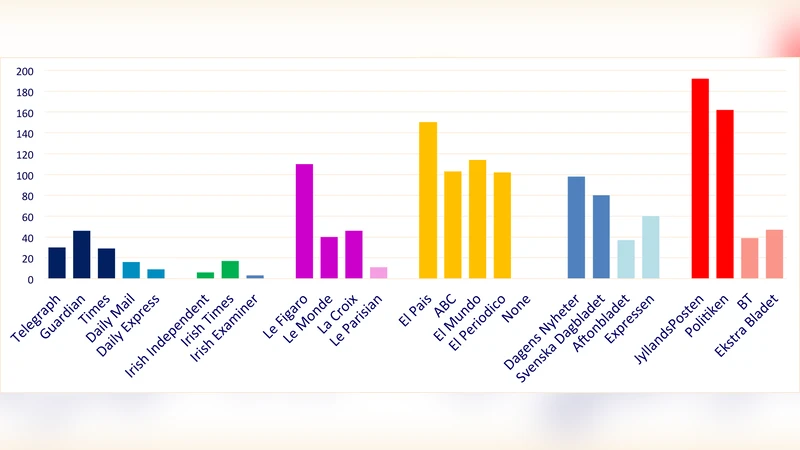
This study compares the media discourses about Euroscepticism in 2014 across six countries (United Kingdom, Ireland, France, Spain, Sweden, and Denmark). We assess the extent to which the mass media’s reporting of Euroscepticism indicates the Europeanization of public spheres. Using a mixed-methods approach combining LDA topic modeling and qualitative coding, we find that approximately 70 per cent of print articles mentioning “Euroscepticism” or “Eurosceptic” are framed in a non-domestic (i.e. European) context. In five of the six cases studied, articles exhibiting a European context are strikingly similar in content, with the British case as the exception. However, coverage of British Euroscepticism drives Europeanization in other Member States. Bivariate logistic regressions further reveal three macro-level structural variables that significantly correlate with a Europeanized media discourse: newspaper type (tabloid or broadsheet), presence of a strong Eurosceptic party, and relationship to the EU budget (net contributor or receiver of EU funds).
💡 Research Summary
The article investigates whether media coverage of Euroscepticism can be considered a Europeanized discourse, thereby contributing to the emergence of a European public sphere. The authors focus on six EU member states—United Kingdom, Ireland, France, Spain, Sweden, and Denmark—during the 2014 European Parliament election year, a period when EU‑related issues are especially salient. Using a mixed‑methods design, they first compile a corpus of 1,545 print‑media articles that contain the terms “Eurosceptic” or “Euroscepticism” (in the respective national languages). The sample includes the two highest‑circulation broadsheets and the two highest‑circulation tabloids in each country, ensuring representation of both quality and popular press.
In the first analytical phase, the authors apply Latent Dirichlet Allocation (LDA) topic modeling to uncover the dominant themes within the articles. They then conduct qualitative coding to assign each article a scope label: “national” (the discussion is framed primarily around domestic politics) or “European” (the article situates Euroscepticism in a cross‑national or EU‑level context). The LDA results reveal that topics such as Brexit, the EU budget, election campaigns, and migration appear consistently across five of the six countries. Approximately 70 % of the articles are classified as European in scope, indicating a high degree of thematic convergence. The United Kingdom is the notable outlier: its coverage is more domestically oriented, yet British Eurosceptic narratives are frequently referenced in the other five countries, suggesting a “driver” effect whereby the UK shapes the Europeanization of discourse elsewhere.
The second phase employs binary logistic regression to test three macro‑level structural hypotheses derived from media‑systems, political, and economic literature. The independent variables are (1) newspaper type (broadsheet = 1, tabloid = 0), (2) the electoral success of a domestic Eurosceptic party (successful = 1, otherwise = 0), and (3) the country’s net position in the EU budget (net contributor = 1, net receiver = 0). The dependent variable is the article’s scope (European = 1, national = 0). Results show that all three predictors are statistically significant. Broadsheets are about 2.3 times more likely than tabloids to publish European‑focused Eurosceptic coverage. Countries with a strong domestic Eurosceptic party exhibit a modest shift toward national framing, whereas net contributors to the EU budget are more prone to European‑oriented reporting than net receivers. Among the three, newspaper type emerges as the strongest predictor, underscoring the role of editorial culture and audience expectations in shaping the geographic scope of news.
The study contributes to the literature in several ways. First, it treats Euroscepticism not as a dependent variable but as a test case for measuring the Europeanization of media discourse, thereby sidestepping definitional ambiguities surrounding “hard” versus “soft” Euroscepticism. Second, the mixed‑methods approach combines computational text analysis with human validation, offering a replicable template for cross‑national media research. Third, by linking media‑system typologies (Hallin‑Mancini), party‑system dynamics, and fiscal positions to the degree of Europeanization, the paper demonstrates that media coverage is embedded in a broader structural context.
Limitations include the exclusive focus on print media (excluding broadcast and digital platforms), the small sample size for Ireland (only 26 articles), and the election‑year specificity, which may overstate the prevalence of European framing. Future research could extend the timeframe to non‑election years, incorporate social‑media data, and examine post‑Brexit developments to assess the durability of the observed patterns.
In sum, the authors find that the majority of Euroscepticism reporting in 2014 was European in scope, that the United Kingdom’s coverage acted as a catalyst for cross‑national discourse, and that structural factors—particularly newspaper type—significantly shape the extent of Europeanization. These findings suggest that even a fundamentally anti‑EU phenomenon can foster a shared European public sphere when it is discussed across borders, highlighting the complex interplay between media systems, political actors, and economic interests in the construction of European public discourse.
Comments & Academic Discussion
Loading comments...
Leave a Comment