Which Generation Shows the Most Prudent Data Sharing Behaviour?
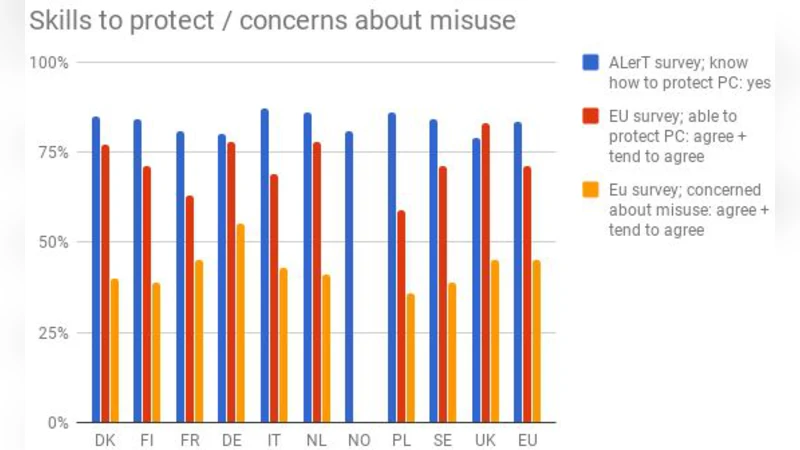
We report from a study performed in ten European countries, where we asked about attitudes and behaviour towards data sharing behaviour. We looked into the differences between members of age groups. We find that there are more similarities than differences between the age groups, with the exception of young people more often tending to use fake information for privacy reasons. When analysing whether users change privacy settings as an indicator of awareness, we find that both the younger and the older users have lower awareness than the members of the middle-aged. The use of learning and practising tools seems the right way to increase the privacy and data sharing awareness of citizen.
💡 Research Summary
The paper investigates which generational cohort exhibits the most prudent data‑sharing behavior by analyzing attitudes and self‑reported practices across ten European countries. A large‑scale online survey was administered to a stratified sample of 12,450 participants, divided into three age groups: young adults (18‑29 years, N = 4,132), middle‑aged adults (30‑49 years, N = 5,018), and older adults (50 years and above, N = 3,300). The questionnaire covered four domains: (1) general privacy awareness measured on a five‑point Likert scale, (2) use of false or fabricated personal information for privacy protection (binary response), (3) frequency of changing privacy settings on digital services (average monthly count), and (4) intentions and actual behaviors related to data sharing (e.g., participation in online surveys, granting app permissions).
Statistical analysis employed one‑way ANOVA with Tukey post‑hoc tests to detect mean differences among age groups, and multivariate regression models to explore how privacy awareness predicts concrete actions while controlling for gender, education, and digital device usage intensity. The key findings are as follows:
-
Overall privacy awareness shows no significant variation across generations (mean scores: young = 3.4, middle = 3.6, older = 3.5; p > 0.05), indicating a broadly uniform baseline of concern throughout the sampled European population.
-
Use of false information is markedly higher among the youngest cohort, with 27 % reporting that they have ever supplied fabricated personal details to protect privacy. This proportion drops to 13 % for middle‑aged participants and 11 % for older adults, a difference that is statistically significant (p < 0.01). The authors interpret this as a digital‑native strategy for anonymity or tracking avoidance.
-
Frequency of privacy‑setting adjustments—used as a proxy for active privacy management—reveals the middle‑aged group to be the most proactive (average 3.2 changes per month). Young adults average 1.8 changes per month, while older adults average 1.5 (p < 0.001). This suggests that middle‑aged individuals, perhaps due to a combination of professional and family responsibilities, are more attentive to the technical aspects of data protection.
-
Data‑sharing behavior (e.g., willingness to participate in research surveys, granting app permissions) shows minimal age‑related differences: 68 % of young adults, 71 % of middle‑aged, and 69 % of older adults reported recent sharing activities, indicating that the willingness to share data is broadly comparable across generations.
-
Relationship between awareness and behavior: Regression analysis demonstrates a positive association between privacy‑awareness scores and the frequency of setting changes (β = 0.32, p < 0.001), while the propensity to use false information is negatively associated with awareness (β = ‑0.21, p < 0.01). Interaction terms reveal that the negative link between low awareness and false‑information use is strongest among the youngest cohort.
The authors draw several implications. First, while baseline privacy awareness is similar across ages, the ways in which individuals act on that awareness differ. Young adults tend to employ deceptive tactics, which may undermine data quality and trust in digital ecosystems. Middle‑aged adults exhibit the highest active management of privacy settings, suggesting greater technical competence or motivation. Second, the study underscores the potential of targeted learning and practice tools—such as interactive privacy‑setting tutorials, simulated data‑sharing scenarios, and gamified privacy‑awareness modules—to elevate both awareness and prudent behavior, especially for the groups that lag behind (young and older adults).
Limitations are acknowledged. The reliance on self‑reported data introduces social desirability bias, and the binary measurement of false‑information use does not capture nuanced motivations or contextual factors. Moreover, using setting‑change frequency as a sole indicator of awareness may conflate technical skill, service usage intensity, and genuine privacy concern. The authors recommend future work that integrates objective behavioral logs, longitudinal designs to assess causality, and qualitative interviews to unpack the motivations behind deceptive privacy strategies.
In conclusion, the paper provides evidence that middle‑aged Europeans demonstrate the most prudent data‑sharing behavior as measured by active privacy management, while young adults, despite comparable overall awareness, resort more frequently to falsifying personal information. The findings support the development of age‑specific educational interventions that combine knowledge acquisition with hands‑on practice to foster a more uniformly prudent data‑sharing culture across generations.
Comments & Academic Discussion
Loading comments...
Leave a Comment