Time Efficient Data Migration among Clouds
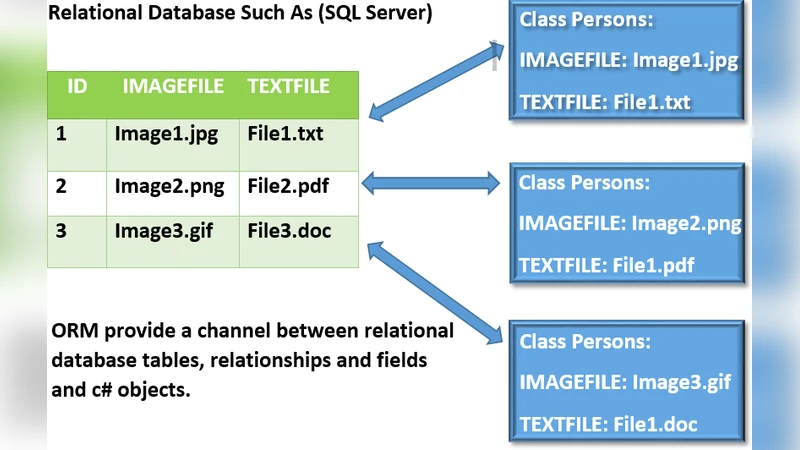
Cloud computing is one of the chief requirement of modern IT trade. Today’s cloud industry progressively dependent on it, which lead mutually abundant solutions and challenges. Among the numerous challenges of cloud computing, cloud migration is one of the major concern, and it is necessity to design optimize solutions to advance it with time. Data migration researcher attempt to move data concerning various geographical locations, which contain huge data volumes, compact time limit and problematical architectures. Researchers aim to transfer data with minimal transmission cost and used various efficient scheduling methods and other techniques to achieve this objective. In former research struggles, numerous solution have proposed. In our proposed work, we have explored the contextual factor to accomplish shorter transmission time. Entity Framework Core technology is utilizing for conceptual modelling, mapping and sortage modelling. Meant for minimum transmission cost Object Related Mapping is designated. Desired objective to achieve time efficiency during data migration has been accomplished. Results obtained when data transmission occur among azure and gear host cloud implementation of proposed framework with some size limitations.
💡 Research Summary
The paper addresses the growing need for efficient data migration between cloud platforms, focusing on reducing transmission time when moving data from Microsoft Azure to Gearhost. After a broad literature review that mentions various cloud service models (IaaS, PaaS, SaaS) and prior migration algorithms such as Online Lazy Migration (OLM) and Randomized Fixed Horizon Control (RFHC), the authors propose a solution based on Entity Framework Core (EF Core) and Object‑Relational Mapping (ORM).
The methodology begins with the construction of an Entity Data Model (EDM) comprising three layers: a conceptual schema (CSDL), a mapping schema (MSL), and a storage schema (SSDL). Using EF Core, the authors map object‑oriented domain classes to relational tables automatically, thereby eliminating hand‑written SQL scripts and reducing human error. The migration workflow is described in four stages: (1) pre‑migration validation of format, consistency, length, range, and integrity; (2) examination of data‑integration techniques such as XML‑based schemas, elastic query processing, model organization, and peer‑to‑peer data distribution; (3) selection of a data‑access strategy among semantic mapping, data‑driven mapping, and ORM mapping; and (4) execution of the actual transfer using ORM to read objects from Azure SQL and write them in batches to Gearhost MySQL.
The authors claim that, for a limited set of test data (text files and images of modest size), the ORM‑driven approach yields lower latency compared with manual scripting or naïve copy methods. However, the experimental section lacks quantitative details: the size of the datasets, network bandwidth, instance specifications, and baseline comparison results are not reported. Consequently, the magnitude of the reported time savings cannot be independently verified.
Technical strengths of the proposal include: (i) automatic generation of CRUD queries via EF Core, which simplifies development and improves maintainability; (ii) abstraction from specific database engines, enhancing portability across heterogeneous cloud environments; and (iii) batch processing that reduces the number of network round‑trips. Nonetheless, several limitations are evident. ORM frameworks are generally optimized for transactional object access rather than bulk binary (BLOB) streaming, raising questions about scalability for large media files. Security considerations such as encryption, integrity verification, and access control are omitted, despite being critical in real‑world migrations. Moreover, the paper does not discuss error handling, retry mechanisms, or consistency guarantees during partial failures.
In summary, the paper presents a conceptually sound approach that leverages modern .NET data‑access technologies to improve cloud‑to‑cloud migration speed. While the idea of using EF Core and ORM for cross‑cloud data movement is promising, the lack of rigorous experimental validation, detailed performance metrics, and comprehensive discussion of operational concerns limits the practical impact of the work. Future research should include extensive benchmarking across varied data volumes, diverse cloud providers, and realistic network conditions, as well as integration of security and fault‑tolerance mechanisms to make the solution viable for production environments.
Comments & Academic Discussion
Loading comments...
Leave a Comment