Deep Room Recognition Using Inaudible Echos
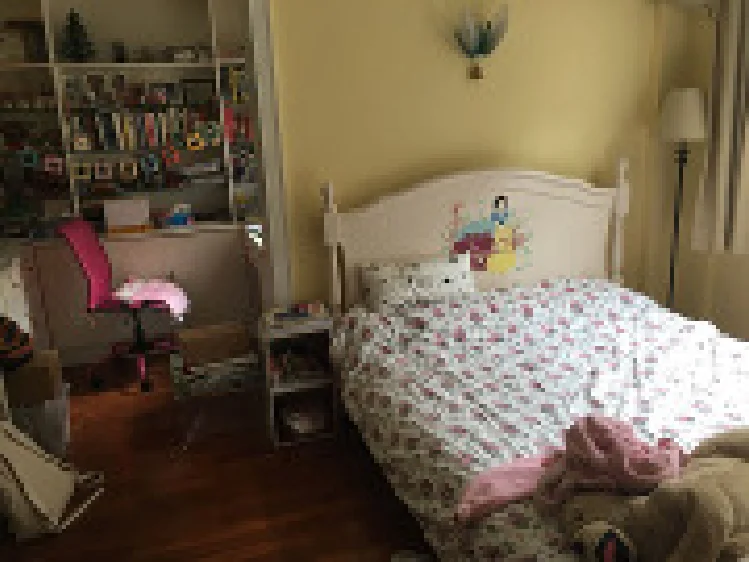
Recent years have seen the increasing need of location awareness by mobile applications. This paper presents a room-level indoor localization approach based on the measured room’s echos in response to a two-millisecond single-tone inaudible chirp emitted by a smartphone’s loudspeaker. Different from other acoustics-based room recognition systems that record full-spectrum audio for up to ten seconds, our approach records audio in a narrow inaudible band for 0.1 seconds only to preserve the user’s privacy. However, the short-time and narrowband audio signal carries limited information about the room’s characteristics, presenting challenges to accurate room recognition. This paper applies deep learning to effectively capture the subtle fingerprints in the rooms’ acoustic responses. Our extensive experiments show that a two-layer convolutional neural network fed with the spectrogram of the inaudible echos achieve the best performance, compared with alternative designs using other raw data formats and deep models. Based on this result, we design a RoomRecognize cloud service and its mobile client library that enable the mobile application developers to readily implement the room recognition functionality without resorting to any existing infrastructures and add-on hardware. Extensive evaluation shows that RoomRecognize achieves 99.7%, 97.7%, 99%, and 89% accuracy in differentiating 22 and 50 residential/office rooms, 19 spots in a quiet museum, and 15 spots in a crowded museum, respectively. Compared with the state-of-the-art approaches based on support vector machine, RoomRecognize significantly improves the Pareto frontier of recognition accuracy versus robustness against interfering sounds (e.g., ambient music).
💡 Research Summary
This paper introduces a practical room‑level indoor localization system that relies solely on a smartphone’s built‑in speaker and microphone. The authors emit a 2 ms single‑tone chirp centered at 20 kHz—an inaudible frequency for humans—and record the room’s acoustic response for only 0.1 s. By limiting both the duration and the frequency band, the method protects user privacy and avoids audible disturbance, while still capturing enough room‑specific reverberation information.
Because the short, narrow‑band signal yields limited conventional acoustic features, the authors convert the raw audio into a time‑frequency spectrogram and feed it to a lightweight two‑layer two‑dimensional convolutional neural network (CNN). The CNN automatically learns subtle patterns in the reverberation that correlate with room size, shape, and material absorption. The model contains roughly 10 k parameters, enabling real‑time inference on mobile devices or via a cloud service.
Extensive experiments were conducted in four scenarios: (1) 22 residential/office rooms, (2) 50 rooms of mixed types, (3) 19 spots in a quiet museum, and (4) 15 spots in a crowded museum. The system achieved 99.7 %, 97.7 %, 99 %, and 89 % classification accuracy respectively, demonstrating that performance scales well with the number of rooms. Compared with the state‑of‑the‑art SVM‑based RoomSense (which uses audible MFCC features) and the MFCC‑based Batphone system, the proposed spectrogram‑CNN approach improves accuracy by 15–22 percentage points and shows markedly better robustness against interfering background music.
To facilitate adoption, the authors built a cloud service named RoomRecognize and released a mobile client library. An application can simply trigger a 0.1 s recording, upload the data, and receive the identified room name. A participatory learning mode allows end users to contribute new training samples, enabling the model to evolve without expert intervention.
The paper also discusses limitations: variability in ultrasonic playback/recording quality across smartphone models, reduced discriminative power in very large or highly reflective spaces, and potential cross‑room interference when ultrasonic energy leaks through walls. Future work is suggested in multi‑band chirp designs, exploiting microphone arrays for directional cues, and integrating physical acoustic modeling to estimate room geometry.
Overall, the work demonstrates that active inaudible acoustic sensing combined with deep learning can deliver accurate, privacy‑preserving room recognition without any external infrastructure, opening avenues for smart‑building automation, healthcare monitoring, and context‑aware museum guides.
Comments & Academic Discussion
Loading comments...
Leave a Comment