Planar and Poly-Arc Lombardi Drawings
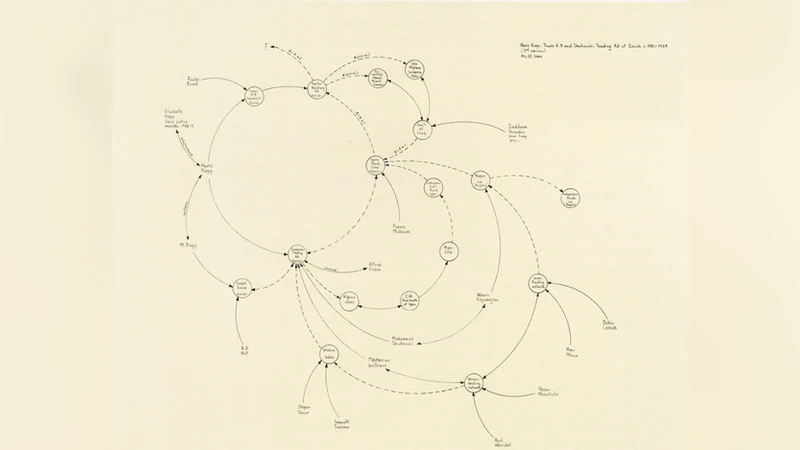
In Lombardi drawings of graphs, edges are represented as circular arcs, and the edges incident on vertices have perfect angular resolution. However, not every graph has a Lombardi drawing, and not every planar graph has a planar Lombardi drawing. We introduce k-Lombardi drawings, in which each edge may be drawn with k circular arcs, noting that every graph has a smooth 2-Lombardi drawing. We show that every planar graph has a smooth planar 3-Lombardi drawing and further investigate topics connecting planarity and Lombardi drawings.
💡 Research Summary
The paper investigates the expressive limits of Lombardi drawings—graph visualizations in which every edge is drawn as a circular arc (or straight line) and the edges incident to each vertex are spaced with perfect angular resolution. While aesthetically appealing, not every graph admits such a drawing, and even many planar graphs cannot be drawn Lombardi‑style without edge crossings. To overcome these limitations, the authors introduce the notion of k‑Lombardi drawings, where each edge may be composed of up to k circular arcs. They distinguish between smooth (C¹‑continuous) and pointed (allowing a sharp bend) variants.
Non‑Lombardi graphs
The authors first strengthen previous impossibility results. They present a 7‑vertex 3‑degenerate graph that lacks a Lombardi drawing regardless of the cyclic ordering of incident edges. More substantially, they construct a graph G₈ obtained from K₅ by attaching three degree‑1 vertices, breaking the high symmetry of K₅. Using geometric properties (namely that an arc joining two points on a circle meets the circle at equal angles, and that the set of meeting points for two arcs with prescribed tangents forms a circle), they derive algebraic constraints on the positions and “twists” of vertices for any edge ordering. By exhaustively enumerating all possible orderings and solving the resulting equations numerically (a Python script is provided), they show that no assignment satisfies the constraints, proving that G₈ is non‑Lombardi. Consequently, an infinite family of connected non‑Lombardi graphs can be generated by gluing copies of G₈ together.
Existence of smooth 2‑Lombardi drawings
The paper then shows that allowing two arcs per edge eliminates the impossibility. Building on a prior theorem that every 2‑degenerate graph with a prescribed edge ordering has a Lombardi drawing, they augment any graph by inserting auxiliary degree‑1 vertices to reduce its degeneracy to two. Each original edge is replaced by a pair of arcs meeting smoothly at the auxiliary vertex, preserving perfect angular resolution at all original vertices. Thus every graph admits a smooth 2‑Lombardi drawing.
Planar k‑Lombardi drawings
The authors turn to planarity. Prior work demonstrated that some planar graphs have Lombardi drawings but no planar Lombardi embedding. Here they prove:
-
Degree‑≤ 3 planar graphs: Every planar graph whose maximum degree is three can be drawn planar with a smooth 2‑Lombardi representation. The construction uses a canonical ordering of a triangulated planar embedding, placing vertices incrementally and routing each edge as two smoothly joined arcs.
-
Higher‑degree planar graphs: For any planar graph, either a pointed smooth 2‑Lombardi planar drawing exists, or a smooth 3‑Lombardi planar drawing can be produced. The extra flexibility (either allowing a bend or an extra arc) suffices to avoid crossings while keeping perfect angular resolution at all vertices.
-
Planar 3‑trees: Extending earlier examples, the authors exhibit planar 3‑trees that lack any planar Lombardi drawing, confirming that treewidth alone does not guarantee planarity in the Lombardi sense.
The constructions rely on classic planar graph techniques (triangulation, canonical ordering, and edge‑splitting) combined with the geometric lemmas about circular arcs. By carefully assigning tangents at each vertex, the authors ensure that the angular resolution condition is met while the arcs can be routed without intersecting.
Relation to prior work
The paper surveys related literature on circular‑arc and curvilinear graph drawing, confluent drawings, and force‑directed methods that use Bézier curves. While many of these approaches improve angular resolution or reduce edge crossings, none guarantee perfect angular resolution together with curvilinear edges. Moreover, the authors note that deciding whether a planar graph with fixed vertex positions can be drawn with non‑crossing circular arcs is NP‑complete, underscoring the significance of their constructive results that avoid such computational hardness by relaxing the single‑arc restriction.
Conclusions and future directions
The main contributions are: (i) a rigorous proof that not all graphs admit Lombardi drawings, (ii) the introduction of k‑Lombardi drawings and the proof that k = 2 suffices for any graph (smoothly), and (iii) a comprehensive treatment of planar graphs, showing that k = 3 guarantees a planar embedding with perfect angular resolution. The work opens several avenues for future research, including algorithmic optimization of the number of arcs per edge, interactive layout tools that exploit smooth multi‑arc edges, and empirical studies on readability and aesthetic perception of k‑Lombardi drawings. Overall, the paper significantly expands the theoretical foundation of aesthetically driven graph visualization and provides practical constructions that can be incorporated into graph‑drawing software.
Comments & Academic Discussion
Loading comments...
Leave a Comment