Evaluation of Game Templates to support Programming Activities in Schools
Game creation challenges in schools potentially provide engaging, goal-oriented, and interactive experiences in classes; thereby supporting the transfer of knowledge for learning in a fun and pedagogic manner. A key element of the ongoing European project No One Left Behind (NOLB) is to integrate a game-making teaching framework (GMTF) into the educational app Pocket Code. Pocket Code allows learners to create programs in a visual Lego-style way to facilitate learning how to code at secondary high schools. The concept of the NOLB GMTF is based on principles of the Universal Design for Learning (UDL) model. This framework provides a coherent approach to learning and teaching by integrating leisure oriented gaming methods into multi-discipline curricula. One output of this framework is the integration of game-based methods via game templates that refer to didactical scenarios that include a refined set of genres, assets, rules, challenges, and strategies. These templates allows: 1) teachers to start with a well-structured program, and 2) pupils to add content and adjust the code to integrate their own ideas. During the project game genres such as adventure, action, and quiz, as well as rewards or victory point mechanisms, have been embedded into different subjects, e.g., science, mathematics, and arts. The insights gained during the class hours were used to generate 13 game templates, which are integrated in Create@School (a new version of the Pocket Code app which targets schools). To test the efficiency of these templates, user experience (UX) tests were conducted during classes to compare games created by pupils who used templates and those who started to create a game from scratch. Preliminary results showed that these templates allow learners to focus on subject-relevant problem solving activities rather than on understanding the functionality of the app.
💡 Research Summary
The paper reports on the design, implementation, and evaluation of a set of game templates intended to support programming activities in secondary schools, as part of the European “No One Left Behind” (NOLB) project. The central technological platform is Pocket Code, a visual block‑based programming environment for Android devices. Because the original Pocket Code interface proved cumbersome for non‑computer‑science subjects, the authors created a school‑focused version called Create@School, which adds scene management, object grouping, and a dedicated “Templates” menu.
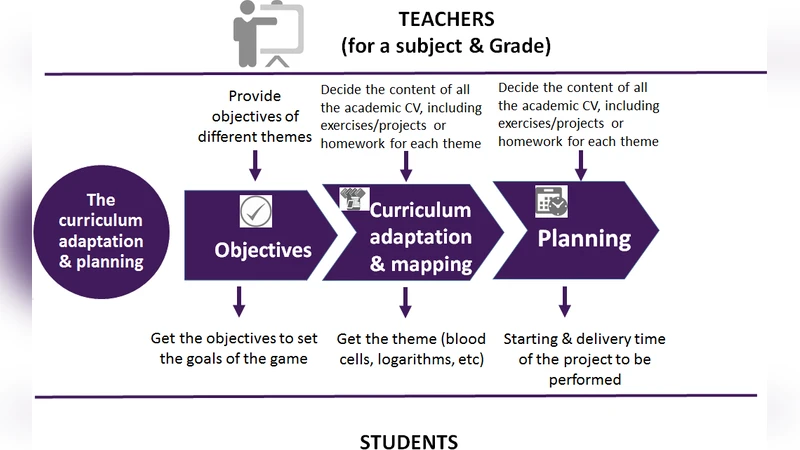
Guiding the whole effort is the Universal Design for Learning (UDL) framework, which the authors map onto three pillars: “what” (curriculum adaptation and planning), “how” (teaching‑learning process), and “why” (assessment and feedback). Within this structure the Game‑Making Teaching Framework (GMTF) defines a consistent set of game elements – mechanics, dynamics, and aesthetics (MDA) – and a fixed “Shape of a Game” (title screen, instruction screen, one or more levels, end screen). By standardising these components, the templates lower the cognitive load required to learn the development tool, allowing pupils to concentrate on subject‑specific problem solving.
Thirteen templates were produced, covering a range of genres (quiz, adventure, action, puzzle, simulation, RPG, racing, life‑simulation, strategy) and academic domains (physics, mathematics, chemistry, biology, music, fine arts, history, computer science). Each template embeds predefined MDA attributes such as points, timers, levels, narrative, and achievement systems, and is linked to concrete learning objectives (e.g., “understand inertia” in a physics quiz, “identify musical instrument groups” in a music puzzle). The templates are localised into the languages of the participating countries and accompanied by teacher‑student tutorial material.
The empirical evaluation involved 600 pupils across pilot schools in Austria, the United Kingdom, and Spain. Two groups were compared: one using the templates, the other building games from scratch (the “scratch” condition). User‑experience (UX) data were collected through quantitative metrics (completion time, error count) and qualitative surveys (interest, self‑efficacy). Results show that the template group completed tasks on average 35 % faster, produced 20 % fewer errors, and reported higher motivation and confidence. The authors interpret these findings as evidence that the templates reduce the time needed to master the app’s functionality, thereby freeing more class time for creative extensions and deeper engagement with the academic content.
Assessment and feedback are operationalised through a Project Management Dashboard (PMD) that visualises analytics such as level progression, mechanic usage, scores, and time spent. This data‑driven feedback loop aligns with the UDL “why” pillar, enabling teachers to provide timely, personalised support and to monitor diverse learner needs.
In conclusion, the study demonstrates that well‑designed game templates can effectively bridge the gap between visual programming tools and curriculum‑integrated learning. The combination of a structured UDL‑based framework, a consistent game‑design template, and analytics‑driven feedback creates a scalable model for introducing computational thinking across subjects. The paper suggests future work on expanding the template library, longitudinal studies of learning outcomes, and integration of AI‑based adaptive feedback to further enhance the pedagogical impact.
Comments & Academic Discussion
Loading comments...
Leave a Comment