The relationships between PM2.5 and AOD in China: About and behind spatiotemporal variations
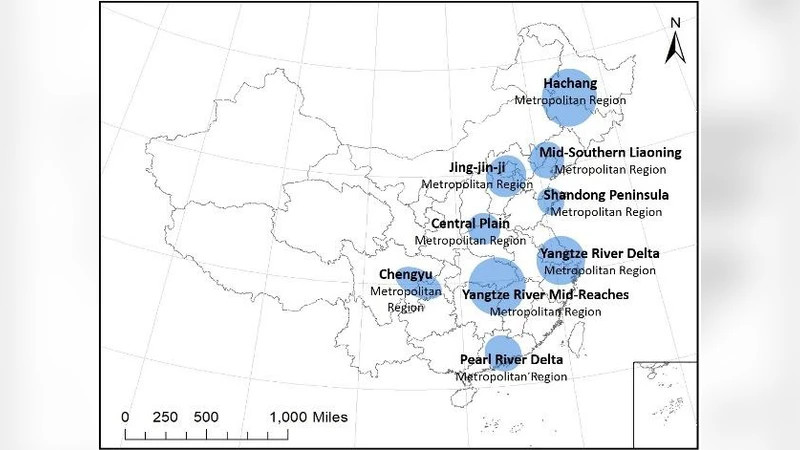
Satellite aerosol products have been widely used to retrieve ground PM2.5 concentration because of its wide coverage and continuously spatial distribution. While more and more studies focus on the retrieval algorithm, we find that the relationship between PM2.5 concentration and satellite AOD has not been fully discussed in China. Is satellite AOD always a good indicator for PM2.5 in different regions and can AOD still be employed to retrieve PM2.5 with pollution conditions changing in these years remain unclear. In this study, the relationships between PM2.5 and AOD were investigated in 368 cities in China for a continuous period from February 2013 to December 2017, at different time and regional scales. Pearson correlation coefficients and PM2.5/AOD ratio were used as the indicator. Firstly, we concluded the relationship of PM2.5 and AOD in terms of spatiotemporal variations. Then the impact of meteorological factors, aerosol size and topography were discussed. Finally, a GWR retrieval experiment was conducted to find out how was the retrieval accuracy changing with the varying of PM2.5-AOD relationship. We found that spatially the correlation is higher in Beijing-Tianjin-Hebei and Chengyu region and weaker in coastal areas such as Yangtze River Delta and Pearl River Delta. The PM2.5/AOD ratio has obvious North-South difference with a high ratio in north China and a lower ratio in south China. Temporally, PM2.5/AOD ratio is higher in winter and lower in summer, the correlation coefficient tends to be higher in May and September. As for interannual variations from 2013 to 2017, we detected a declining tendency on PM2.5/AOD ratio. The accuracy of GWR retrievals were decreasing too, which may imply that AOD may not be a good indicator for PM2.5 in the future.
💡 Research Summary
This paper investigates the quantitative relationship between ground‑level fine particulate matter (PM₂.₅) and satellite‑derived aerosol optical depth (AOD) across China from February 2013 to December 2017. Using daily PM₂.₅ observations from 1,500 monitoring stations aggregated to 368 cities and MODIS Terra Level‑2 AOD (10 km), the authors compute Pearson correlation coefficients and the PM₂.₅/AOD ratio as two complementary indicators. Spatial analysis reveals strong PM₂.₅‑AOD correlations (r ≈ 0.6–0.8) in the heavily polluted North China Plain (Beijing‑Tianjin‑Hebei) and the Chengyu region, while coastal megacities in the Yangtze River Delta and Pearl River Delta show weaker links (r ≈ 0.3–0.5). A pronounced north‑south gradient in the PM₂.₅/AOD ratio is documented: northern cities exhibit ratios above 1.5, indicating that AOD underestimates surface PM₂.₅, whereas southern cities have ratios near or below 1.0, suggesting overestimation. Seasonal patterns show the ratio peaking in winter (due to heating emissions and shallow boundary layers) and dropping in summer; correlation coefficients are highest in May and September when atmospheric mixing is moderate. Interannual trends indicate a gradual decline in the PM₂.₅/AOD ratio (≈ 3 % per year) and a concurrent deterioration of Geographically Weighted Regression (GWR) retrieval accuracy (RMSE rising from ~8 µg m⁻³ in 2013 to ~12 µg m⁻³ in 2017). The authors attribute these changes to policy‑driven PM₂.₅ reductions, evolving aerosol composition, and the increasing influence of meteorological factors such as planetary boundary‑layer height, relative humidity, fine‑mode fraction, and Angstrom exponent. The study concludes that AOD alone will become a less reliable proxy for surface PM₂.₅, especially in coastal and summer conditions, and recommends incorporating additional meteorological and aerosol‑microphysical variables into adaptive, region‑specific retrieval algorithms to maintain robust satellite‑based air‑quality monitoring in the future.
Comments & Academic Discussion
Loading comments...
Leave a Comment