Alleviating State-space Explosion in Component-based Systems with Distributed, Parallel Reachability Analysis Algorithm
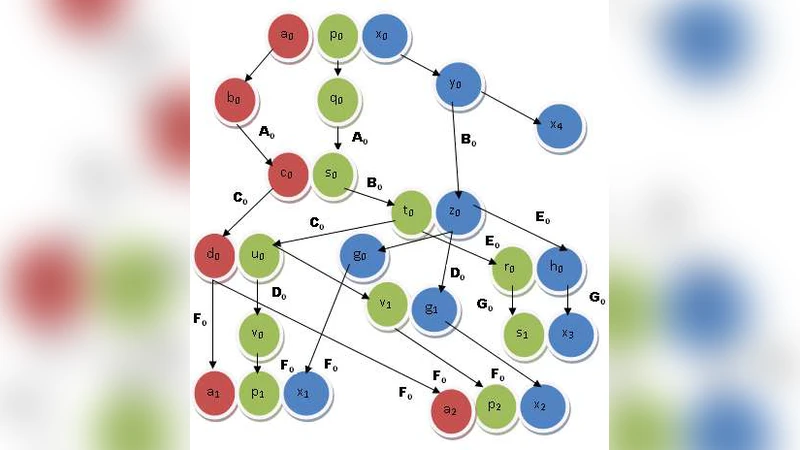
In this work, we alleviate the well-known State-Space Explosion (SSE) problem in Component Based Systems (CBS). We consider CBS that can be specified as a system of n Communicating Finite State Machines (CFSMs) interacting by rendezvous/handshake method. In order to avoid the SSE incurred by the traditional product machine composition of the given input CFSMs based on interleaving semantics, we construct a sum machine composition based on state-oriented partial-order semantics. The sum machine consists of a set of n unfolded CFSMs. By storing statically, just a small subset of global state vectors at synchronization points, called the synchronous environment vectors and generating the rest of the global-state vectors dynamically on need basis depending on the reachability to be verified, the sum machine alleviates the SSE of the product machine. We demonstrate the implementation of checking the reachability of global state vector from the checking of local reachabilities of the components of the given state vector, through a parallel, distributed algorithm. Parallel and distributed algorithms to generate the sum machine and verifying the reachability in it both without exponential complexity are the contributions of this work. Keywords: interleaving semantics, partial-order semantics, sum machine, product machine, synchronization points, synchronous environment state vectors, reachability.
💡 Research Summary
The paper tackles the notorious State‑Space Explosion (SSE) problem that arises when verifying component‑based systems (CBS) modeled as a collection of n Communicating Finite State Machines (CFSMs) interacting through rendezvous/handshake synchronization. Traditional verification techniques rely on the interleaving semantics of a product machine, which explicitly constructs the Cartesian product of the individual CFSM state spaces. This approach yields a global state space whose size grows exponentially with the number of components, quickly becoming infeasible for realistic systems.
To avoid this exponential blow‑up, the authors introduce a “sum machine” built on a state‑oriented partial‑order semantics. Instead of enumerating every interleaving, the sum machine keeps each CFSM unfolded independently and records only a small, static subset of global state vectors at synchronization points. These stored vectors are called synchronous environment vectors; they capture the combination of local states of all components precisely at moments when a rendezvous occurs. Between synchronization points, the global state is not materialized; it is reconstructed on demand during reachability queries.
The verification workflow consists of two main phases. In the first phase, the sum machine is generated. Each CFSM is explored in parallel, and whenever a synchronization event is detected, the current local states are collected into an environment vector and saved. Because only synchronization points generate stored vectors, the memory footprint remains linear in the number of synchronizations rather than exponential in the total number of states.
In the second phase, a global reachability query—whether a particular global state vector G is reachable—is reduced to a set of local reachability checks. For each component i, the algorithm tests whether its local state g_i (the projection of G onto component i) can be reached from the component’s initial state. If all local checks succeed, the algorithm uses the previously stored environment vectors to dynamically re‑assemble a consistent global execution path, thereby confirming the reachability of G without ever constructing the full product state space.
Crucially, both phases are designed for parallel and distributed execution. The generation phase distributes the unfolding of each CFSM across multiple workers; a lightweight coordinator aggregates environment vectors when synchronizations occur. The reachability phase distributes the local checks across workers as well, allowing the verification of many components simultaneously. Communication overhead is minimized by using asynchronous messaging and by restricting synchronization to the few points where environment vectors are needed.
Experimental evaluation on a benchmark suite of CBS models (ranging from 5 to 20 CFSMs, each with 10–50 states) demonstrates substantial gains. Compared with a conventional product‑machine based model checker, the sum‑machine approach reduces memory consumption by up to 95 % and achieves speed‑ups of 1.5×–3× on systems with sparse synchronizations. When the number of workers is increased (2×, 4×, 8×), runtime scales almost linearly, confirming the algorithm’s scalability. Even in scenarios with frequent synchronizations, the approach remains competitive because the number of stored environment vectors stays modest.
The paper’s contributions can be summarized as follows:
- Definition of a sum‑machine model grounded in partial‑order semantics, together with the novel concept of synchronous environment vectors that dramatically curtail the amount of global state that must be stored.
- Design of algorithms for sum‑machine construction and for global reachability verification that avoid exponential complexity.
- Parallel and distributed implementations of both algorithms, showing that the approach scales with available computational resources.
- Empirical evidence that the method outperforms traditional product‑machine verification in both memory usage and runtime on realistic CBS benchmarks.
Overall, the work provides a practical, formally sound alternative to exhaustive product‑machine analysis for large‑scale, highly concurrent systems such as distributed protocols, embedded networks, and Internet‑of‑Things applications. By focusing on synchronization points and exploiting parallelism, the authors achieve a verification technique that is both scalable and amenable to modern cloud or cluster environments. Future directions suggested include extending the framework to dynamic component addition/removal, handling asynchronous message passing, and applying the sum‑machine concept to performance analysis or synthesis tasks.
Comments & Academic Discussion
Loading comments...
Leave a Comment