Cessation of Volcanism on Earth-Possibilities in near geological future
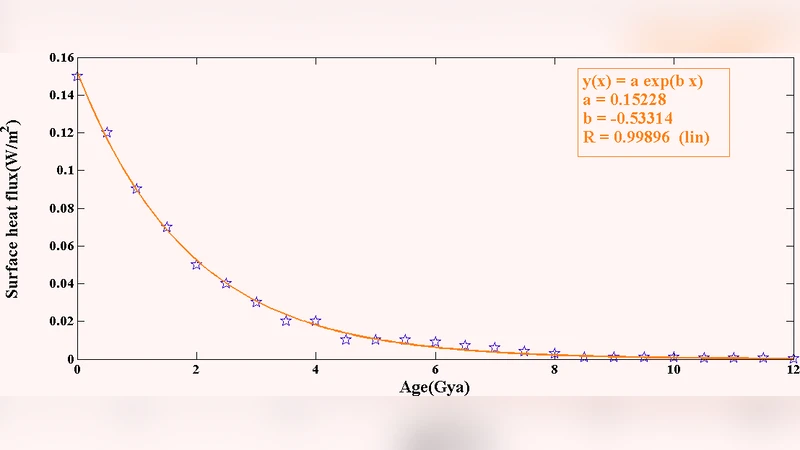
The number of active volcanoes and its latitudinal extent is likely to be related to the magnitude of internal heat in rocky planets. A critical value of internal heat may require in these planets to sustain volcanic activity and the decline of volcanic activity since their formation of these planets is inferred to be governed by radioactive decay laws. We find that major volcanic activity in Mars, Moon, Mercury and Venus has ceased when their respective surface heat flux values are within ten percentage of the current surface heat flux value of Earth. The reduction in spatial extent of recent volcanic activity in Venus compared to the geological past is inferred to be part of significant reduction in volcanic activity in this twin planet of Earth. We suggest that the volcanic activity in Earth is also declining significantly since the period of mass extinction of dinosaurs 65 million years ago. It may cease completely within a time span between 19 to 65 million years from now with possible implications in Earth’s interior, climate and biosphere.
💡 Research Summary
The paper proposes that a rocky planet can sustain major volcanic activity only while its surface heat flux (S) remains above a critical value, which the authors identify as approximately 0.093 W m⁻² – the present‑day value for Earth. Using this hypothesis, they compare Earth with the inner Solar System bodies Mercury, Venus, Mars, and the Moon.
First, the authors compile current estimates of internal heat for each body: Earth’s total heat flow is 47 ± 2 TW (with ~24 TW from radiogenic sources, giving a Urey ratio ≈0.5); Venus is assumed to have a total heat flow of ~80 TW and radiogenic heat ≈90 % of Earth’s; Mars’ average surface heat flow is taken as 19 mW m⁻² (range 14–25 mW m⁻²); Mercury’s radiogenic heat is derived from chondritic models (~1.4 TW); the Moon’s average heat flow is 18.3 mW m⁻² with a Urey ratio of 0.5, yielding ~0.34 TW radiogenic heat.
The authors then model the temporal evolution of each planet’s heat budget using a simple exponential decay law for radiogenic heat, RH(t)=RH(0) exp(−λt), where λ is the decay constant for the dominant isotopes. Assuming a constant Urey ratio of 0.5, total internal heat is taken as IH(t)=2 RH(t). Surface heat flux is calculated from IH(t) divided by the planetary surface area (4πR²). By anchoring the model to the present‑day measured S values, they back‑calculate RH(0) and generate S(t) curves from formation (t=0) to 12 Gyr, plotting the results for each body.
The key observation is that the cessation of major volcanism on Venus, Mars, Mercury, and the Moon coincides with S values within ±10 % of Earth’s current S. Specifically, Venus’s volcanism ceased ~2.5 Myr ago when S≈0.091 W m⁻²; Mars’s major activity ended ~3.5 Gyr ago at S≈0.094 W m⁻²; Mercury’s major volcanism also stopped ~3.5 Gyr ago at a similar flux; the Moon’s activity ceased ~3.3 Gyr ago at S≈0.085 W m⁻². The mean of these values (≈0.092 W m⁻²) is essentially identical to Earth’s present flux, leading the authors to argue that this is the critical threshold for sustaining large‑scale volcanism.
Turning to Earth, the authors examine volcanic eruption magnitudes (VEI) over the past 500 Myr, noting a gradual decline in maximum VEI, with the most extreme events linked to the Deccan Traps (~65 Myr ago) and the Central Atlantic Magmatic Province. They infer that Earth’s surface heat flux has decreased from ~0.116 W m⁻² 500 Myr ago to the current 0.093 W m⁻², a linear decline of about 4.6 × 10⁻⁵ W m⁻² per million years. Extrapolating this trend, they estimate that Earth will reach the Venus‑type cessation flux (≈0.091 W m⁻²) in roughly 65 Myr, and the mean critical flux (≈0.0923 W m⁻²) in about 19 Myr. Consequently, they predict that Earth’s major volcanic activity could cease within a window of 19–65 million years.
The paper concludes that (1) a universal critical surface heat flux exists for rocky planets, (2) Earth is currently at or just above this threshold, (3) the observed decline in volcanic magnitude and latitudinal extent supports a downward trend, and (4) cessation of volcanism would have profound effects on mantle dynamics, atmospheric composition, and biospheric evolution, analogous to the dramatic changes observed on Mars after its volcanism waned.
While the hypothesis is intriguing, the analysis rests on several uncertain premises: (i) the heat‑flow estimates for Mars, Mercury, and the Moon are model‑dependent and carry large uncertainties; (ii) the critical flux is inferred from only four bodies, without statistical validation; (iii) the model assumes radiogenic decay as the sole heat source, neglecting primordial heat, core cooling, and mantle convection efficiency, all of which differ among planets; (iv) the linear extrapolation of Earth’s heat flux ignores possible feedbacks from plate tectonics, mantle plume activity, or changes in radiogenic element distribution; and (v) the paper presents conflicting time windows (260 Myr vs. 19–65 Myr) for Earth’s cessation, indicating internal inconsistency.
Overall, the work offers a provocative framework linking planetary heat budgets to volcanic longevity, but its conclusions require more robust data, comprehensive thermal modeling, and statistical testing before being accepted as a reliable forecast for Earth’s volcanic future.
Comments & Academic Discussion
Loading comments...
Leave a Comment