An AI Based Super Nodes Selection Algorithm in BlockChain Networks
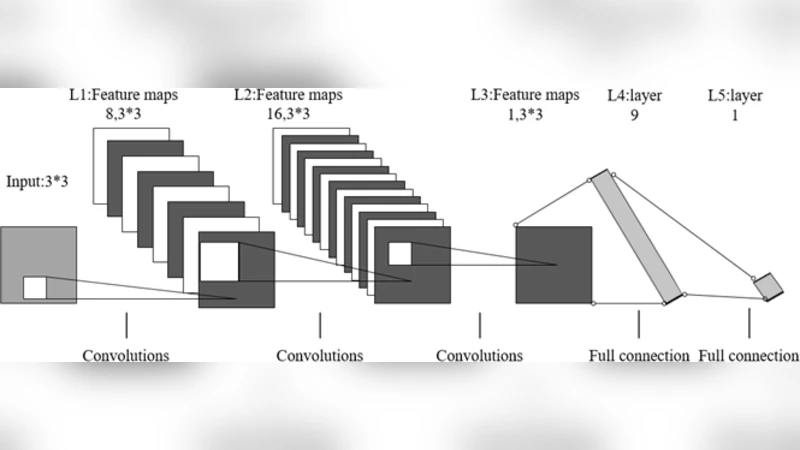
In blockchain systems, especially cryptographic currencies such as Bitcoin, the double-spending and Byzantine-general-like problem are solved by reaching consensus protocols among all nodes. The state-of-the-art protocols include Proof-of-Work, Proof-of-Stake and Delegated-Proof-of-Stake. Proof-of-Work urges nodes to prove their computing power measured in hash rate in a crypto-puzzle solving competition. The other two take into account the amount of stake of each nodes and even design a vote in Delegated-Proof-of-Stake. However, these frameworks have several drawbacks, such as consuming a large number of electricity, leading the whole blockchain to a centralized system and so on. In this paper, we propose the conceptual framework, fundamental theory and research methodology, based on artificial intelligence technology that exploits nearly complementary information of each nodes. And we designed a particular convolutional neural network and a dynamic threshold, which obtained the super nodes and the random nodes, to reach the consensus. Experimental results demonstrate that our framework combines the advantages of Proof-of-Work, Proof-of-Stake and Delegated-Proof-of-Stake by avoiding complicated hash operation and monopoly. Furthermore, it compares favorably to the three state-of-the-art consensus frameworks, in terms of security and the speed of transaction confirmation.
💡 Research Summary
**
The paper proposes a novel consensus mechanism for blockchain systems called Proof of Artificial Intelligence (PoAI), which aims to overcome the energy consumption, centralization, and latency issues inherent in the three dominant protocols: Proof‑of‑Work (PoW), Proof‑of‑Stake (PoS), and Delegated‑Proof‑of‑Stake (DPoS). The core idea is to evaluate each node’s “average transaction number” (AVN) using a specially designed convolutional neural network (CNN). AVN is defined as a composite metric that reflects node properties, network conditions, and security factors. Nodes are then classified into three categories based on a dynamically adjusted threshold θ: (1) Super nodes – high‑performance nodes with low latency and abundant mining equipment, (2) Random nodes – lower‑AVN nodes selected randomly to preserve fairness, and (3) Validator nodes – basic participants that only verify transactions.
The workflow consists of four stages: (i) collection of node characteristics via a questionnaire‑style survey, (ii) feeding these features into the CNN to predict AVN, (iii) applying the dynamic threshold to separate super and random nodes, and (iv) allowing the selected super and random nodes to reach consensus and create new blocks. By replacing the hash‑intensive PoW competition with a machine‑learning‑driven selection process, the authors claim that PoAI eliminates the need for massive electricity consumption and reduces the risk of power‑concentration monopolies.
The authors present a simulation‑based evaluation that compares PoAI against PoW, PoS, and DPoS. According to the reported results, PoAI achieves faster transaction confirmation, higher throughput, and lower energy usage while maintaining comparable security. The paper argues that the random‑node component prevents any single entity from dominating the network, thereby preserving decentralization.
Despite its innovative premise, the paper suffers from several critical shortcomings. First, the definition of AVN lacks concrete mathematical formulation; the “questionnaire” used to gather node attributes is not described in detail, leaving open how such data would be obtained in a real‑world, permissionless blockchain. Second, the CNN architecture, training dataset size, hyper‑parameters, and performance metrics are omitted, making the approach non‑reproducible. Third, the dynamic threshold θ is described only qualitatively (“changes with network performance”) without an explicit update rule or analysis of stability under rapid network fluctuations. Fourth, the security analysis is superficial: while the random‑node selection is touted as a fairness guarantee, there is no discussion of how randomness is generated, how Sybil attacks are mitigated, or how the system behaves if a super node becomes malicious. Fifth, the experimental section provides only high‑level statements of superiority; it lacks quantitative tables for transactions‑per‑second (TPS), latency, energy consumption, and resilience under adversarial scenarios such as 51 % attacks or network partitions.
In summary, the paper introduces an appealing concept—using AI to assess node capability and dynamically allocate consensus roles—but it falls short on methodological rigor, reproducibility, and thorough security evaluation. Future work should (1) formalize the AVN metric with clear equations, (2) disclose the CNN model details and training pipeline, (3) define the dynamic threshold update mechanism mathematically, (4) incorporate robust randomness generation and Sybil‑resistance techniques, and (5) conduct extensive empirical testing on realistic blockchain testbeds, including adversarial stress tests. Only with such comprehensive validation can PoAI be considered a viable alternative to existing consensus protocols.
Comments & Academic Discussion
Loading comments...
Leave a Comment