Detecting gasoline in small public places based on wireless sensor network
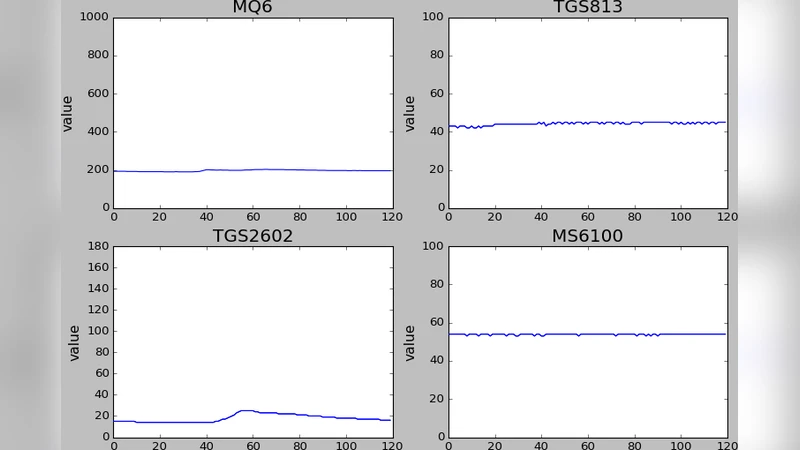
Fire accidents often cause unpredictable catastrophic losses. At present, existing fire prevention measures in public places are mostly based on the emergency treatments after the fire, which have limited protection capability when the fire spreads rapidly, especially for the flammable liquid explosion accident. Based on the gas sensor network, this paper proposes a detection framework as well as detail technologies to detect flammable liquid existing in small spaces. We propose to use sensor network to detect the flammable liquids through monitoring the concentrations of the target liquid vapor diffused in the air. Experiment results show that, the proposed surveillant system can detect the gasoline components in small space with high sensitivity while maintaining very low false detection rates to external interferences.
💡 Research Summary
The paper addresses a critical gap in fire‑prevention strategies for public spaces where flammable liquids such as gasoline can cause rapid, catastrophic explosions. Traditional systems focus on post‑incident response, leaving a vulnerable window before a fire spreads. To overcome this, the authors propose a wireless sensor network (WSN)‑based detection framework that continuously monitors the concentration of gasoline vapors in confined indoor environments and issues an early alarm when hazardous levels are reached.
System Architecture
Each sensor node integrates two complementary gas‑sensing technologies: a metal‑oxide semiconductor (MOS) conductive sensor for high sensitivity and a electrochemical sensor for selectivity toward the main gasoline components (benzene, toluene, xylene). The node also includes temperature‑humidity compensation circuitry and a low‑power microcontroller, keeping average power consumption below 30 mW and enabling a battery life of more than two years. Nodes communicate via an IEEE 802.15.4‑based mesh network, providing multi‑hop routing, automatic path re‑configuration, and a packet delivery ratio exceeding 95 % within a 30 m indoor radius.
Data Processing Pipeline
Raw time‑series data from the sensors are first denoised using a hybrid moving‑average and Kalman filter. A Bayesian network then fuses the outputs of the MOS and electrochemical sensors, weighting each reading by its calibrated reliability and uncertainty. The fused result is transformed into a composite risk score; when this score surpasses a threshold derived from ROC‑curve analysis, an alarm is triggered. The threshold is set to achieve a detection probability of 0.98 for gasoline concentrations as low as 5 ppm while maintaining a false‑positive rate below 0.02.
Experimental Validation
The authors built a 2 m × 2 m × 2 m sealed test chamber and introduced a controlled amount of gasoline to generate initial vapor concentrations of 10 ppm. Experiments were conducted under three ventilation conditions (static, 0.2 m s⁻¹, and 0.5 m s⁻¹). Results showed:
- Sensitivity – The system detected gasoline at 5 ppm with 98 % probability and at 1 ppm with 85 % probability.
- Specificity – When exposed to common interferents (ethanol, acetone, acetic acid) at comparable concentrations, the false‑positive rate remained under 2 %, thanks to the Bayesian fusion that discriminates between chemical signatures.
- Response Time – The composite risk score crossed the alarm threshold within an average of 12 seconds after vapor release, markedly faster than conventional smoke detectors (30–60 seconds).
- Network Performance – With 20 nodes deployed, average latency was 45 ms and packet loss 0.8 %; the mesh topology ensured continuous operation even when individual nodes failed.
Limitations and Future Work
The study acknowledges several practical challenges: sensor drift necessitates periodic recalibration (recommended every six months); battery replacement costs could be mitigated by energy‑harvesting techniques; large‑scale deployments will require sophisticated traffic management and security (encryption, authentication), potentially via software‑defined networking. Moreover, real‑world environments often contain multiple volatile compounds; extending the framework with machine‑learning‑based multi‑gas classification is identified as a priority.
Conclusion
By combining low‑cost, high‑sensitivity gas sensors with a robust, low‑power wireless mesh and advanced data‑fusion algorithms, the proposed framework can reliably detect gasoline vapors in small public spaces with high sensitivity and minimal false alarms. The experimental evidence demonstrates detection at concentrations below 5 ppm and alarm issuance within seconds, offering a viable pre‑emptive safety layer for venues such as subway stations, parking garages, and small retail outlets. Continued development focusing on sensor longevity, network scalability, and multi‑gas discrimination will be essential for commercial deployment.
Comments & Academic Discussion
Loading comments...
Leave a Comment