Computer science students simulation in capturing tacit knowledge by using NGT for reducing traffic jam
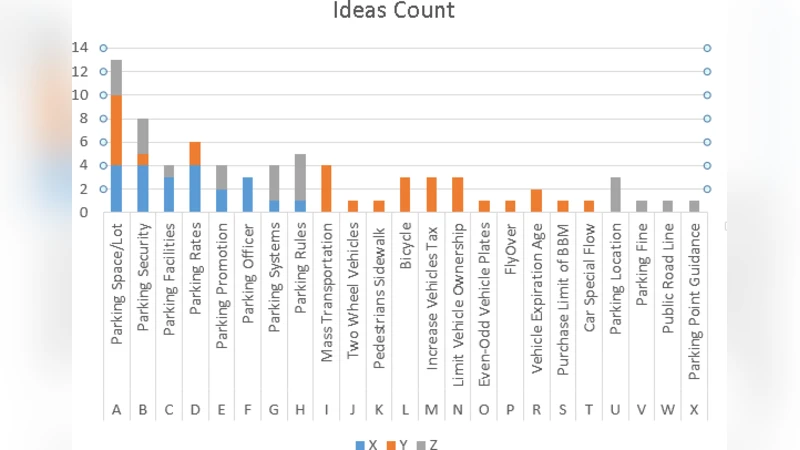
The subject knowledge management systems is one of the main courses in information systems study program, faculty of computer science. This course is offered at A concentration for students in semester 5 (five). Knowledge consists of knowledge explicit and tacit. To capture tacit knowledge, it can be done by involving a number of methods, namely: 1) Brainstorming, and 2) Nominal Group Technique. The study also involves a number of social information technologies, such as: 1) Facebook, 2) WordPress, 3) DropBox, and 4) YouTube. The topic for the theme of knowledge is how to reduce traffic jam. After passing 2 (two) simulation rounds, this research get 8 (eight) ideas suggestion related to vehicle parking in an effort to reduce traffic jam. The tacit knowledge capture simulation with NGT is able to provide acceptable suggestions by all the panelists involved. The use of social information technology in this study also received a very good response from the panelists.
💡 Research Summary
The paper reports an instructional experiment conducted in a Knowledge Management Systems course for fifth‑semester Computer Science students. Its primary aim was to capture tacit knowledge—knowledge that resides in individuals’ experiences and intuition—by using the Nominal Group Technique (NGT) and to translate that knowledge into concrete ideas for reducing urban traffic congestion. The authors combined NGT, a structured group decision‑making method, with four widely used social information technologies (Facebook, WordPress, Dropbox, and YouTube) to facilitate collaboration, documentation, and feedback throughout the process.
Methodology
A total of 12‑15 students were recruited as a panel. After a brief orientation on NGT and the digital tools, the experiment proceeded in two simulation rounds. In the first round, participants individually wrote down ideas for alleviating traffic jams, then shared them in a round‑robin fashion, clarified each suggestion, and finally voted to rank the ideas. The results were posted to a closed Facebook group for asynchronous discussion, while detailed write‑ups were uploaded to a WordPress site. Supporting files (diagrams, data tables, and short video prototypes) were stored on Dropbox, and short demonstration videos were published on YouTube. The second round revisited the top‑ranked ideas, encouraged refinement, and repeated the voting and ranking steps. After the two rounds, a post‑session questionnaire measured participants’ satisfaction with the NGT process, the digital platforms, and perceived feasibility of the generated ideas.
Results
Eight actionable ideas emerged, all centered on optimizing vehicle parking as a lever for traffic‑flow improvement. The ideas included: (1) a real‑time parking‑availability mobile app linked to city traffic management, (2) a shared‑parking marketplace that matches drivers with under‑utilized spaces, (3) differential parking fees to incentivize off‑peak usage, (4) discounted parking for users of public transit, (5) expanded electric‑vehicle charging stations in parking lots, (6) automated detection of illegal parking with driver notifications, (7) a reservation system for high‑demand parking zones, and (8) adaptive traffic‑signal control that responds to parking‑lot inflow/outflow patterns. Participants rated the NGT process an average of 4.5 out of 5 and the social‑technology suite 4.6 out of 5, indicating strong approval. The perceived feasibility of the ideas scored 3.9 out of 5, suggesting optimism about real‑world implementation.
Analysis and Discussion
The study demonstrates that NGT can effectively externalize tacit knowledge in a student setting, overcoming the dominance and passivity problems often associated with unstructured brainstorming. By forcing each participant to contribute ideas before group discussion, NGT ensures equal voice and produces a richer pool of suggestions. The integration of familiar digital platforms further amplified collaboration: Facebook facilitated rapid, informal exchanges; WordPress served as a living repository for structured documentation; Dropbox ensured version‑controlled file sharing; and YouTube allowed visual prototyping, which helped participants better understand and critique each proposal.
However, the authors acknowledge several limitations. The sample is confined to a single discipline and semester, limiting external validity. Only two NGT cycles were conducted, which may not be sufficient to exhaust the idea space for a complex problem like traffic congestion. Moreover, the study stops at idea generation; no pilot implementation or impact assessment was performed, leaving the actual effectiveness of the proposals untested. Future work is suggested to involve multidisciplinary panels (e.g., urban planning, transportation engineering, public policy), increase the number of NGT rounds, and move from concept to prototype testing in a real traffic environment.
Implications
From an educational perspective, the experiment offers a replicable model for embedding knowledge‑management practices into curricula. It shows that combining structured group techniques with readily available social technologies can turn abstract tacit knowledge into concrete, socially relevant outputs. The approach is scalable and adaptable to other domains, suggesting a pathway for higher‑education institutions to foster student‑centered, problem‑oriented learning while simultaneously generating ideas that could inform municipal policy.
In conclusion, the paper provides evidence that NGT, supported by social information technologies, is a viable method for capturing and operationalizing tacit knowledge among computer science students. The resulting parking‑focused traffic‑jam mitigation ideas illustrate the practical value of this methodology, and the positive participant feedback underscores its potential as a pedagogical tool for knowledge‑management education.
Comments & Academic Discussion
Loading comments...
Leave a Comment