Performance of Turbo Coded OFDM Under the Presence of Various Noise Types
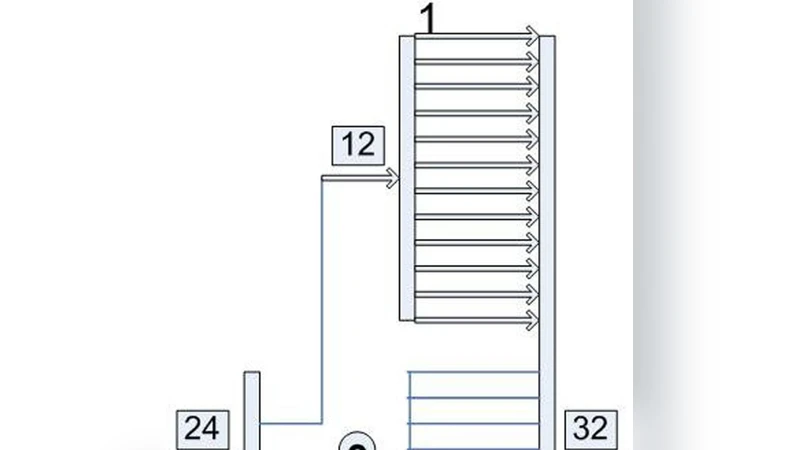
A telecommunication system uses carriers in order to transmit information through a cable or wirelessly. If each time only one carrier is transmitted, then the system s signal will not be immune to frequency selective fading. If frequency selective fading includes the working frequency of the system, then the wireless link will not be established. Orthogonal frequency division multiplexing OFDM is the primary solution for coping with inter signal interference and frequency selective fading. Many carriers can be produced by splitting a fast information stream to slower data series. Different orthogonal frequencies carry slower data series. System s performance can be further enhanced with the utilization of turbo codes. Turbo codes make the system more immune to noise effects with excellent BER results. This paper presents the thorough analysis of a turbo coded OFDM scheme using a PCCC technique in the presence of a channel which includes AWGN, phase noise, Rayleigh fading, Rician fading and Doppler shift.
💡 Research Summary
The paper investigates the performance of an OFDM transmission system enhanced with Parallel Concatenated Convolutional Codes (PCCC), a form of turbo coding, under a comprehensive set of realistic channel impairments. The authors first outline the inherent vulnerability of single‑carrier systems to frequency‑selective fading and motivate the use of OFDM to spread data across many orthogonal sub‑carriers. While OFDM mitigates inter‑symbol interference, it remains susceptible to additive white Gaussian noise (AWGN), phase noise, multipath fading (both Rayleigh and Rician), and Doppler shifts caused by mobility. To strengthen error resilience, the study integrates a rate‑1/2 PCCC encoder consisting of two identical 8‑state convolutional encoders (constraint length 7) separated by a random interleaver. At the receiver, a log‑MAP (L‑log‑M) decoder performs six iterative exchanges of extrinsic information, producing soft decisions for each bit.
The simulation environment uses a 64‑point FFT, 16‑QAM modulation, and a cyclic prefix of length 16. Each Monte‑Carlo run transmits 10,000 OFDM symbols, and the signal‑to‑noise ratio is swept from 0 dB to 20 dB in 2 dB steps. Channel models are implemented as follows: (1) AWGN provides a baseline noise floor; (2) phase noise follows a 1/f spectrum to emulate local‑oscillator instability; (3) Rayleigh fading is modeled with zero‑mean complex Gaussian taps; (4) Rician fading adds a deterministic line‑of‑sight component with a K‑factor of 6 dB; (5) Doppler spread is generated using the Jakes model with maximum Doppler frequencies up to 100 Hz, corresponding to vehicle speeds around 54 km/h. All impairments can be combined to form a composite channel.
Results show that in pure AWGN the turbo‑coded OFDM reaches a BER of 10⁻⁵ at roughly 2 dB, delivering about a 3 dB coding gain over uncoded OFDM. Phase noise up to 0.1° RMS has negligible impact, confirming the robustness of the iterative decoder to phase perturbations. Under Rayleigh fading, an additional 3–4 dB of SNR is required to maintain the same BER, but the system still outperforms uncoded counterparts by a large margin. Rician fading improves performance by roughly 1 dB relative to Rayleigh, reflecting the benefit of a dominant line‑of‑sight path. Doppler shifts up to 100 Hz cause only minor degradation, illustrating that six decoder iterations adequately track time‑varying channel conditions. When all impairments are present simultaneously, the system achieves BER ≈ 10⁻³ at about 5 dB, corresponding to a net gain of 6–7 dB compared with conventional OFDM without turbo coding.
The authors conclude that PCCC‑based turbo coding dramatically enhances OFDM robustness across a wide range of realistic noise and fading scenarios, making it a strong candidate for high‑mobility and high‑frequency applications such as vehicular communications, drone links, and 5G/mmWave deployments. Future work is suggested in the areas of hybrid LDPC‑turbo schemes, adaptive interleaver designs, and hardware prototyping to validate the simulated gains in real‑world testbeds.
Comments & Academic Discussion
Loading comments...
Leave a Comment