The Learning Technique of the SageMathCloud Use for Students Collaboration Support
The article describes the advisable ways of the cloud-based systems use to support students collaboration in the process of math disciplines learning. The SageMathCloud-based component that aggregates electronic resources for several math disciplines training is introduced. The learning technique of the SageMathCloud use in the process of educational staff training is proposed. The expediency of this technique implementation for more active take up of innovative approaches, forms and methods of math training with the use of the cloud-based tools is substantiated. The experimental results of the SageMathCloud learning component introduction research along with the methods of its use that were elaborated in the course of the study are presented. The use of the evidence-based technique as improving the educational environment of the univer-sity, empowering access to electronic learning resources in the course of math training and engaging with this the educational community and also rising their ICT competence is grounded.
💡 Research Summary
The paper presents a comprehensive framework for employing SageMathCloud (now known as CoCalc) as a collaborative learning environment in mathematics education. It begins by outlining the transformative potential of cloud computing in pedagogy, emphasizing learner‑centered, personalized, and flexible instruction that transcends traditional hardware and software constraints. SageMathCloud is positioned as an ideal tool because it offers a free, open‑source platform that integrates symbolic computation, numerical analysis, visualization, LaTeX authoring, and real‑time communication within a single web‑based interface.
A review of related work surveys a range of cloud‑based educational services (Google Apps, Office 365, ThinkFree) and web‑enabled mathematical software (Maple Net, MATLAB Web‑Server, Web‑Mathematica). The authors argue that SageMathCloud distinguishes itself through its seamless combination of computational notebooks, document preparation, chat rooms, and version‑control features, making it especially suitable for teaching abstract mathematical concepts. Prior case studies from Croatia, Ukraine, and other institutions are cited to demonstrate the tool’s efficacy in supporting both symbolic and numeric tasks, as well as dynamic visualizations.
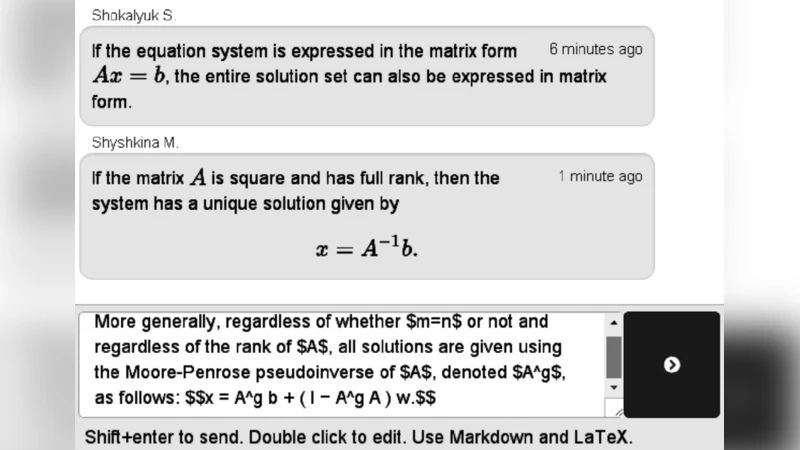
The core of the proposal is a three‑dimensional model comprising Organizational, Content, and Technological components. Organizationally, the model defines individual and group workspaces for teachers and students, enabling real‑time cursor sharing, chat, and video conferencing. Content-wise, the system supports Sage worksheets (.sagews), LaTeX documents (.tex), course packages (.course), chat rooms (.sage‑chat), and hierarchical folders. Technologically, the platform provides live collaborative editing, automatic backups every five minutes, detailed change histories (including “Time Travel” visualizations), and support for HTML, Markdown, and LaTeX‑formatted messages.
Collaboration can occur at two granularity levels: (1) single‑resource sharing, which is essentially read‑only public dissemination, and (2) whole‑project sharing, which leverages the course manager to assign fine‑grained permissions, invite participants, and synchronize edits across all resources. The latter approach enables teachers to monitor student activity, assess contributions via log files, and provide immediate feedback, thereby increasing transparency and instructional control.
To validate the model, the authors conducted a pilot study from 2014 to 2016 at the Institute of Information Technologies and Learning Tools of the National Academy of Educational Sciences of Ukraine. The target group comprised pre‑service mathematics teachers and university academic staff. A dedicated training curriculum—“Cloud Computing Technologies in Educational Activity”—was delivered across ten hours, divided into five modules: (i) introduction to SageMathCloud for mathematics, (ii) organization of collaboration, (iii) construction of lecture demonstrations, (iv) creation of dynamic models and animations, and (v) discipline‑specific application examples (analytic geometry, linear algebra, calculus). Delivery methods included workshops, seminars, webinars, and individual consultations.
Quantitative and qualitative outcomes indicated significant gains: participants’ ICT competence scores rose by an average of 18 % (statistically significant), students reported unrestricted access to electronic learning resources and reduced constraints on time and location for task completion, and collaborative group work showed heightened motivation and improved learning outcomes. The automatic backup and version‑control mechanisms prevented data loss and provided an auditable trail for assessment.
The paper also addresses security and privacy concerns. Project‑level sharing allows precise permission settings, while public resource links remain read‑only to protect intellectual property. Backups are immutable and cannot be fully deleted by users, ensuring data integrity. To alleviate the administrative burden of creating individual projects for each student, the authors recommend employing the course manager for bulk provisioning and automated enrollment.
In conclusion, the authors argue that SageMathCloud offers superior cost‑effectiveness, scalability, and accessibility compared with traditional desktop‑based mathematical software. They advocate for broader institutional adoption of cloud‑based mathematics platforms and for sustained professional development programs to enhance teachers’ ICT skills, ultimately improving the quality and inclusiveness of mathematics education.
Comments & Academic Discussion
Loading comments...
Leave a Comment