Application of Blockchain in Booking and Registration Systems of Securities Exchanges
Securities exchange being digitalised and online, security of information and data has become a major concern. Blockchain (BC) technology, being distributed and immutable in nature, has proved to the “Trust Machine” eliminating the need for third-parties. Authors of this paper investigate how Blockchain can be used to secure stock exchange transactions, with an especial focus to the technological as well as legal aspects of such applications. Considering the intricate operational structure of the securities exchange, the research proposes to design, develop and implement a hybrid BC, customised according to the need of the respective stock exchange. The study suggests that the use of such BC can bring many benefits which the other technologies currently being used cannot offer. However, during the design process of any such application using BC, the relevant laws and regulations of the corresponding country need to be considered.
💡 Research Summary
The paper investigates the application of blockchain technology to the booking, registration, and transaction processes of securities exchanges, aiming to enhance data security, integrity, and trustworthiness in an increasingly digital market environment. It begins by highlighting the vulnerabilities inherent in traditional exchange infrastructures, which rely heavily on centralized databases and multiple intermediaries for order matching, clearing, settlement, and regulatory reporting. These centralized systems are prone to single points of failure, data tampering, and dependence on third‑party trust.
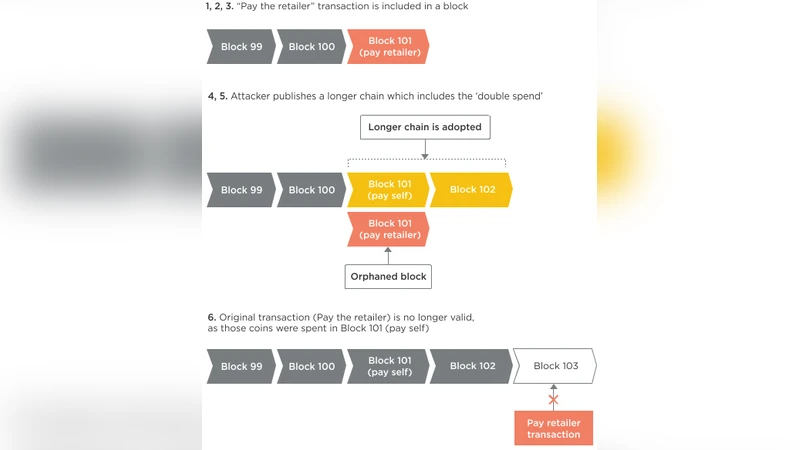
The authors then provide a concise yet thorough overview of blockchain fundamentals, including distributed ledger architecture, cryptographic hash functions, Merkle trees, asymmetric digital signatures, and consensus mechanisms such as Proof‑of‑Work (PoW). Using Bitcoin’s blockchain as a reference model, they illustrate how PoW and the longest‑chain rule prevent double‑spending attacks and ensure immutability by requiring substantial computational effort to alter any block. The paper also discusses the three primary blockchain classifications—public (permissionless), private (permissioned), and consortium (permissioned but multi‑entity)—and evaluates their suitability for exchange environments.
Given the high‑throughput, low‑latency, and regulatory‑compliance requirements of securities markets, the authors argue that a permissioned consortium blockchain is the most appropriate choice. In such a network, only authorized participants—typically the exchange itself, clearing houses, custodians, and regulators—operate as nodes, thereby preserving privacy while still benefiting from distributed consensus and fault tolerance.
A hybrid architecture is proposed in which only essential transaction metadata (hashes, timestamps, identifiers) are stored on‑chain, while the full transaction details reside off‑chain in encrypted databases. This design balances the blockchain’s immutability with the need to comply with data‑protection statutes that may require the ability to delete or modify personal data. Smart contracts are employed to automate order matching, clearing, settlement, and regulatory reporting, reducing manual intervention and operational risk. To address performance concerns, the authors suggest a hybrid consensus model that combines PoW for security with Practical Byzantine Fault Tolerance (PBFT) for faster finality among the limited set of permissioned nodes.
Legal and regulatory considerations are examined in depth. The paper reviews securities legislation, anti‑money‑laundering (AML) rules, electronic signature laws, and data‑privacy regulations across jurisdictions. It acknowledges the tension between blockchain’s “append‑only” nature and statutory requirements for data retention periods, audit trails, and the right to be forgotten. The authors propose solutions such as key‑revocation (making encrypted data effectively unreadable) and off‑chain storage of sensitive fields, ensuring that the on‑chain record remains a verifiable proof without exposing protected information.
Implementation challenges are identified, including the computational and energy costs of consensus algorithms, integration complexity with legacy exchange systems, and the need for robust governance frameworks. To mitigate these issues, the paper recommends a phased pilot approach: initially deploying blockchain for a limited set of functions (e.g., post‑trade audit trails) and gradually expanding to full order‑to‑settlement workflows. Node placement strategies are discussed, advocating for high‑availability data centers for core nodes and cloud‑based scalability for auxiliary nodes, thereby eliminating single points of failure.
Risk analysis covers potential attacks such as collusion among malicious nodes, 51 % attacks, and attempts to forge audit records. The authors demonstrate, through scenario analysis, that the combined security of cryptographic hashing, Merkle proofs, and consensus rules makes such attacks computationally prohibitive. They also stress the importance of a transparent governance model, with clearly defined roles for the exchange, regulators, and technology providers, to manage protocol upgrades, key management, and compliance monitoring.
In conclusion, the study finds that blockchain can substantially improve the resilience, transparency, and efficiency of securities exchange operations when implemented as a permissioned consortium network with a hybrid on‑chain/off‑chain data model and a mixed consensus mechanism. While technical, legal, and operational hurdles remain, the proposed framework offers a viable roadmap for exchanges seeking to modernize their infrastructure, reduce reliance on trusted intermediaries, and meet evolving regulatory expectations. Future research directions include optimizing consensus algorithms for lower latency, integrating advanced privacy‑preserving techniques such as zero‑knowledge proofs, and harmonizing international regulatory standards to enable cross‑border interoperability of blockchain‑based exchange platforms.
Comments & Academic Discussion
Loading comments...
Leave a Comment