Using mobile service for supply chain management : a survey and challenges
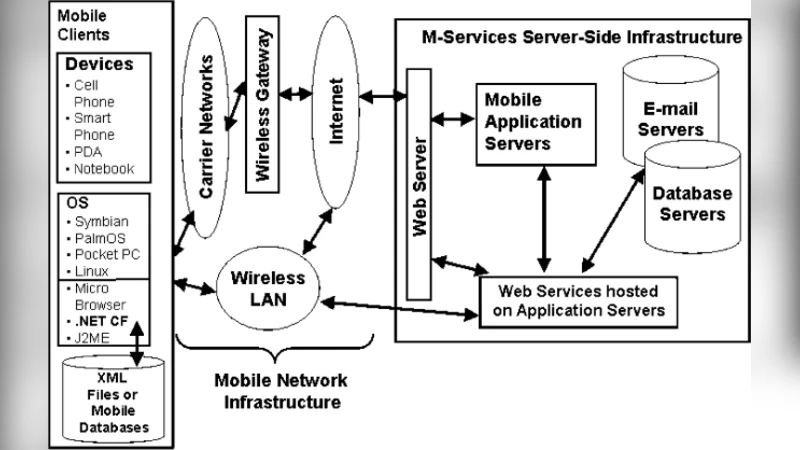
Efficient supply chain management calls for robust analytical and optimal models to automate its process. Therefore, information technology is an essential ingredient that integrates these tools in supply chain. With the emergence of wireless, the high technologies and the reliability of mobile devices, mobile web services draw a promising horizon facing economic challenges. They offer new personalized services to each actor in the supply chain on their mobile devices at anytime and anywhere. This paper presents a literature review of mobile web service implemented on the industry context based on the supply chain management approach. First, a large definition of mobile web service and some proposal architecture are exposed. Then the paper discuss some generic related work on mobile web service focusing on supply chain management. Finally some challenges on m-service oriented supply chain management are proposed.
💡 Research Summary
The paper provides a comprehensive literature survey on the use of mobile web services (often abbreviated as “m‑services”) within the context of supply chain management (SCM). It begins by emphasizing that modern SCM requires real‑time coordination among suppliers, manufacturers, distributors, and customers, and that information technology—particularly wireless and mobile technologies—has become indispensable for achieving this coordination. Mobile web services are presented as an evolution of traditional web services, offering the same platform‑independent, service‑oriented capabilities while adding the crucial attributes of mobility, ubiquity, and on‑demand access via smartphones, tablets, and other handheld devices.
In the second section the authors define mobile web services and review several architectural patterns that have been proposed in the literature. Three principal families are identified: (1) proxy‑based architectures, where a high‑performance server mediates between mobile clients and backend services, off‑loading XML/SOAP parsing and reducing bandwidth consumption on the device; (2) peer‑to‑peer (P2P) architectures, which enable direct device‑to‑device communication and can maintain service continuity when the central network is unavailable; and (3) asymmetric architectures that combine cloud and edge computing to distribute processing and storage. The paper also introduces a classification matrix based on (i) target users (consumer‑oriented vs. business‑oriented) and (ii) network connectivity (connected vs. disconnected). This matrix helps to clarify the design trade‑offs between always‑online services that assume reliable connectivity and offline‑first services that must synchronize data later.
A substantial portion of the manuscript is devoted to a systematic review of 28 research articles published between 2005 and 2014. The authors categorize each work along six analytical axes: architecture, discovery, semantic description, invocation/composition, quality‑of‑service (QoS), and security. The resulting table shows that early efforts focused on lightweight representations (e.g., HandHeld Flexible Representation) and alternative transport protocols, while later studies explored semantic matchmaking, cloud‑based discovery as a Service (DaaS), agent‑based frameworks, and security mechanisms for mobile ad‑hoc networks. The review highlights that while many proposals address individual technical challenges, few integrate all aspects (e.g., a full‑stack solution that simultaneously offers efficient architecture, robust discovery, QoS guarantees, and strong security).
Section three connects the mobile web service literature to concrete SCM applications. The authors outline the typical SCM processes—procurement, production, distribution—and illustrate how mobile services can support each step: real‑time inventory visibility for shop‑floor operators, mobile order entry for sales representatives, on‑site status updates for logistics personnel, and instant customer notifications. The research methodology is described as a pure literature survey, with the authors extracting criteria for evaluating papers in two categories: (a) SCM process coverage and (b) m‑service analytical dimensions. The review of industry reports (e.g., OCAD University’s “Mobile Innovation in Service”) underscores that, despite clear benefits, the adoption of mobile services for intra‑organizational SCM remains limited and fragmented.
The final section enumerates the key challenges that must be overcome for mobile‑enabled SCM to mature:
- Scalability and Heterogeneity – Supporting a wide variety of devices, operating systems, and network conditions without sacrificing performance.
- Security and Privacy – Protecting data in transit over wireless links, authenticating both service providers and consumers, and ensuring compliance with corporate policies. Traditional WS‑Security mechanisms are often too heavyweight for mobile contexts.
- Standardization – The lack of universally accepted service description languages and discovery protocols for mobile environments hampers interoperability.
- Real‑Time Synchronization – Offline operation is essential for field workers, but reconciling divergent data updates when connectivity is restored remains an open problem.
- User Experience – Designing intuitive interfaces that respect limited screen real estate, battery life, and intermittent connectivity.
- Cost‑Effectiveness – Leveraging cloud and edge resources to minimize infrastructure expenses while delivering low latency.
The authors conclude that while the survey successfully maps the current research landscape, it suffers from a paucity of empirical validation. Future work should involve pilot deployments in real supply chains, quantitative measurement of performance gains (e.g., order‑to‑delivery cycle reduction, inventory accuracy improvement), and the development of a standardized, security‑aware, lightweight SOA framework tailored for mobile devices. By bridging the gap between academic prototypes and industrial practice, mobile web services can become a cornerstone of next‑generation, agile supply chain management.
Comments & Academic Discussion
Loading comments...
Leave a Comment