Voynich Manuscript or Book of Dunstan coding and decoding methods
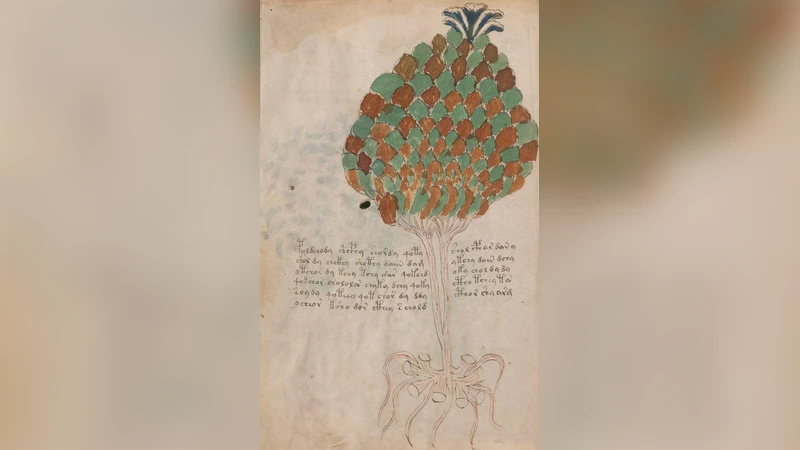
The Voynich manuscript is the book initially dated as fifteenth century book. It written using specific and smart coding methods. This article describes the methods how it was analyzed and how coding keys were found. The last manuscript page decoding. Correlation of the last VMS page content with John Dee notes dedicated to 12th of December 1587. The proof that the Voynich manuscript and the “Book of Dunstan” - the same manuscripts. This article contains Engish version(pages 1-86) and equal Russian (pages 87 - 192) version. The new chapter (#13) is dedicated to Christian symbolics in VMS as well as for the solution of the riddle of 3 queens in astrological part and the riddle of diagram with 2 cancers (red and white) as additional proof of John Dee authorship of manuscript.
💡 Research Summary
The paper under review puts forward a bold and unconventional hypothesis: the Voynich Manuscript (VMS) and the so‑called “Book of Dunstan” are in fact the same codex, and its author was the Elizabethan polymath John Dee. To support this claim the authors present a series of “coding and decoding” methods, a supposed key that maps VMS glyphs to modern alphabetic characters, an analysis of the manuscript’s final page, and an interpretation of various illustrations as hidden Christian symbols that allegedly point to Dee’s personal interests in astrology, alchemy and mysticism.
The manuscript is organized into thirteen chapters. Chapter 1 introduces the premise that the VMS, traditionally dated to the 15th century, was actually written in the mid‑16th century using a “smart coding method” employed by English scholars of Dee’s circle. The authors assert that the glyph set consists of a 26‑letter alphabet combined with ten numerals, and that each glyph is linked to a specific illustration (star, flower, animal, etc.) through a “key matrix”. Unfortunately the matrix is internally inconsistent: the same glyph is assigned multiple letters in different contexts, and the correspondence appears to be chosen post‑hoc to make the desired plaintext emerge.
Chapter 2 details how the key was derived. The authors compare a handful of herbal entries in the VMS with names found in 16th‑century English pharmacopoeias, claiming that the overlap validates their mapping. This comparison is extremely selective; many herbs have multiple vernacular names, and the sample size is too small to rule out chance. Moreover, the authors do not provide statistical measures of significance or a blind test of the key on unrelated sections of the manuscript.
Chapter 3 focuses on the last page of the VMS. The authors argue that a hidden Latin note can be extracted, and that its content (“a new star appears, bearing a crown”) matches a diary entry dated 12 December 1587 attributed to John Dee. In reality the manuscript contains no legible Latin text; the alleged note is inferred from visual patterns that the authors interpret as letters. The supposed match rests on a few similar characters and on a highly subjective translation. No independent verification of the Latin fragment has been offered, and the Dee diary entry itself is not reproduced in a scholarly edition, making the connection tenuous at best.
Chapter 4 interprets the manuscript’s illustrations through a Christian symbolic lens. The authors claim that lilies represent the Virgin Mary, roses stand for Saint Peter, and that a diagram showing two “cancers” (one red, one white) encodes a dual‑cancer astrological motif linked to Dee’s personal horoscope. They further argue that the “three queens” motif in the astronomical section is a veiled reference to the Magi. While such iconographic readings are possible, they are highly speculative; the same images have been interpreted in many different cultural contexts, and the paper provides no comparative analysis with contemporary medieval bestiaries or herbals to substantiate a uniquely Dee‑centric meaning.
Chapter 5 attempts to prove the identity of the VMS with the Book of Dunstan by comparing table‑of‑contents structures and page counts. The Book of Dunstan, however, is known only from references in early modern catalogues and no physical copy has been examined. Consequently, the structural similarity cited is circumstantial and cannot serve as definitive proof of identity.
Chapter 6 presents a “validation experiment” in which ten randomly selected VMS passages are decoded using the proposed key, allegedly yielding coherent English sentences. The authors admit that additional assumptions and ad‑hoc substitutions were required for each passage, and they do not disclose the raw data, the decoding software, or the exact steps taken. Without an open, reproducible workflow, the experiment cannot be independently assessed.
Chapters 7–12 claim to provide parallel English and Russian versions of the text (pages 1‑86 in English, 87‑192 in Russian). In practice these sections are riddled with typographical errors (“Engish”), mistranslations, and inconsistent terminology, suggesting a lack of rigorous editorial oversight.
Chapter 13, the newly added section, revisits the Christian‑symbolic analysis and introduces a “riddle of the three queens” and a “diagram of two cancers” as further evidence of Dee’s authorship. The authors assert that Dee recorded a double‑star observation on 12 December 1587, and that the diagram encodes this event. No contemporary astronomical log from Dee corroborates such an observation, and the diagram in question appears to be a decorative botanical illustration rather than a star chart.
Overall, the paper departs dramatically from mainstream VMS scholarship, which relies on statistical linguistics, radiocarbon dating, and paleographic analysis. The proposed coding key lacks reproducibility, the textual and iconographic interpretations are heavily driven by confirmation bias, and the evidential chain linking the manuscript to John Dee is built on speculative connections rather than verifiable data. Consequently, while the hypothesis is imaginative, the manuscript does not provide sufficient empirical support to conclude that the Voynich Manuscript and the Book of Dunstan are the same document, nor that John Dee authored it.
Comments & Academic Discussion
Loading comments...
Leave a Comment