Eco-Route: Recommending Economical Driving Routes For Plug-in Hybrid Electric Vehicles
High fuel consumption cost results in drivers’ economic burden. Plug-In Hybrid Electric Vehicles (PHEVs) consume two fuel sources (i.e., gasoline and electricity energy sources) with floating prices. To reduce drivers’ total fuel cost, recommending economical routes to them becomes one of the effective methods. In this paper, we present a novel economical path-planning framework called Eco-Route, which consists of two phases. In the first phase, we build a driving route cost model (DRCM) for each PHEV (and driver) under the energy management strategy, based on driving condition and vehicles’ parameters. In the second phase, with the real-time traffic information collected via the mobile crowdsensing manner, we are able to estimate and compare the driving cost among the shortest and the fastest routes for a given PHEV, and then recommend the driver with the more economical one. We evaluate the two-phase framework using 8 different PHEVs simulated in Matlab/Simulink, and the real-world datasets consisting of the road network, POI and GPS trajectory data generated by 559 taxis in seven days in Beijing, China. Experimental results demonstrate that the proposed model achieves good accuracy, with a mean cost error of less 8% when paths length is longer than 5 km. Moreover, users could save about 9% driving cost on average if driving along suggested routes in our case studies.
💡 Research Summary
The paper introduces Eco‑Route, a two‑phase framework designed to recommend the most economical driving routes for Plug‑in Hybrid Electric Vehicles (PHEVs). The motivation stems from the dual‑fuel nature of PHEVs—gasoline and electricity—whose prices fluctuate, imposing a significant economic burden on drivers. Traditional fuel‑efficiency routing methods, developed for pure gasoline vehicles, are inadequate for PHEVs because the optimal route depends not only on distance or travel time but also on the vehicle’s energy management strategy and the state of charge (SOC) of its battery.
Phase 1 builds a Driving Route Cost Model (DRCM) that quantifies the total monetary cost (gasoline plus electricity) of traversing any given path. The model starts from vehicle dynamics: the required tractive force f(t) is decomposed into rolling resistance, gravitational component, aerodynamic drag, and acceleration resistance. These forces are expressed as functions of vehicle speed v(t), road slope θ, friction coefficient μ, air‑drag coefficient φ, frontal area A, and vehicle mass m. The total power demand is split between the internal combustion engine (p_eng(t)) and the battery (p_batt(t)). The split ratio μ (not to be confused with the friction coefficient) is derived from the Equivalent Consumption Minimization Strategy (ECMS), which seeks to minimize an equivalent fuel consumption metric that converts electric energy into an equivalent gasoline amount using a predefined equivalence factor (s ≈ 2.35 in the experiments). The instantaneous cost rate drc(t) combines gasoline price n (CNY/L) and electricity price m (CNY/kWh) with the respective power consumptions, yielding a cost expressed directly in Chinese yuan.
Phase 2 leverages Mobile Crowdsensing (MSC) to collect real‑time traffic data from GPS‑enabled devices. Using OpenStreetMap (OSM) for the road network and a large dataset of 559 taxis’ trajectories over seven days in Beijing, the authors extract two candidate routes for each origin‑destination pair: the shortest distance route and the fastest travel‑time route. For each candidate, the DRCM integrates drc(t) over the travel interval to compute the total cost DRC. By comparing the two DRC values, Eco‑Route recommends the cheaper alternative.
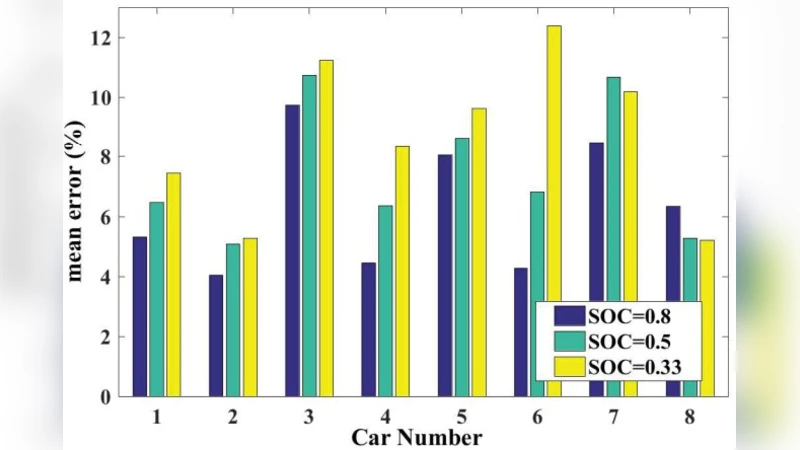
The authors validate the framework with eight distinct PHEV models simulated in Matlab/Simulink. They calibrate model coefficients (k₁–k₆) for each vehicle using the simulated power and fuel consumption data. Empirical results show that when the path length exceeds 5 km, the mean absolute cost error stays below 8 %. Moreover, in case studies the recommended routes achieve an average fuel‑cost saving of about 9 % compared with the default (shortest or fastest) routes. A key insight is the strong dependence of the optimal route on the battery SOC: when SOC > 0.6, the shortest route tends to be cheaper, whereas lower SOC values favor the fastest route because the engine must supply more power, making time‑saving more valuable than distance reduction.
The paper also discusses limitations: it assumes static electricity and gasoline prices, ignores charging‑station availability, and treats ECMS as the sole energy‑management policy. Future work is suggested to incorporate dynamic pricing, stochastic traffic prediction, and multi‑objective optimization that includes charging logistics.
Overall, Eco‑Route represents a novel contribution to intelligent transportation for hybrid vehicles, demonstrating that integrating vehicle‑specific energy management models with real‑time crowdsensed traffic data can yield actionable, cost‑saving routing advice that outperforms conventional distance‑ or time‑based methods.
Comments & Academic Discussion
Loading comments...
Leave a Comment