Ethical Implications of Social Internet of Vehicles Systems
The core concept of IoT is to equip real world objects with computing, processing and communicating capabilities to enable socializing between them. Internet of Vehicles (IoV) is an adherent of IoT that has realized significant advancements using communication technologies. Vehicles connected through Internet are capable of sharing information that can substantially enhance the quality of traffic on roads. Social Internet of Things (SIoT) is an instance of IoT that deals specifically in socialization of connected objects. SIoT enables the notion of Social Internet of Vehicles (SIoV) where vehicles are the key entities for sharing information between themselves and the infrastructure (commonly known as Road Side Units (RSUs)). Vehicles in SIoV socialize by exchanging data such as traffic congestions, weather conditions, infotainment, vacant parking slots, alternate routes and discount coupons for restaurants etc. In SIoV, vehicles can communicate with other vehicles and infrastructure through traditional communication technologies like Wi-Fi, Cellular networks or through Dedicated Short Range Communication (DSRC) etc. SIoV will be confronted with ethical dilemmas and expected to function in an ethically responsible manner. This paper highlights the ethical implications of SIoV systems. Vehicle to Vehicle (V2V) and Vehicle to Infrastructure (V2I) involves autonomous decision making that requires setting ethical and moral rules before taking verdict. The article discusses the lack of ethical guidelines in designing and deploying of SIoV systems that are of utmost importance. Finally, an addition to SIoV architecture is proposed to incorporate the ethical and moral principles for scheming the SIoV systems.
💡 Research Summary
**
The paper “Ethical Implications of Social Internet of Vehicles Systems” examines the emerging field of Social Internet of Vehicles (SIoV), where connected cars and roadside infrastructure (RSUs) exchange data such as traffic congestion, weather, parking availability, infotainment, and commercial offers. While the authors acknowledge the substantial benefits of Vehicle‑to‑Vehicle (V2V) and Vehicle‑to‑Infrastructure (V2I) communications for traffic efficiency and safety, they argue that autonomous decision‑making in these systems inevitably raises profound ethical questions that must be addressed before large‑scale deployment.
The authors begin by situating SIoV within the broader Internet of Things (IoT) and Internet of Vehicles (IoV) ecosystems, highlighting the evolution from traditional VANETs to socially aware vehicular networks. They cite statistics on road fatalities and the growing reliance on autonomous technologies, noting that even perfectly functioning autonomous vehicles will still encounter unavoidable crash scenarios. This observation leads to a discussion of machine ethics, referencing Asimov’s Three Laws of Robotics and a taxonomy of ethical agents (normative, ethical‑impact, implicit, and explicit agents). The paper stresses that a purely top‑down rule set (e.g., Asimov’s laws) cannot resolve all conflicts, while a purely bottom‑up learning approach may lack accountability and transparency.
To structure the ethical analysis, the authors adopt the PAPA framework (Privacy, Accuracy, Property, Accessibility) proposed by Richard Mason. They map each component of PAPA onto concrete SIoV concerns:
- Privacy: What personal data (owner identity, destination, passenger information) should a vehicle share?
- Accuracy: Who is liable if erroneous data leads to an accident?
- Property: Who owns the exchanged information and may monetize it?
- Accessibility: Under what conditions should accident‑related data be disclosed, and to whom?
The paper then dissects the SIoV architecture into three logical layers—Sensing, Network, and Application—and enumerates ethical risks at each layer in tabular form.
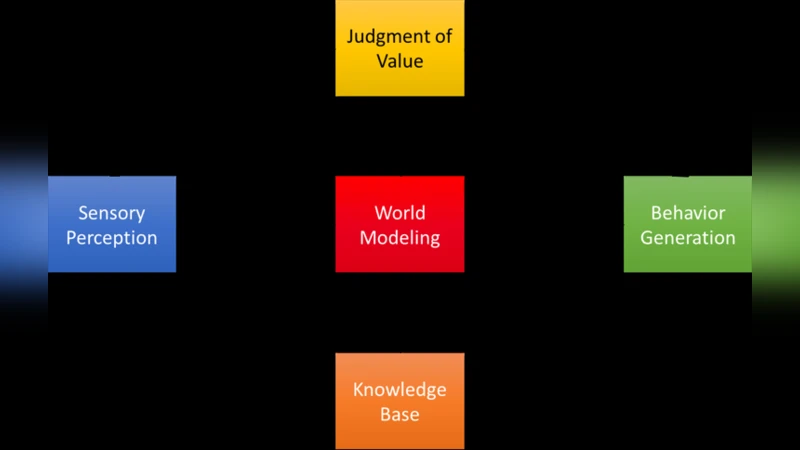
Sensing Layer: Involves physical entities (vehicles, sensors, drivers, passengers). Risks include invasive data collection (privacy), sensor failures or miscalibrations (accuracy), ambiguous data ownership (property), and unclear protocols for sharing crash‑related data (accessibility). The authors also reference NIST’s reference model for intelligent unmanned ground vehicles, emphasizing the need for a “Judgment of Value” component that can evaluate ethical trade‑offs in real time.
Network Layer: Covers V2V/V2I communication technologies (Wi‑Fi, cellular, DSRC, 6LoWPAN). Ethical concerns focus on security vulnerabilities that could enable malicious data injection, the fairness of bandwidth allocation, and the transparency of routing decisions that may prioritize certain vehicles over others.
Application Layer: Encompasses end‑user services such as navigation, infotainment, social apps, and commercial offers. Here, algorithmic bias, discriminatory routing, and the commercial exploitation of collected data are highlighted as major ethical challenges.
Based on this layered analysis, the authors propose an Ethical SIoV Architecture that integrates an “Ethical Engine” and an “Ethical Knowledge Base” into each layer. The Ethical Engine continuously performs three steps: (1) Situation awareness (world modeling), (2) Value judgment (using a hybrid of top‑down negative ethics—risk avoidance—and bottom‑up positive ethics—maximizing social welfare), and (3) Action selection (behavior generation). The Ethical Knowledge Base stores formalized ethical rules, which can be updated through stakeholder consensus or regulatory mandates. A transparent logging mechanism records every ethical decision, enabling post‑incident accountability and forensic analysis.
Implementation suggestions include:
- Blockchain‑based immutability for sensor data and decision logs, ensuring tamper‑proof evidence.
- Embedding ethical metadata into V2X messages, allowing receiving nodes to interpret the ethical context of transmitted data.
- Machine‑learning‑driven ethical reasoning, where reinforcement learning agents learn utility functions aligned with societal values while being constrained by hard‑coded safety rules.
- Standardized APIs for privacy consent management, giving vehicle owners granular control over which data categories are shared.
The paper concludes by emphasizing the current lack of comprehensive ethical guidelines for SIoV design, deployment, and regulation. It calls for interdisciplinary collaboration among engineers, ethicists, policymakers, and legal experts to refine the proposed architecture, develop international standards, and conduct real‑world pilots that evaluate both technical performance and ethical compliance. Future work is outlined as (i) formalizing a universal set of ethical norms for vehicular contexts, (ii) harmonizing these norms with diverse legal jurisdictions, and (iii) creating lightweight, real‑time ethical engines suitable for embedded automotive hardware.
In summary, the article provides a thorough technical‑ethical audit of SIoV systems, identifies concrete risks at each architectural layer, and offers a concrete, multi‑layered framework to embed ethical reasoning directly into the fabric of future connected and autonomous vehicular ecosystems.
Comments & Academic Discussion
Loading comments...
Leave a Comment