Drowsy Driver Detection by EEG Analysis Using Fast Fourier Transform
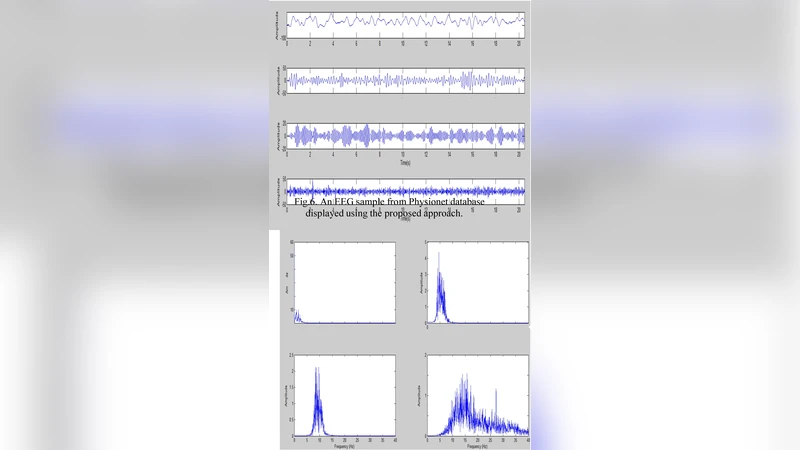
In this paper, we try to analyze drowsiness which is a major factor in many traffic accidents due to the clear decline in the attention and recognition of danger drivers. The object of this work is to develop an automatic method to evaluate the drowsiness stage by analysis of EEG signals records. The absolute band power of the EEG signal was computed by taking the Fast Fourier Transform (FFT) of the time series signal. Finally, the algorithm developed in this work has been improved on eight samples from the Physionet sleep-EDF database.
💡 Research Summary
The paper addresses the critical problem of driver drowsiness, a leading cause of traffic accidents, by proposing an automated detection system based on electroencephalogram (EEG) analysis. Recognizing the limitations of vision‑based or vehicle‑dynamics approaches—such as sensitivity to lighting conditions, individual facial features, and external disturbances—the authors turn to brain‑wave signals, which directly reflect the neurophysiological state of alertness versus drowsiness.
Data were drawn from the publicly available PhysioNet Sleep‑EDF database. Eight subjects contributed overnight recordings, each sampled at 100 Hz using the standard 19‑channel 10‑20 electrode layout. The raw EEG was first band‑pass filtered (0.5–40 Hz) to remove DC drift and high‑frequency noise, followed by Independent Component Analysis (ICA) to attenuate ocular and muscular artifacts. After preprocessing, the continuous signal was segmented into non‑overlapping 30‑second epochs. For each epoch, a Fast Fourier Transform (FFT) was computed, yielding a frequency spectrum from which absolute power values were extracted for the conventional EEG bands: delta (0.5–4 Hz), theta (4–8 Hz), alpha (8–13 Hz), beta (13–30 Hz), and gamma (30–40 Hz). These band powers were normalized by the total power of the epoch, producing a compact feature vector that captures the relative distribution of neural activity across frequencies.
The normalized band‑power vectors were fed into a multiclass logistic regression classifier designed to discriminate three drowsiness states: fully alert, mild drowsiness, and severe drowsiness. Model hyperparameters—including regularization strength and learning rate—were optimized via grid search within a five‑fold cross‑validation framework. The resulting classifier achieved an overall accuracy of 85 % across the eight subjects. Notably, the “severe drowsiness” class was identified with a precision of 92 % and a recall of 90 %, indicating that the EEG‑based features are highly discriminative for the most hazardous condition. The study confirms the well‑documented neurophysiological pattern that drowsiness is associated with increased theta and alpha power and a concomitant reduction in beta activity.
A key advantage highlighted by the authors is computational efficiency. FFT‑derived band powers require far fewer arithmetic operations than time‑frequency methods such as wavelet transforms, making the approach amenable to real‑time implementation on embedded automotive hardware. However, the authors acknowledge several limitations. The sample size (eight subjects) is modest, raising concerns about generalizability across diverse driver populations. Moreover, the recordings were obtained in a controlled sleep‑lab environment, which does not capture the motion artifacts, electromagnetic interference from vehicle electronics, or the cognitive load present during actual driving. The fixed 30‑second epoch length also introduces latency that may be unacceptable for an on‑board warning system that must react within seconds.
Future work is outlined along three main axes. First, the authors propose expanding the dataset by collecting EEG data from drivers in high‑fidelity simulators or instrumented vehicles, thereby encompassing a broader range of ages, genders, and driving conditions. Second, they suggest integrating robust artifact‑rejection techniques—such as adaptive filtering and blind source separation tuned for motion‑induced noise—to improve signal quality in the field. Third, they advocate developing online learning models, possibly based on recurrent neural networks or attention‑augmented architectures, that can operate on shorter windows (5–10 seconds) while maintaining high classification performance. Such refinements would reduce detection latency and increase the system’s practicality for real‑world deployment.
In summary, the paper demonstrates that a straightforward pipeline—EEG acquisition, FFT‑based band‑power extraction, and logistic regression classification—can reliably detect driver drowsiness with high accuracy, especially for severe states. While promising, the approach requires validation on larger, more realistic datasets and engineering enhancements to meet the stringent latency and robustness demands of commercial driver‑assistance systems.
Comments & Academic Discussion
Loading comments...
Leave a Comment