Introducing an innovative robot-based mobile platform for programming learning
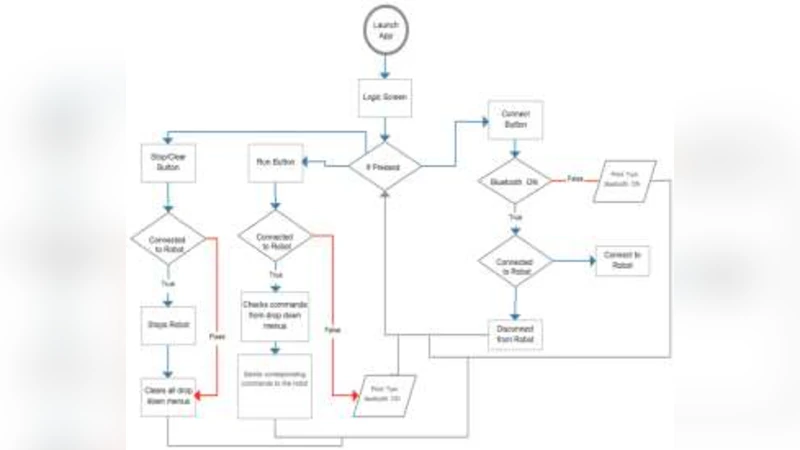
The present study introduces an Android based application that focuses on promoting students’ learning experience when interacting with Lego Mindstorms Robotic Kit NXT. A thorough investigation of the current literature reveals that there are numerous applications attempting to overcome the limitations of Lego platform which, however, appear to only partially succeed in significantly improving children’s engagement in fruitful learning. Their main limitations are that they either function on an elemental level or suffer from a general lack of creating effectively room for children to test their abilities and other curiosities. Aiming at confronting these limitations, the proposed android application, which is referred to as MyNXT, was created and presented. MyNXT offers direct access control along with the choice to program using simple linear logic through an easy and a user friendly environment with built in instructions for all ages. Concluding, the proposed application constitutes a stepping to an educating platform, which can facilitate the learning needs of children in contemporary times.
💡 Research Summary
**
The paper presents the design and development of an Android application called MyNXT, intended to improve the learning experience of students who work with the LEGO Mindstorms NXT robotic kit. The authors begin by reviewing the extensive literature on robotics in education, highlighting that while LEGO Mindstorms has been used for over two decades to foster creativity, problem‑solving, and collaborative learning, the existing programming environments (NXT‑G, leJOS, NBC/NXC, MATLAB toolboxes, etc.) are either too visual‑block‑oriented, require prior coding knowledge, or demand desktop computers, which limits their suitability for younger learners who lack instructor guidance.
In the literature review, the authors cite numerous studies demonstrating that robot‑aided learning boosts motivation, self‑efficacy, and cognitive development across primary, secondary, and university levels. They also note that most mobile control apps for NXT focus on direct tele‑operation (voice or tactile commands) and do not provide a way for children to author and upload their own programs. This gap motivates the creation of MyNXT, which the authors built using MIT App Inventor, a rapid‑prototyping platform for Android apps.
MyNXT’s core features are: (1) Bluetooth connectivity for real‑time robot control; (2) a linear‑logic programming model that replaces complex block‑based or text‑based coding with a simple “step‑by‑step” command list (e.g., Start → Move Forward → Turn → Stop); (3) age‑appropriate tutorials and built‑in example programs that guide users through basic concepts; and (4) immediate feedback on robot status after each command is sent. The user interface employs large icons and clear labels to accommodate children’s motor skills and to reduce cognitive load.
Methodologically, the paper conducts a systematic review of existing LEGO‑based educational tools and identifies three main limitations: (a) high entry barriers due to required prior programming knowledge, (b) lack of direct, on‑device program authoring, and (c) dependence on desktop environments that limit portability. MyNXT is positioned as a solution that addresses all three by offering an on‑device, intuitive authoring environment that can be used anywhere a smartphone is available.
However, the study does not include an empirical evaluation of MyNXT’s pedagogical impact. No pre‑test/post‑test design, control group comparison, or qualitative feedback from teachers and students is reported. Consequently, while the conceptual contribution is clear, the evidence for actual learning gains remains speculative. The authors acknowledge this limitation and propose future work that includes rigorous experimental validation, UI/UX refinements based on user testing, extension of compatibility to newer LEGO platforms (EV3, Spike Prime), and the development of teacher dashboards for classroom management.
In conclusion, the paper argues that MyNXT represents a “stepping‑stone” educational platform that lowers the barrier to entry for programming LEGO robots, thereby enabling younger learners to explore logical sequencing and basic robotics concepts without extensive prior knowledge or instructor intervention. The work is valuable for its practical focus on mobile accessibility and its attempt to bridge the gap between highly visual block languages and text‑based coding environments. Nonetheless, to substantiate its claims, subsequent research must provide robust, data‑driven assessments of learning outcomes, long‑term engagement, and scalability across diverse educational contexts.
Comments & Academic Discussion
Loading comments...
Leave a Comment