Smart GSM Based Home Automation System
This research work investigates the potential of Full Home Control, which is the aim of the Home Automation Systems in near future. The analysis and implementation of the home automation technology using Global System for Mobile Communication (GSM) m…
Authors: Rozita Teymourzadeh, Salah Addin Ahmed, Kok Wai Chan
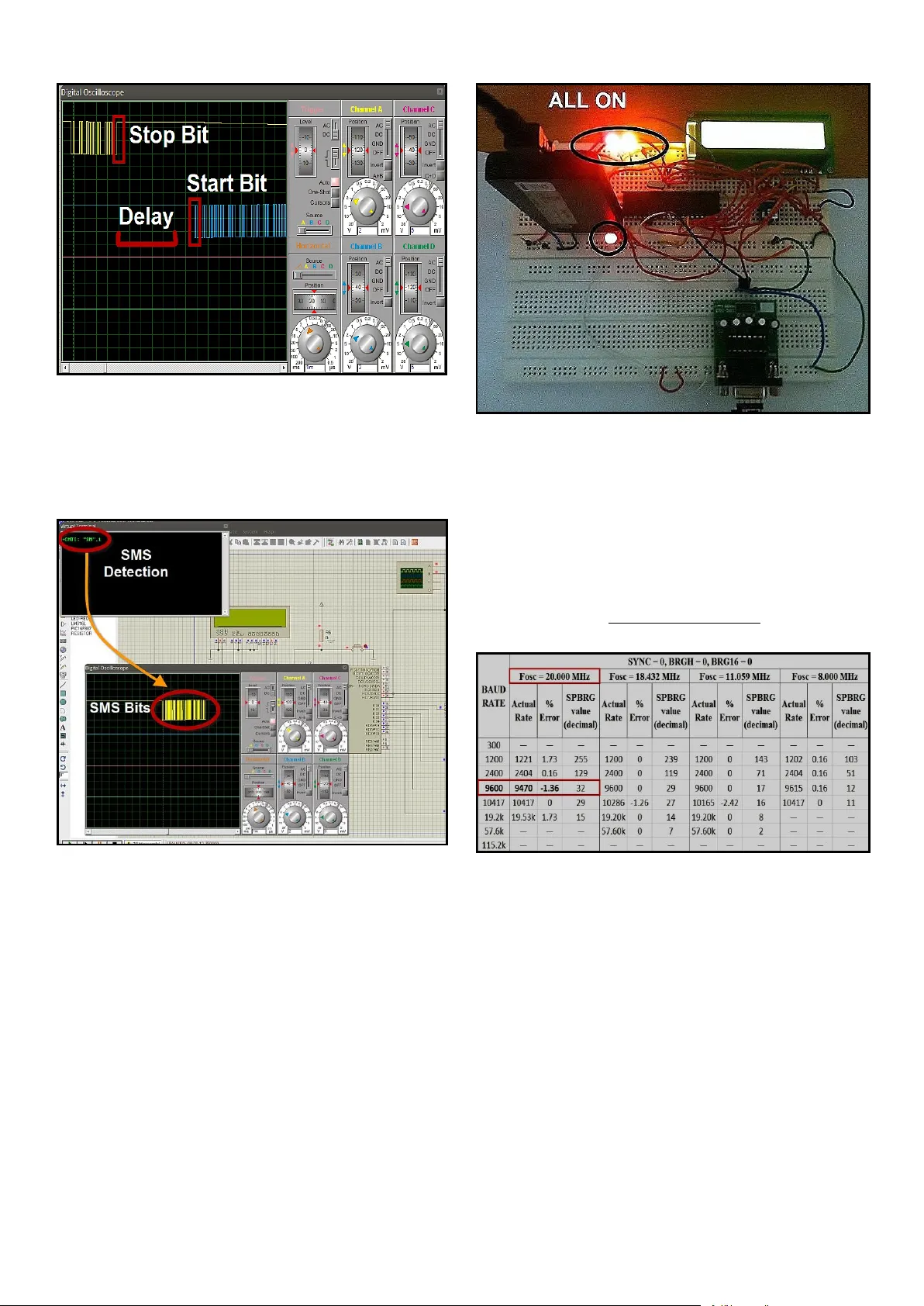
Smart GSM Based Home Automation System Rozita Teym ourzadeh , CEng, Member IEEE /IET , Salah Addin Ahm ed, Kok Wai C han, and Mok Vee Hoong Faculty of Engineering, T echnology & Built Environme nt UCSI University Kuala Lumpur, Mala ysia rozita@ucsiuniversity.edu. my Abstract — This research work investigates the potential of ‘Full Home Control’, w hich is the aim of the Home Automation Systems in ne ar future . The analysis and i mplem entation of the home automation technology using Global Sy stem for M obile Communication (GSM) modem to control home app liances such as light, conditional syste m , and security system via Short Message Service (SMS) text messages is presen ted in this pap er. The proposed researc h w ork i s foc used on functionality of the GSM protocol, w hich allows the user to control the target system away from residential using the frequency bandwidths. The concept of serial communication and AT -commands has been applied tow ards development of the smart GSM -based home automation system. Home ow ners will be able to receive feedba ck status of any home a ppliances under c ontrol whether sw itched on or off re mo tely from their mobile phones. PIC16F887 microcontroller w ith the integration of GSM provides the smart automated house syste m w ith the desired baud rate of 9600 bps. The proposed prototype of GS M based home automation system was i m plemented and tested w ith maximum of four loads and shows the accuracy of ≥98%. Keywords — Home automation; Glo bal Syste m f or M obile Communication (GSM); Short Message Service (SMS); PIC microcontroller; RS232 standard I. I NTRODUCTI ON In rec ent years , there has been a gro wing i nterest a mong consumers in the s mart home concept [1]. Smart homes contain multiple, connected devices such as h ome entertainment consoles, s ecurity systems, ligh ting, access control systems and sur veillance. Intelligent ho me a uto mation system is i ncorporated into smart homes to provide co mfort, convenience, and security to ho me o wners [2 -4]. Home automation s ystem represent s and rep orts the status o f the connected device s in an intuitive, user-friendl y interfac e allowing the use r to interact and control vario us devices with the touch o f a fe w buttons. So me of the major co mmunication technologies used by to day’s home auto mation system [5 -7] include Bluetooth, WiMAX and Wireless LAN (W i-Fi), Zigbee, and Global System for Mobile Com munication (GSM). All GSM is one o f the m o st widel y used cellular technologies in th e world [8,9]. With the increase in the number of GSM sub scribers, research a nd develop ment [ 10 - 12] is heavily supported in further investigating the GSM implementation. I n 2009, Das, Sanaullah, et. al. [ 13 ] developed a cell phone based remote management and co ntrol system for home appliance s. Ho wever, a few li mitations for the system include not being able to control multiple appliances concurrently and the home auto mation s s ystem could not veri fy the status of the appliances. ElKamchouc hi and ElShafee [6 ] presented the design and prototype implementation of basic ho me auto mation system based on SMS technolog y using AT89C55 Atmel microco ntroller . The microcontroller acts as the bridge between t he GSM net work and sensors o f the home automation s ystem. F urther researches have been conduct ed to analyze t he p erformance of other ho me a utomation co ntrol system [14 - 16] . Internet a nd wireless co mmunications have also been u tilized i n parallel with GSM for home auto mations [17]. Among the cellular technologies , GSM network is preferred for the communicati on between the home app lian ces and the user due to its w ide spread cover age [8,9] which makes the w hole s ystem online for alm ost all the time. Anoth er advantage of using the GSM network in home automati on is its high security infrast ructure, which provides max imum reliabil ity wh ereby other peo ple cannot m onitor the inform ation sent or received . Hence, this rese arch work implem ents SMS based control for home appliances using the GSM archite cture w ithout acc essing the local netw ork. II. S YSTEM R EALI ZATION The design of our pro posed smart GSM -based ho me automation system is given in Fig. 1 . The architecture consists of mobile phone and G SM mode m. In the propo sed syste m design, incoming SMS messa ge is sent fro m t he user phone to the GSM mode m as a text message via cell ular network. T he GSM modem then sends t he commands in text mode to the PIC microcontroller using an RS23 2 interface. T he RS232 voltage le vels are at ±12V whereas both the microcontroller input a nd output operates at 0V to +5V. Since RS232 is not compatible with microco ntroller, MAX232 is utilized to enable the co mmunication between both the GSM mod em a nd PIC microcontroller by co nve rting RS232 level sig nals to T TL level signal. Outgoing message fro m the system co ntaining t he home app liances stat us is delivered to the mobile ph one through GSM mode m. Fig. 1. Stage Re alization. The 8-bit PIC16F887 microcontroller generally consists of timers, Analog to Digital Co nverters ( ADCs), and Universal Synchronous Asynchro nous Receiver Tr ansmitter (U SART ). In the p roposed resear ch work, the microco ntroller receives instructions and d ecodes them to give device ad dress and command, then sends c orresponding signals to the d river of the p ower circuit. In addition, the microcontroller ensures dual independent operatio n action t o turn on t he device or switch it off. A feedbac k status of a ny device s under co ntrol whether switched on or o ff will be provided by the microcontroller. The RS-232 interface standard d efines the electrical and mechanical detail s of t he in terface bet ween Data T erminal Equipment (DT E) and Data Communications Equ ipment (DCE), wh ich employ serial binary data interchange. The current version of the standard refers to DCE as Data Circuit terminating Eq uipment. Physically, interfacing between the PIC16F887 and GSM modem was i mplemented using RS23 2 standard installed on Max23 2. Since the system design has not included a batter y, an external power suppl y is connected to the system to d rive sufficient a mount o f current through the circuit co nnections. Relays had been connected to the output loads for a stable electrical control b ecause these r elays ca n provide feedin g for different voltage level lo ads. Hence, the output selectio n becomes easier at any volta ge. Fig. 2 d emonstrates the simulatio n of the p roposed GSM based home auto mation system bei ng implemented i n several stages. T he PIC16F887 was simulated with the GSM modem by connecti ng it to the physical ports on the PC. MAX232 was placed to ensure pr oper transmission o f data between the two terminals. Virtual ter minal monitors the text sent from, and to the PI C16F887 while checking t he transmissio n pro cess and testing the algorith m. T he waveform of the transmitted and received messages is monito red fro m t he osci lloscope. While simulating the GS M modem, t he “COMPIM” clock physicall y tests the respo nse o f t he GSM modem by connecti ng it t o a physical port on P C. Fig. 2. Simulation of the proposed G SM based home autom ation system. III. I MPLEMENTA TION As sho wn in Fig. 3, waveform is generated in the digital oscilloscope when the co mmand is transmitted from PIC16F887 to GSM modem. T his co mmand will exec ute the deletion of the first message fro m t he SIM card memory . T he program reaches to a sleep state waiting for the new inco ming text messages and then compares the text message with the stored co mmands. If both the received text messa ge and the stored commands match, then, it will execute the intend ed command, which is turnin g on or off the output ter minal. Fig. 3. AT+CMGD =1 command to d elete SMS message. A simulation result was performed to observe the response while comm unicating with the GSM modem . The AT command was sent from PIC16F 887 to the GSM modem as the program starts up, then the response is r eceive d from the GSM modem after very short peri od of tim e that does not exceed 5 00 microsecon ds which is fast enough to d etect the incom ing messag e from the modem. T he display was used to show when the PIC is transm itting the sig nal. From Fig. 4, the PIC16F887 serves as a transmitter initially and then, it receives the response from modem. T he duration between the text sent and r espons e receive d is less than 500 microsecon ds . Henc e, the delay time is ignored because the data sent are limited to certain commands that do not exceed 4 or 5 characters. Howev er, if the amount of data transferr ed is very huge, the response delay time is very critical and must be studied and analyz ed in detail. Furth ermore, the delay that must be controlled for this project is for GSM commun ication that is mostly governed by the SMS pr otocol and does not exceed 2 or 3 seconds as had b een teste d practically . Fig. 4. Wave form of transceiver text message. A la yout is desi gned using Pro teus I SIS Professional, while adding Virt ual Ter minal and connecting it to COMP IM, which i s physical ly the DB9 connector i n the PC terminal. It can be added from the libr ary as shown i n Fig. 5. T he message alert text indicate s t hat the message has b een s uccessfull y received and stored in the SIM car d in the memory locatio n. Fig. 5. Detect ion of incoming SMS fr om GSM mode m. The oscillosc ope is connected t o the receiver side (RX) on PIC16F887 microcont roller that is connected to GSM modem to display the waveform of the detected message as soon as it reaches the GSM memory. After detecting the messag e, the PIC16F887 is supposed to read and d ecode the incom ing messag e to execute the intended comm and, w hich is turning on the loads. The whole p rocess is being execute d with in short period of time that does not exceed 2 secon ds . Fig. 6 show s the command text message had b een sent to activat e connected loads at the same t ime. After receiving the co mmand to turn on the light s, the relay set will per form switching oper ation fro m nor mally opened to close the circuit, allo wing the current to st art lighting as illustrated in Fig. 6. Fig. 6. All loa ds swi tche d on w hen tex t co mmand s sen t via SMS. IV. R ESULT S AND D ISCUSSI ONS The Baud Rate Generator (B RG) is an 8 -bit or 1 6-bit timer that is dedicated to the support of both asynchronous and synchron ous EUSART operation. By default, the B RG operates in 8-bit mode. For the PIC16F887 w ith frequen cy of oscillato r (F OSC ) of 20MHz, desired baud rate of 9600 bps, asyn ch ro nous mode, and 8-bit BRG, (1) will yield a baud rate of 9470 b ps and an error of -1.35% illus trated in Fig. 7. Cal cul ated Baud Rat e = FO SC 64( [ SPB RG H : SPB RG ] + 1 ) (1) Fig. 7. Baud rate s pecification. The prototype o f the p roposed GSM based ho me automation syste m is shown i n Fig. 8. A 12V is supplied to the voltage re gulator to po wer th e circuit. MAX232 is con nected to the GSM modem and the system run smoothly a fter the t ext message was r eceived. T he output loads were activated and automated the house i n desirable basis. Fig. 8. Prototy pe of proposed G SM based home automa tion system. V. C ONCL USION Recently, the home auto mation market i s very pro mising field that is growing very fast and needs vast range of developments that can be carr ied out in t he co ncept of smar t home. In t his project d esign and implementation of smart GSM ho use was consid ered. PIC16F887 microcontroller with the co operation of GSM provid es the smart a utomated house system with the d esired baud r ate of 9600 bps. The p roposed prototype was imple mented a nd tested with maximum of fo ur loads and shows the accurac y of ≥98%. R EFERENCES [1] B. I. Ahmad , F. Yakubu , M. A. Bagiwa, and U. I. Abdu llahi. (2011). Remote Home Management: An alternative for working at h ome while away. World of Computer Science and In formation Technology Journal (WCSIT) , 1( 4 ) , pp. 144-147. [2] A. W. Ahmad , N. Jan, S. Iqbal, and C. Lee, “ Implementation of ZigBee-GSM based Home Security Monitoring and Remote Control system, ” in Proc. 2011 IEEE 54th International Midwest Symposium on Circuits and Systems (M WSCAS) , Seoul, pp.1-4. [3] T. Begum, M. S. Hossain, M. B. Uddin, and M. S. H. Chowdhury, “ Desig n and development of activation and monitoring of home automation sy stem via SMS through microcontroller, ” in Pro c. 2009 4th International Conference on Computers and Devices for Communication (CODEC 2009) , Kolkata, pp.1- 3. [4] Y. Zhai and X. Cheng, “ Design of s mart home remote monitoring system based on embedded system, ” in Pro c. 2011 2nd International Conference on Computing, Control and Industrial Engineering (CCIE) , Wuhan, pp.41 – 44. [5] S. I. Azid and S. Kumar. (2011). Analysis and Performance of a Low Cost SMS Based Ho me Security S ystem. International Journal of Smart Home , 5( 3 ) , pp. 15 - 24. [6] H. ElKamchouc hi and A. ElS hafee, “ Design and pro totype implementation of S MS based home auto mation system” , in Proc. 2012 IEEE International Co nference on Electronics Design, Systems a nd Applications (ICEDSA) , Kuala Lumpur, pp.162-167. [7] M. S. Khandare an d A. Mahajan, “ Mobile Monitoring System for S mart Home, ” in Proc. 2010 3rd International Conference on Emerging Trends in Engineering and Technology (ICETET) , Goa, pp.848 – 852. [8] G. Gu and G. Peng, “ The survey of GSM wireless communication system , ” in Proc. 2010 International Conference on Computer and Information Application (ICCIA) , Tianjin, pp.121 – 124. [9] G. Mingming, Shaoliangshan, Huixiaowei, and Sunqingwei, “ The System of W ireless Smart House Ba sed on G SM and ZigBee, ” in Proc. 2010 International Conference on Intelligent Computation Technology and Automation (ICICTA) , Changsha, pp.1017 – 1020. [10] C. Felix and I. J. Raglend, “ Home automation using GSM, ” in Proc. 2011 International Conference on Signal Processing, Communication, Computing and Networking Technologies (ICSCCN) , Thuckafay , pp.1 5-19. [11] C. P eijiang and J. Xu ehua, “ Desig n and Implementation o f Remote Mo nitoring System Based on GSM, ” in Proc. 200 8 Pacific-Asia Workshop on Computational Intelligence and Industrial Application (PACIIA '08) , Wuhan, pp.678 – 681. [12] B. S. Rao , S. D. V. P rasad, and R.M. Mohan, “ A prototype for Home Automation u sing GSM technology, ” in Proc. 2010 International Conference on Powe r, Con trol and Embedded Systems (ICPCES) , Allahabad, pp.1-4. [13] C. K. Das, M. Sanaullah, H. M. G. Sa rower, and M. M. Hassan, (2009). Development o f a Cell Ph one ba sed Remote Control System: an Effective Switching S ystem for Controlling Home and Office Appliances. International Journal of Electrical & Computer Sciences , 9( 10 ) , p p. 23 -29. [14] K. Gill, S. - H. Yang, F. Yao, and X. Lu. (2009). A zigbee- based home automation system. IEE E Transaction s on Consumer Electronics , 55( 2 ) , pp.422 – 430. [15] L. Pu, “ An Improved Short Message Security Proto col for Home Network, ” in Proc. 2009 International Conference on Future Computer and Commu nication (FCC '09 ) , Wuhan, pp.62 – 65. [16] T. P erumal , M. N. Sulaiman, Khaironi Ya tim Sharif, A. R. Ramli, and C. Y. Leong . (2013). Development of an Embedded Smart Home Management Scheme. International Journal of Smart Home , 7( 2 ) , pp. 15 – 26. [17] L. Wei , Y. Min , C. LiangLiang, and C. P ing, “ The Design of Intelligent Hou sehold Control System Based on Internet and GSM, ” in Proc. 2011 Second International Conference on Networking and Distributed Computing (ICNDC) , Beijing, pp. 254 – 256.
Original Paper
Loading high-quality paper...
Comments & Academic Discussion
Loading comments...
Leave a Comment