Conceptualizing Blockchains: Characteristics & Applications
Blockchain technology has recently gained widespread attention by media, businesses, public sector agencies, and various international organizations, and it is being regarded as potentially even more disruptive than the Internet. Despite significant interest, there is a dearth of academic literature that describes key components of blockchains and discusses potential applications. This paper aims to address this gap. This paper presents an overview of blockchain technology, identifies the blockchain’s key functional characteristics, builds a formal definition, and offers a discussion and classification of current and emerging blockchain applications.
💡 Research Summary
The paper “Conceptualizing Blockchains: Characteristics & Applications” seeks to fill a notable gap in the academic literature by providing a systematic overview of blockchain technology, distilling its core functional characteristics, offering a formal definition, and classifying current and emerging applications.
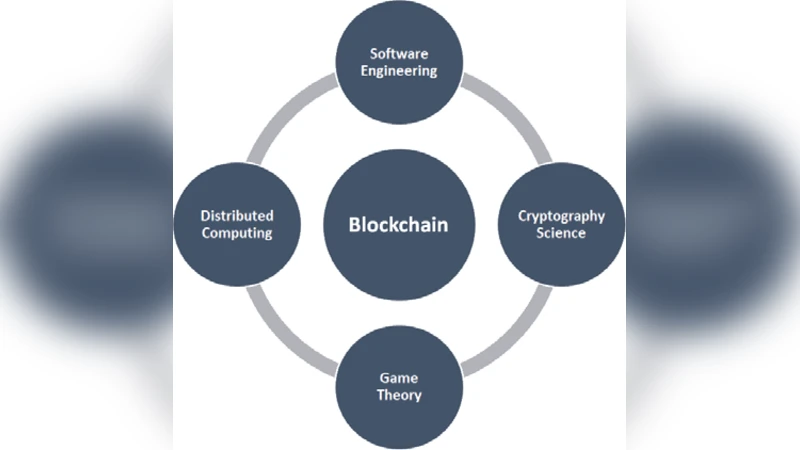
The authors begin with a historical and multidisciplinary background, tracing blockchain’s roots to the convergence of software engineering, distributed computing, cryptography, and game‑theoretic economics—collectively termed “cryptoeconomics.” They recount Satoshi Nakamoto’s 2008 Bitcoin white‑paper, which introduced the hash‑linked chain of timestamps and the Proof‑of‑Work (PoW) consensus mechanism as a solution to the double‑spending problem. This foundational work established the blockchain as a decentralized, append‑only ledger where each block contains a set of transactions, is cryptographically linked to its predecessor, and is validated through a network‑wide consensus process.
From this foundation the authors extract four fundamental characteristics that they argue are common to all blockchain implementations:
- Immutability – The hash‑based chaining makes any alteration of a past block computationally infeasible because it would require recomputing all subsequent block hashes.
- Decentralization – The entire ledger is replicated across all participating nodes, eliminating a single point of control or failure.
- Consensus‑Driven Operation – Validation of new blocks is performed by a consensus algorithm (PoW, Proof‑of‑Stake, Proof‑of‑Burn, etc.), which provides trust without a central authority.
- Transparency – Because the ledger is an open data structure, any party can audit the full transaction history, enabling provenance and auditability.
The paper then critiques existing definitions of blockchain that focus narrowly on “digital ledgers” (e.g., Coinbase, Oxford Dictionary) or on distribution without emphasizing decentralization. To address this, the authors propose a more encompassing definition:
“A decentralized database containing sequential, cryptographically linked blocks of digitally signed asset transactions, governed by a consensus model.”
This definition foregrounds three pillars: (a) the data structure (sequential, linked blocks), (b) the security model (digital signatures, cryptographic links), and (c) the governance model (consensus).
The authors discuss smart contracts as programmable transaction rules embedded in the blockchain. They describe how platforms such as Ethereum provide a Turing‑complete virtual machine that enables autonomous execution of contract logic, thereby extending blockchain use beyond simple value transfer to complex business processes (escrow, multi‑party signatures, supply‑chain automation, etc.).
A taxonomy of blockchain types is presented:
- Public blockchains – Open to anyone, fully decentralized, with open consensus (e.g., Bitcoin, Ethereum).
- Private (permissioned) blockchains – Access restricted to a known set of participants; consensus may be simplified or centralized, often used within enterprises.
- Hybrid/Consortium blockchains – A middle ground where a privileged group operates the network, combining elements of openness with controlled participation.
The paper proceeds to a high‑level classification of applications across sectors such as finance (payments, tokenization), logistics (track‑and‑trace), healthcare (secure medical records), and public administration (transparent voting, land registries). For each sector the authors outline the anticipated benefits—enhanced trust, reduced intermediaries, auditability, and potential cost savings.
While the survey is comprehensive in its conceptual mapping, the authors acknowledge several limitations. Empirical case studies are sparse, and the discussion of scalability challenges (throughput, latency), regulatory considerations, and governance frameworks is relatively brief. Moreover, the paper predates many recent developments such as Layer‑2 scaling solutions (e.g., rollups, state channels), Central Bank Digital Currencies (CBDCs), and the integration of zero‑knowledge proofs for privacy. The authors suggest that future research should empirically evaluate blockchain deployments, explore hybrid consensus mechanisms that balance security and efficiency, and incorporate emerging technical and policy trends.
In summary, the paper provides a solid foundational framework for understanding blockchain technology, articulates a clear definition that captures its structural, security, and governance dimensions, and offers a useful classification of blockchain types and application domains. It serves as a valuable reference point for scholars and practitioners seeking to navigate the rapidly evolving blockchain landscape, while also highlighting areas where deeper empirical and technical investigation is needed.
Comments & Academic Discussion
Loading comments...
Leave a Comment