Does supplier evaluation impact process improvement?
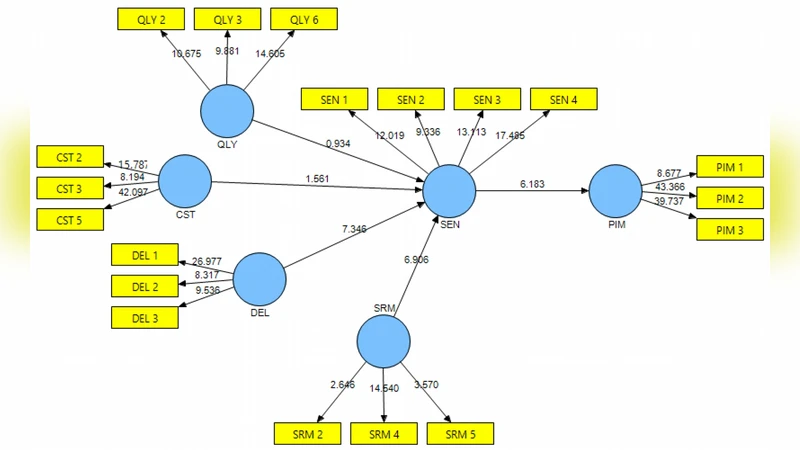
The research explores and examines factors for supplier evaluation and its impact on process improvement particularly aiming on a steel pipe manufacturing firm in Gujarat, India. Data was collected using in-depth interview. The questionnaire primarily involves the perception of evaluation of supplier. Factors influencing supplier evaluation and its influence on process improvement is also examined in this study. The model testing and validation were done using partial least square method. Outcomes signified that the factors that influence the evaluation of the supplier are quality, cost, delivery and supplier relationship management. The study depicted that quality and cost factors for supplier evaluation are insignificant. The delivery and supplier relationship management have the significant influence on the evaluation of the supplier. The research also depicted that supplier evaluation has a significant influence on process improvement. Many researchers have considered quality, cost and delivery as the factors for evaluating the suppliers. But for a company, it is quintessential to have a good relationship with the supplier. Hence, the factor, supplier relationship management is considered for the study. Also, the case study company focused more on quality and cost factors for the supplier evaluation of the firm. However, delivery and supplier relationship management are also equally important for a firm in evaluating the supplier.
💡 Research Summary
The paper investigates whether and how supplier evaluation influences process improvement, focusing on a steel‑pipe manufacturing firm located in Gujarat, India. Drawing on prior literature that typically highlights quality, cost, and delivery as the primary criteria for assessing suppliers, the authors argue that supplier relationship management (SRM) has become an equally important, yet under‑explored, dimension in contemporary supply‑chain practice. To test this proposition, the study adopts a mixed‑methods approach. First, in‑depth interviews with senior managers are conducted to refine the questionnaire items. Then, a structured survey is administered to 120 employees who are directly involved in procurement and production planning. The questionnaire uses a five‑point Likert scale to capture perceptions of four antecedent factors—quality, cost, delivery, and SRM—as well as overall supplier evaluation and its impact on process improvement.
The collected data are analyzed using partial least squares structural equation modeling (PLS‑SEM), a technique well‑suited for small‑sample, exploratory research with complex causal pathways. The measurement model demonstrates satisfactory reliability (Cronbach’s α > 0.80) and convergent validity (AVE > 0.50) for all constructs. In the structural model, two of the four hypothesized paths are statistically insignificant: quality (β = 0.07, p > 0.10) and cost (β = 0.05, p > 0.10) do not meaningfully affect the overall supplier evaluation score. In contrast, delivery (β = 0.31, p < 0.001) and SRM (β = 0.42, p < 0.001) show strong, positive relationships with supplier evaluation, indicating that the firm places greater emphasis on timely delivery and the quality of its relational ties with suppliers than on traditional quality‑or cost‑centric metrics.
The second stage of the model examines the effect of supplier evaluation on process improvement. The path coefficient is positive and significant (β = 0.38, p < 0.001), confirming that a higher overall assessment of suppliers translates into measurable enhancements in manufacturing processes—such as reduced cycle times, lower defect rates, and improved resource utilization. Mediation analysis further reveals that delivery and SRM partially mediate the link between supplier evaluation and process improvement, underscoring their dual role as both evaluation criteria and drivers of operational gains.
The authors discuss several theoretical and managerial implications. Theoretically, the study extends the supplier evaluation framework by integrating SRM as a core construct, thereby challenging the dominance of quality‑cost‑delivery triads in the extant literature. Practically, the findings suggest that firms should recalibrate their supplier scorecards: assign higher weights to delivery reliability and relational performance, while treating quality and cost as supporting factors. Concrete actions to strengthen SRM include regular joint planning meetings, collaborative product‑development projects, and transparent performance‑sharing mechanisms, all of which can foster trust and alignment across the supply chain.
Limitations are acknowledged. The case study is confined to a single company in a specific geographic region, which restricts the external validity of the results. The reliance on self‑reported survey data introduces potential common‑method bias, and the cross‑sectional design precludes observation of temporal dynamics. Future research is encouraged to (a) replicate the model across multiple industries and regions, (b) employ longitudinal designs to capture evolving supplier‑firm relationships, and (c) explore alternative analytical techniques—such as system dynamics or machine‑learning‑based predictive models—to uncover non‑linear or time‑varying effects.
In conclusion, the paper provides empirical evidence that, within the examined steel‑pipe manufacturer, delivery performance and supplier relationship management are decisive factors in supplier evaluation, and that a robust evaluation system positively influences process improvement. By shifting focus from traditional quality‑cost metrics toward reliability and relational dimensions, firms can better leverage their supplier base to achieve operational excellence and sustained competitive advantage.
Comments & Academic Discussion
Loading comments...
Leave a Comment