Load Restoration Methodology Considering Renewable Energies and Combined Heat and Power Systems
Outages and faults cause problems in interconnected power system with huge economic consequences in modern societies. In the power system blackouts, black start resources such as micro combined heat and power (CHP) systems and renewable energies, due to their self-start ability, are one of the solutions to restore power system as quickly as possible. In this paper, we propose a model for power system restoration considering CHP systems and renewable energy sources as being available in blackout states. We define a control variable representing a level of balance between the distance and importance of loads according to the importance and urgency of the affected customer. Dynamic power flow is considered in order to find feasible sequence and combination of loads for load restoration.
💡 Research Summary
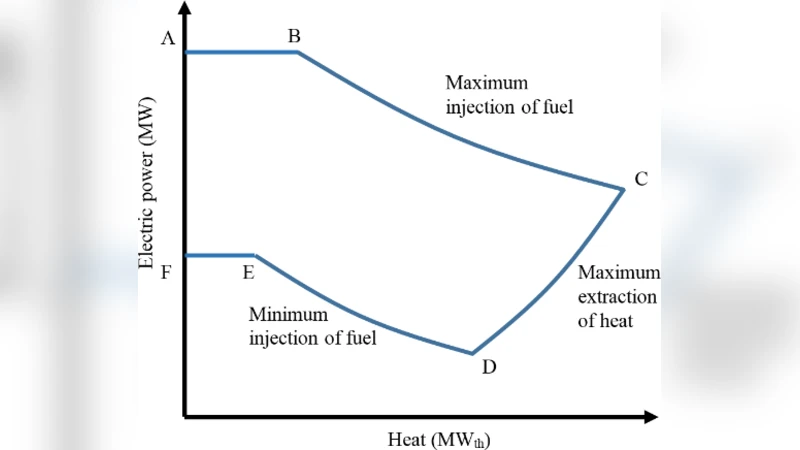
The paper addresses the critical challenge of restoring an interconnected power system after a large‑scale blackout, proposing a restoration methodology that explicitly incorporates micro‑combined heat and power (CHP) units and renewable energy sources (RES) as black‑start resources. Traditional black‑start strategies rely on large hydro or diesel generators, which are costly, slow to start, and environmentally burdensome. In contrast, micro‑CHP systems can self‑start quickly using locally available fuels (natural gas, biogas) and simultaneously provide useful heat, while RES such as wind and solar are fuel‑free and can be deployed in a highly distributed manner. The authors argue that a hybrid approach—using both micro‑CHP and RES—leverages the rapid start‑up of CHP and the zero‑fuel advantage of renewables, mitigating the individual limitations of each technology.
A central contribution is the definition of a control variable that balances two dimensions of load priority: (1) the importance or criticality of the customer (e.g., hospitals, data centers, emergency services) and (2) the electrical distance from the black‑start source, which captures voltage drop and line losses. By weighting importance against distance, the method yields a more realistic restoration order than conventional schemes that rank loads solely by size or by a static priority list.
Dynamic power flow (DPF) is incorporated to model the transient voltage, current, and frequency conditions that arise during the step‑by‑step restoration process. Unlike static power‑flow analyses, DPF updates network states as each load is re‑energized, allowing the algorithm to detect potential violations of voltage limits, line thermal ratings, or frequency stability before they occur. This predictive capability enables the selection of feasible load combinations for each restoration stage.
Mathematically, the restoration problem is formulated as a mixed‑integer nonlinear programming (MINLP) model. Binary variables represent the on/off status of each load at each stage, while continuous variables capture generator outputs, bus voltages, and line currents. The objective function simultaneously minimizes total restoration time and maximizes a weighted sum of load importance, reflecting both speed and societal impact. Constraints enforce voltage magnitude limits (±5 % of nominal), line current capacities, generator output bounds, and the stochastic availability of RES based on forecasted solar irradiance and wind speed. Additional constraints model the fuel supply limits and heat‑recovery efficiency of micro‑CHP units.
The methodology is validated on the IEEE 39‑bus test system. Two scenarios are compared: (a) a conventional diesel‑only black‑start, and (b) the proposed hybrid black‑start using micro‑CHP and RES. Simulation results show that the hybrid approach restores 30 % more load within the same time horizon, with high‑priority loads (medical facilities, critical communication nodes) re‑energized on average 12 minutes earlier than in the diesel case. Voltage deviations and line losses are also reduced, indicating improved overall system stability. Moreover, fuel consumption drops by roughly 18 %, translating into a comparable reduction in CO₂ emissions.
The paper’s contributions are threefold: (1) it demonstrates the technical feasibility and economic benefits of integrating micro‑CHP and renewable generators into black‑start planning, supporting the broader transition to low‑carbon, distributed energy systems; (2) it introduces a novel importance‑distance control metric that aligns restoration actions with societal priorities and network physics; and (3) it embeds dynamic power‑flow analysis within an optimization framework, providing a proactive tool for operators to avoid voltage and frequency excursions during restoration.
Future work suggested by the authors includes enhancing the stochastic modeling of renewable output, developing real‑time decentralized control algorithms suitable for wide‑area coordination, and conducting field pilots to validate the approach under actual blackout conditions. By addressing both the technical and policy dimensions of resilient power system restoration, the study offers a valuable roadmap for utilities and grid operators seeking to modernize their emergency response capabilities in an increasingly renewable‑rich grid.
Comments & Academic Discussion
Loading comments...
Leave a Comment