Time-varying Rotational Inverted Pendulum Control using Fuzzy Approach
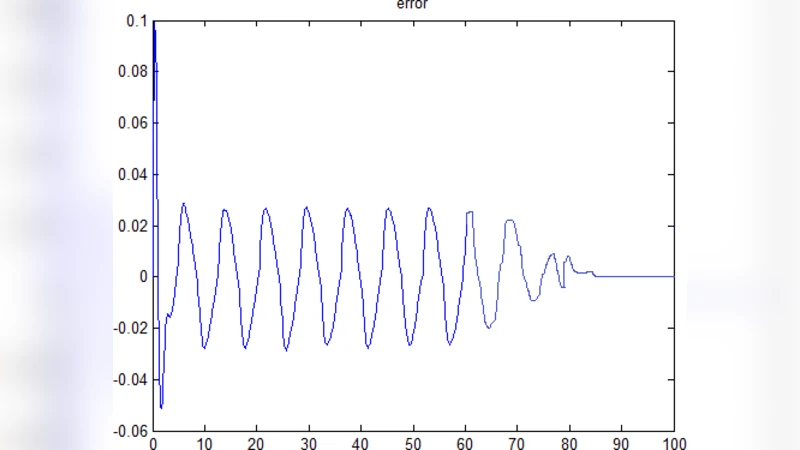
In this paper, a nonlinear rotational inverted pendulum with time-varying parameters is controlled using the indirect adaptive fuzzy controller design. This type of controller is chosen because this particular system performance is highly sensitive to unavoidable unknown model changes. So, a conventional controller is firstly designed through feedback linearization method, and applied to the system. Feedback linearization method here is used for two purposes; to attain an approximation of necessary system dynamics and to assess the performance of the proposed adaptive fuzzy controller by comparing the results of both adaptive fuzzy and feedback linearization controllers. An indirect adaptive fuzzy controller, resistant to parameter variations is then proposed. The general structure of the adaptive controller is specified in the first stage. In the second stage, its parameters are regulated with the aid of two fuzzy systems. Lyapunov stability theorem is used to regulate the system parameters such that the closed loop system is stabilized and zero tracking error is attained. Finally, the results of the proposed and the conventional approaches are compared. Results showed that the adaptive fuzzy controller performed more efficiently than the classical controller, with existing parameters variations.
💡 Research Summary
The paper addresses the control problem of a rotational inverted pendulum (RIP) whose physical parameters vary with time, a situation that commonly occurs in practical mechatronic systems due to wear, load changes, friction, or environmental disturbances. The authors first develop a conventional controller based on feedback linearization (FL). By exactly canceling the nonlinear terms in the RIP dynamics, FL yields a virtual linear system that can be regulated with standard linear techniques such as PD or LQR. This baseline controller serves two purposes: it provides a reference performance level under nominal (constant‑parameter) conditions, and it creates a benchmark against which the proposed adaptive fuzzy controller can be evaluated.
Recognizing that FL relies on precise knowledge of the model, the authors introduce an indirect adaptive fuzzy control (IAFC) scheme that is explicitly designed to cope with unknown and time‑varying parameters. The IAFC architecture contains two fuzzy inference systems (FIS): one approximates the unknown nonlinear drift term (f(x)), and the other approximates the input gain matrix (g(x)). Each FIS uses Gaussian membership functions over the state vector (
Comments & Academic Discussion
Loading comments...
Leave a Comment