The Complexity of the Empire Colouring Problem
We investigate the computational complexity of the empire colouring problem (as defined by Percy Heawood in 1890) for maps containing empires formed by exactly $r > 1$ countries each. We prove that the problem can be solved in polynomial time using $s$ colours on maps whose underlying adjacency graph has no induced subgraph of average degree larger than $s/r$. However, if $s \geq 3$, the problem is NP-hard even if the graph is a forest of paths of arbitrary lengths (for any $r \geq 2$, provided $s < 2r - \sqrt(2r + 1/4+ 3/2)$. Furthermore we obtain a complete characterization of the problem’s complexity for the case when the input graph is a tree, whereas our result for arbitrary planar graphs fall just short of a similar dichotomy. Specifically, we prove that the empire colouring problem is NP-hard for trees, for any $r \geq 2$, if $3 \leq s \leq 2r-1$ (and polynomial time solvable otherwise). For arbitrary planar graphs we prove NP-hardness if $s<7$ for $r=2$, and $s < 6r-3$, for $r \geq 3$. The result for planar graphs also proves the NP-hardness of colouring with less than 7 colours graphs of thickness two and less than $6r-3$ colours graphs of thickness $r \geq 3$.
💡 Research Summary
The paper revisits the empire‑colouring problem originally introduced by Percy Heawood in 1890, focusing on its computational complexity when each empire consists of exactly r countries (vertices) with r > 1. An (s, r)‑colouring asks for an assignment of at most s colours such that all vertices belonging to the same empire receive the same colour, while vertices belonging to adjacent empires receive different colours. The authors first define the reduced graph R_r(G): each empire of the original planar graph G is contracted to a single pseudo‑vertex, and edges between empires become edges (possibly multiple) between the corresponding pseudo‑vertices. Under this reduction, an (s, r)‑colouring of G exists if and only if R_r(G) is properly colourable with s colours in the ordinary sense.
The paper’s positive results exploit sparsity. If the underlying planar graph G belongs to the class SPARSE(σ), meaning that every induced subgraph has average degree at most σ, and if r·σ is an integer, then the decision problem r·σ‑COL_r restricted to SPARSE(σ) can be solved in polynomial time. The proof uses a minimum‑degree greedy strategy together with a refined version of Brooks’ theorem: because the average degree bound guarantees that R_r(G) contains no K_{rσ+1}, the greedy removal of a vertex of degree ≤ rσ repeatedly yields an rσ‑colouring. As concrete corollaries, (2r − 1)‑colouring is polynomial on forests of paths of length at most 2r − 1, and (6r − 1)‑colouring is polynomial on planar graphs whose components have at most 12r vertices.
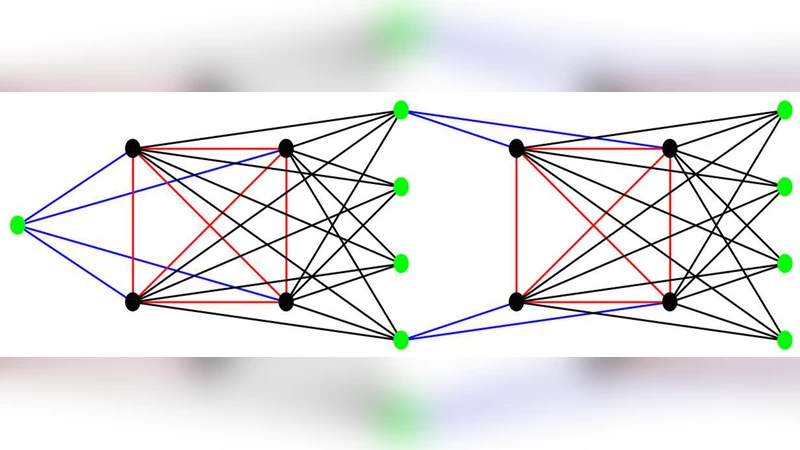
The hardness side is built on a novel reduction from k‑SAT to a specially crafted class of graphs called (s, k)‑formula graphs Φ. Each Φ consists of a truth gadget (a complete graph on s vertices labelled T, F, X₁,…,X_{s‑2}), a variable gadget (a pair of complementary vertices a, a̅ adjacent to all X_j so that they must receive opposite colours, encoding TRUE/FALSE), and a clause gadget that forces at least one literal of each clause to be coloured TRUE. The construction guarantees that Φ is s‑colourable iff the original formula is satisfiable, establishing that s‑COL(FG(s,k)) is NP‑complete for any k < s with s ≥ 3.
Using this reduction, the authors derive several dichotomies. For trees, they prove a complete classification: (s, r)‑colouring is NP‑hard exactly when 3 ≤ s ≤ 2r − 1 (for any fixed r ≥ 2); otherwise (i.e., s = 1, 2 or s ≥ 2r) the problem is solvable in polynomial time. The hardness proof for trees relies on the clique gadget B_{r,s}, an r‑empire graph whose reduced graph contains a K_{s+1} but whose underlying structure is a forest of r paths, together with colour‑constraining gadgets B^{-}_{r,s}(u,v) that force two empires to share the same colour.
For general planar graphs, the paper shows that the problem remains NP‑hard even on very restricted families. When r = 2, (s, 2)‑colouring is NP‑hard for s < 7; for r ≥ 3, it is NP‑hard for s < 6r − 3. These results are obtained by embedding the aforementioned gadgets into planar graphs of bounded thickness. In particular, a graph of thickness t can be decomposed into t planar layers; the authors prove that deciding whether a thickness‑t graph is colourable with fewer than 6t − 3 colours (or fewer than 7 colours when t = 2) is NP‑hard.
The technical core of the paper consists of: (i) the reduction of the empire problem to ordinary vertex‑colouring via R_r(G); (ii) the sparsity‑based polynomial algorithm using minimum‑degree greedy and Brooks‑type arguments; (iii) the construction of formula graphs and a suite of gadgets (clique, colour‑constraining, and connection gadgets) that enforce precise colour relationships; and (iv) the systematic translation of these gadgets into trees, forests of paths, and planar graphs of bounded thickness.
Overall, the work delineates a sharp boundary between tractable and intractable instances of the empire‑colouring problem. When the average degree of the underlying graph is sufficiently low, the problem is efficiently solvable; as soon as the colour budget drops below a threshold that depends linearly on r, even extremely sparse structures such as disjoint paths become NP‑hard. The complete classification for trees and the near‑complete classification for planar graphs deepen our understanding of how empire size, colour budget, and graph sparsity interact, and they also shed light on related problems such as colouring graphs of given thickness. The results have implications for map‑colouring applications where regions are grouped into larger administrative units (empires) and for theoretical studies of colourability in layered or thick graph families.
Comments & Academic Discussion
Loading comments...
Leave a Comment