On Portrait of a Specialist in Open Data
The article is written to identify the requirements for Open Data Specialist. The ability to use and work with open data affects many areas: sociology, urban studies, geography, statistics, public administration, data journalism, etc. It is especially important to develop and implement training courses on open data for non-IT students. Typically, the specialization of these students contains insufficient number of lessons on working with data and with open data. Students (hereinafter - researchers) feel a great need to eliminate “digital illiteracy” and to master the skills of working with open data. The development of a specialty on open data is designed to solve the problem of lack of knowledge and skills in working with open data. In this paper, the authors attempt to generalize the requirements for an expert in open data and offer an overview of information sources on the topic of hiring such specialists. The authors justify the need to create a specialty on open data for non-core students as well. It is supposed that the specialty will be read in English, a non-native language for students.
💡 Research Summary
The paper “On Portrait of a Specialist in Open Data” investigates the competencies required for an Open Data Specialist (ODS) and argues for the development of dedicated training programs, especially for non‑IT and non‑core students who often lack sufficient exposure to data handling. The authors begin by defining Open Data as freely accessible information without copyright or patent restrictions and note its growing importance across fields such as sociology, urban studies, geography, statistics, public administration, and data journalism. They highlight a gap: many students and professionals feel “digitally illiterate” regarding open data, and curricula in non‑technical programs typically allocate few lessons to data acquisition, processing, and analysis.
To identify the skill set demanded by industry and perceived as essential by prospective specialists, the researchers conducted an online questionnaire targeting students from the IT and Computer Science departments of ITMO University. The survey comprised 12 questions divided into three sections: demographic information, professional competencies for an ODS, and English‑language awareness. Distribution channels included Telegram groups (OpenDataRussia, Data Science, etc.), Slack channels (opendatascience), Facebook groups, and private contacts, reaching an estimated audience of 19,172 individuals. Ultimately, 96 responses were collected (75 Russian‑language, 21 English‑language).
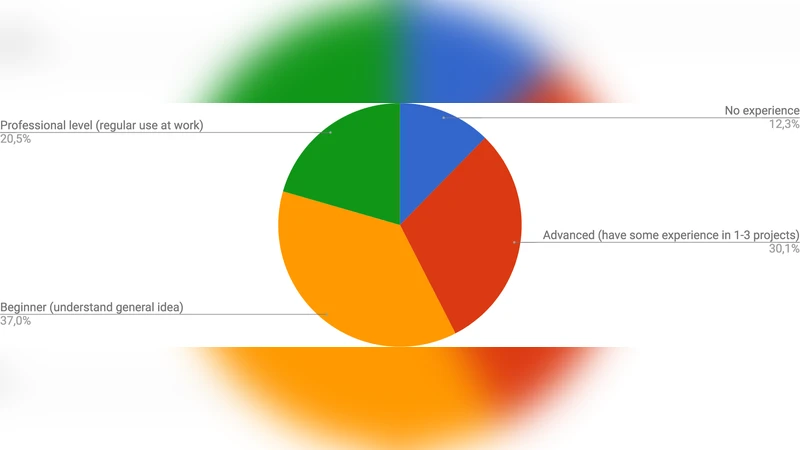
Demographically, 76.5 % of respondents held higher education degrees (including 16.2 % PhDs), and 86.5 % were aged 18‑45, with a concentration (39.2 %) in the 28‑39 bracket. Most participants worked in IT‑related fields, and 87.7 % reported a clear understanding of open data, while 20.5 % had applied it professionally.
The competency analysis asked respondents to rate twelve technical and methodological items as “Beginner” or “Advanced.” The highest‑rated “Advanced” skills were: (1) working with search‑engine systems (58 %), (2) using open‑data platforms (55 %), (3) employing APIs (41 %), and (4) data visualization (40 %). Skills considered essential at a “Beginner” level included relational DBMS usage (40 %), basic statistics (41 %), and knowledge of open licences (32 %). Additional competencies receiving strong endorsement were SQL querying (42 % advanced), programming in algorithmic languages (36 % advanced), version‑control systems (41 % advanced), and project‑management tools (44 % advanced). Notably, 89 % of respondents deemed English proficiency necessary for professional activities, and when asked which language they use for data searches, English (L2) accounted for 26.9 % of searches—six times the share of Russian (L1). This underscores the importance of English for accessing international open‑data repositories and suggests that English for Specific Purposes (ESP) or English‑Medium Instruction (EMI) should be integral to any ODS curriculum.
The authors also examined job‑market data from major recruitment platforms (Indeed, LinkedIn, CareerBuilder, Dice, UpWork). In the United States, “Data Manager” appeared most frequently, with “Open Data Manager” trailing by a factor of 6‑13 in vacancy counts. “Open Data Specialist” had relatively few postings, indicating that the role is not yet standardized. Salary analysis showed Data Scientists earning around $130 k per year, Data Managers and Open Data Managers around $95 k, and Data Specialists about $60 k. In the United Kingdom, similar patterns emerged: Data Managers commanded £42 k, while Open Data Specialists had limited salary data, reflecting a nascent market.
The paper concludes with a set of practical recommendations for improving the questionnaire (e.g., adding fields for specialty name, programming language relevance, technology stack, data‑search methods, gender, workplace location, DevOps skills) and for designing an ODS training program. Suggested curriculum components include: data governance and legal/ethical issues, regular‑expression usage, data archiving, DevOps practices, project management, API design, visualization tools, and intensive English for professional contexts.
Overall, the study demonstrates that an effective Open Data Specialist must combine technical proficiency (search engines, platforms, APIs, visualization), methodological knowledge (statistics, licensing, data archiving), soft skills (project and version control), and strong English language abilities. The authors argue that without a dedicated, English‑medium educational pathway, non‑core students will continue to face “digital illiteracy” in the open‑data domain. Future work is planned to pilot the proposed curriculum, assess learning outcomes, and track employment impacts over time.
Comments & Academic Discussion
Loading comments...
Leave a Comment