XFO: Toward Programming Rich Semantic Models
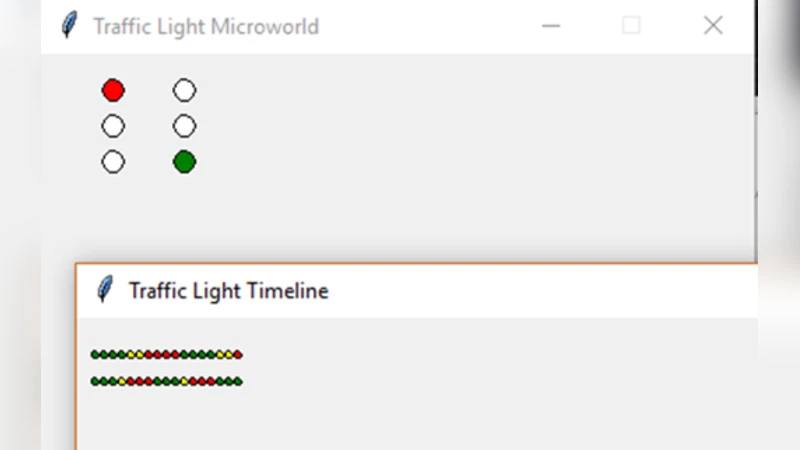
We have proposed that ontologies and programming languages should be more closely aligned. Specifically, we have argued that the Basic Formal Ontology (BFO2) has many features that are consistent with object-oriented analysis, design, and modeling. Here, we describe the eXtended Formal Ontology (XFO), a programming environment we developed to support semantic modeling. We then use XFO to implement a Traffic Light Microworld and discuss more complex applications.
💡 Research Summary
The paper argues that the gap between formal ontologies and mainstream software development can be narrowed by aligning the Basic Formal Ontology (BFO2) with object‑oriented programming (OOP) concepts. The authors demonstrate that BFO2’s categories—continuants, occurrents, entities, qualities, and processes—map naturally onto OOP constructs such as classes, attributes, methods, and events. Building on this theoretical correspondence, they introduce the eXtended Formal Ontology (XFO), a programming environment that embeds BFO2’s ontological structure directly into a language’s type system. In XFO, an ontological class becomes a programming class, properties become fields, and processes become methods. The system supports multiple inheritance and mix‑in patterns to capture complex ontological relationships, and it enforces “semantic typing” and runtime validation so that every instantiated object must satisfy its ontological constraints. For example, a Vehicle class must contain Wheel parts as dictated by a hasPart relation, and any violation is caught at object creation time.
To illustrate XFO’s capabilities, the authors implement a Traffic Light microworld. The SignalLight class is defined with an enumeration of states (Red, Yellow, Green). State transitions are modeled as BFO2 processes encapsulated in a Transition method, each guarded by temporal and environmental constraints expressed as ontological rules. This design automatically prevents illegal configurations—such as simultaneous red and green lights—during simulation. The microworld also demonstrates how XFO can easily extend to model vehicle queues, pedestrian crossings, and other traffic‑flow dynamics by reusing the same ontological backbone.
Beyond the simple example, the paper discusses potential applications in manufacturing, medical diagnostics, and smart‑city simulations. A key advantage of XFO is its “semantic bridging” mechanism, which allows heterogeneous domain ontologies to be aligned through shared upper‑level classes, facilitating data interoperability across large, multi‑disciplinary systems. The authors acknowledge current limitations, including performance scaling for very large ontologies, the need for standardized interfaces with existing programming languages, and tooling for ontology versioning and collaborative development. They propose future work on optimizing the runtime engine, defining language bindings (e.g., for Python, Java), and integrating XFO with version‑control systems to support team‑based semantic modeling.
In summary, the paper presents XFO as a concrete step toward a unified development paradigm where ontological rigor and object‑oriented software engineering co‑exist. By embedding BFO2 semantics into the programming layer, XFO promises improved model consistency, automatic validation, and easier reuse of domain knowledge, paving the way for more robust, semantically aware applications.
Comments & Academic Discussion
Loading comments...
Leave a Comment