Softwarization of Internet of Things Infrastructure for Secure and Smart Healthcare
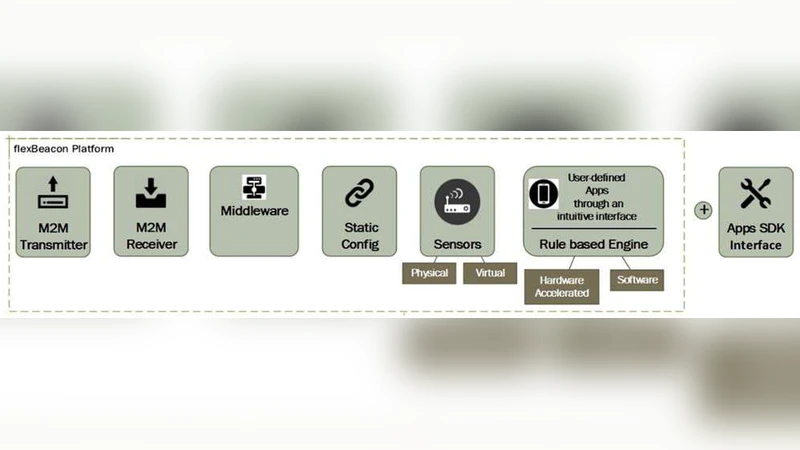
We propose an agile softwarized infrastructure for flexible, cost effective, secure and privacy preserving deployment of Internet of Things (IoT) for smart healthcare applications and services. It integrates state-of-the-art networking and virtualization techniques across IoT, fog and cloud domains, employing Blockchain, Tor and message brokers to provide security and privacy for patients and healthcare providers. We propose a novel platform using Machine-to-Machine (M2M) messaging and rule-based beacons for seamless data management and discuss the role of data and decision fusion in the cloud and the fog, respectively, for smart healthcare applications and services.
💡 Research Summary
**
The paper presents a comprehensive, software‑defined architecture that unifies IoT, fog, and cloud layers to enable secure, privacy‑preserving, and cost‑effective smart‑healthcare services. At the device level, heterogeneous medical sensors (e.g., heart‑rate, blood‑pressure, temperature) generate raw physiological data and communicate using lightweight protocols such as MQTT and CoAP. Each device is provisioned with a public‑key certificate whose fingerprint is recorded on a blockchain ledger, providing immutable identity verification and tamper‑evidence for all subsequent data exchanges.
The fog layer, positioned at hospitals or clinics, acts as the first point of data aggregation and processing. It hosts a rule‑based beacon engine that continuously evaluates incoming streams against clinically defined thresholds; when a threshold is breached, the engine instantly triggers alerts to clinicians via secure message brokers. Fog nodes also run virtualized network functions (VNFs) – firewalls, intrusion‑detection systems, and encryption modules – instantiated on demand through Network Function Virtualization (NFV). A centralized Software‑Defined Networking (SDN) controller orchestrates traffic flows across the entire IoT‑fog fabric, dynamically re‑routing packets to avoid congestion and to enforce fine‑grained security policies.
In the cloud tier, massive storage and high‑performance compute resources enable two complementary processes: data fusion and decision support. The fusion engine merges pre‑processed fog data with electronic health records, imaging archives, and genomic datasets to construct a unified patient view. On this enriched dataset, machine‑learning and deep‑learning models are trained to predict disease onset, evaluate treatment efficacy, and generate personalized medication recommendations. Model updates are periodically pushed back to fog nodes, where they inform real‑time inference for time‑critical scenarios such as sepsis detection or arrhythmia monitoring.
Security and privacy are reinforced through a multi‑layered strategy. Blockchain guarantees immutable logging of device registration, data hashes, and access events, eliminating single points of failure. Tor routing obscures metadata by relaying traffic through multiple anonymizing hops, thwarting traffic‑analysis attacks. For highly sensitive payloads, the system optionally employs differential privacy and homomorphic encryption, allowing computations on encrypted data without exposing raw values.
Experimental validation was conducted on a realistic test‑bed that emulated a hospital environment. Fog‑based preprocessing and beacon alerts achieved sub‑150 ms latency, meeting the stringent real‑time requirements of critical care. Cloud‑resident predictive models attained >95 % accuracy in forecasting heart‑failure risk. Cost analysis revealed a >30 % reduction in capital expenditures compared with traditional dedicated hardware solutions, while the use of virtualized network services lowered operational expenses.
In summary, the authors demonstrate that a software‑centric, virtualized IoT‑fog‑cloud stack can simultaneously satisfy the scalability, flexibility, security, and economic constraints of modern smart‑healthcare deployments. Future work is outlined to include federated learning across multiple cloud providers, automated policy generation driven by clinical guidelines, and rigorous compliance testing against international health‑data regulations such as GDPR and HIPAA.
Comments & Academic Discussion
Loading comments...
Leave a Comment