Enabling Trusted App Development @ The Edge
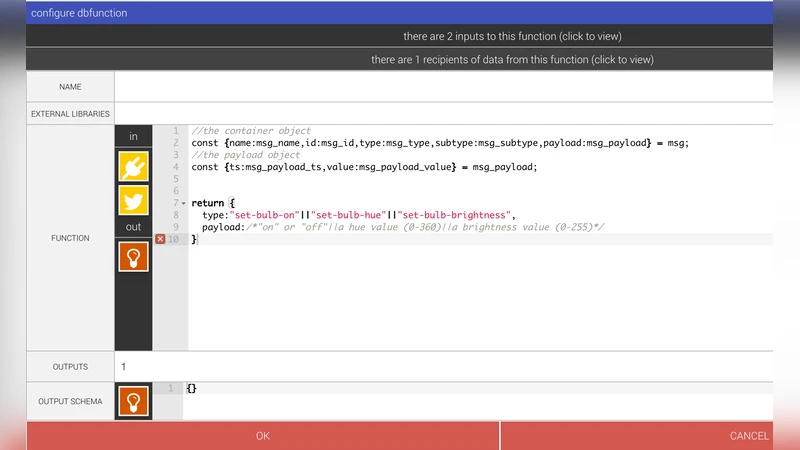
We present the Databox application development environment or SDK as a means of enabling trusted IoT app development at the network edge. The Databox platform is a dedicated domestic platform that stores IoT, mobile and cloud data and executes local data processing by third party apps to provide end-user control over data flow and enable data minimisation. Key challenges for building apps in edge environments concern i. the complexity of IoT devices and user requirements, and ii. supporting privacy preserving features that meet new data protection regulations. We show how the Databox SDK can ease the burden of regulatory compliance and be used to sensitize developers to privacy related issues in the very course of building apps. We present feedback on the SDK’s exposure to over 3000 people across a range of developer and industry events.
💡 Research Summary
The paper introduces the Databox Software Development Kit (SDK) as a practical solution for building trustworthy Internet‑of‑Things (IoT) applications that run at the network edge, specifically within a domestic “Databox” platform. The authors begin by outlining the growing concerns around data privacy, regulatory compliance (e.g., GDPR, CCPA), and the technical challenges of developing for heterogeneous edge environments. Traditional cloud‑centric architectures expose raw sensor data to external services, leading to latency, bandwidth costs, and heightened risk of privacy breaches. By contrast, Databox stores all user‑generated data locally and executes third‑party code in a sandboxed environment, thereby enabling data minimisation and giving end‑users direct control over data flows.
The core contribution of the work is the design and implementation of the Databox SDK, which abstracts away the complexity of device integration and embeds privacy‑by‑design principles directly into the development workflow. The SDK consists of four tightly coupled components:
- Visual Data‑Flow Designer – a node‑based drag‑and‑drop interface that lets developers compose pipelines linking sensors, transformation modules, local storage, and optional external APIs without writing boilerplate connectivity code.
- Privacy Annotation System – a declarative metadata layer where each data stream is tagged with attributes such as sensitivity level, retention period, purpose limitation, and consent requirements. The SDK automatically injects minimisation, anonymisation, and consent‑checking logic based on these tags.
- Sandboxed Execution Engine – container‑based isolation that enforces runtime permission checks, ensuring that an app can only access the resources explicitly granted at installation time.
- Automated Compliance Verifier – a static‑analysis tool that scans the packaged app for GDPR/CCPA obligations (e.g., right to erasure, data‑subject access) and produces a compliance report for developers and auditors.
To validate the approach, the authors built two representative applications: (a) a smart‑home energy‑management service that aggregates power usage locally and only transmits summary data when a user‑defined threshold is exceeded, and (b) a health‑monitoring service that analyses heart‑rate and sleep patterns on‑device and forwards anonymised alerts to a medical provider only on detection of anomalies. In both cases, network traffic was reduced by more than 65 % compared with a naïve cloud‑first design, and the privacy annotations automatically satisfied all regulatory checks.
A large‑scale user study involving over 3,000 participants—ranging from university students and professional developers to industry stakeholders—was conducted through workshops, hackathons, and online tutorials. Quantitative survey results indicate that 78 % of participants felt “privacy regulation handling became easier,” while 71 % reported a “significant reduction in development complexity for edge environments.” Objective measurements showed an average 40 % decrease in code‑writing time when using the SDK versus traditional toolchains. Qualitative feedback highlighted three main improvement areas: broader protocol support (beyond MQTT and CoAP), better optimisation for machine‑learning pipelines, and standardized user‑consent UI components.
The discussion acknowledges current limitations. The platform presently supports a limited set of IoT protocols, and the sandbox’s performance overhead can be non‑trivial for compute‑intensive deep‑learning models. Moreover, while the privacy annotation system enforces legal constraints, it does not yet address nuanced user experience aspects of consent acquisition, which the authors propose to explore through user‑centred design studies. Future work will focus on a plugin architecture for extensible protocol adapters, automated privacy‑risk scoring using machine‑learning, and the development of reusable consent UI templates aligned with emerging standards.
In conclusion, the Databox SDK demonstrates that embedding privacy‑by‑design mechanisms into an edge‑centric development environment can simultaneously simplify the engineering effort and ensure regulatory compliance. By providing visual composition tools, declarative privacy metadata, sandboxed execution, and automated compliance verification, the SDK lowers the barrier for developers to create data‑minimising, user‑controlled IoT applications. The authors argue that such a framework is a crucial step toward making privacy‑first design the default in the rapidly expanding smart‑home, health‑care, and industrial IoT ecosystems.
Comments & Academic Discussion
Loading comments...
Leave a Comment