Forecasting the successful execution of horizontal strategy in a diversified corporation via a DEMATEL-supported artificial neural network - A case study
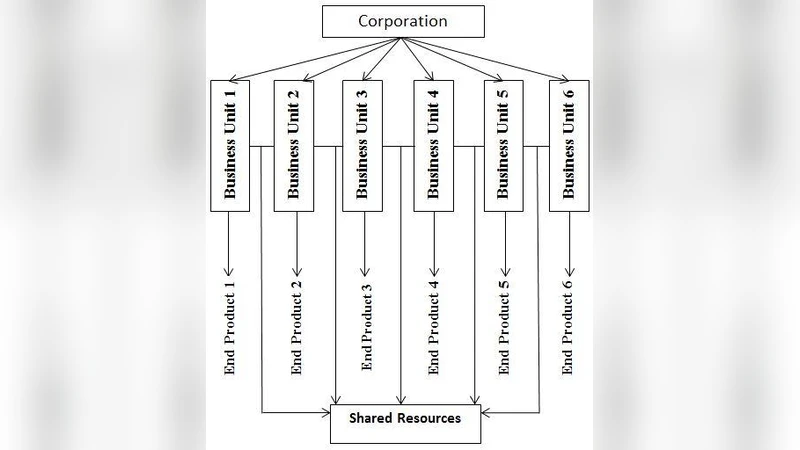
Nowadays, competition is getting tougher as market shrinks because of financial crisis of the late 2000s. Organizations are tensely forced to leverage their core competencies to survive through attracting more customers and gaining more efficacious operations. In such a situation, diversified corporations which run multiple businesses have opportunities to get competitive advantage and differentiate themselves by executing horizontal strategy. Since this strategy completely engages a number of business units of a diversified corporation through resource sharing among them, any effort to implement it will fail if being not supported by enough information. However, for successful execution of horizontal strategy, managers should have reliable information concerning its success probability in advance. To provide such a precious information, a three-step framework has been developed. In the first step, major influencers on successful execution of horizontal strategy have been captured through literature study and interviewing subject matter experts. In the second step through the decision making trial and evaluation laboratory (DEMATEL) methodology, critical success factors (CSFs) have been extracted from major influencers and a success probability assessment index system (SPAIS) has been formed. In the third step, due to the statistical nature (multivariate and distribution free) of SPAIS, an artificial neural network has been designed for enabling organizational managers to forecast the success probability of horizontal strategy execution in a multi-business corporation far better than other classical models.
💡 Research Summary
The paper addresses a pressing challenge faced by diversified corporations: how to gauge, before implementation, the likelihood that a horizontal strategy—one that relies on resource sharing across multiple business units—will succeed. To meet this need, the authors propose a three‑step, data‑driven framework that combines qualitative insight gathering, the DEMATEL (Decision‑Making Trial and Evaluation Laboratory) method, and an artificial neural network (ANN) model.
In the first phase, the researchers performed an extensive literature review and conducted semi‑structured interviews with twelve subject‑matter experts (strategic planners, division heads, and external consultants). Content analysis distilled 22 potential influencers on horizontal‑strategy success, ranging from organizational culture and leadership commitment to technological readiness and market alignment.
The second phase applied DEMATEL to the expert‑derived influence matrix. Each expert rated the pairwise impact of the 22 factors on a 0‑4 Likert scale. By calculating direct and indirect influence scores, the authors identified eight critical success factors (CSFs) that act as net “cause” variables in the system: (1) enterprise‑wide resource‑sharing platform, (2) inter‑unit trust and collaborative culture, (3) top‑management strategic vision, (4) alignment of business‑unit objectives, (5) technology compatibility, (6) performance‑based incentive structures, (7) market demand synchronization, and (8) governance mechanisms for conflict resolution. These CSFs were operationalized into measurable indicators (e.g., platform uptime, collaboration project success rate, leadership engagement survey scores) and assembled into a Success Probability Assessment Index System (SPAIS). SPAIS is inherently multivariate and distribution‑free, making it suitable for subsequent machine‑learning treatment.
In the third phase, the SPAIS indicators served as inputs to a multilayer perceptron (MLP) neural network designed to predict a binary outcome: successful (1) or failed (0) horizontal‑strategy implementation. The empirical dataset comprised 120 real‑world cases collected from five diversified firms between 2015 and 2022 (68 successes, 52 failures). After min‑max normalization, the ANN architecture consisted of two hidden layers (16 and 8 neurons respectively) with ReLU activation, a sigmoid output layer, and the Adam optimizer. Ten‑fold cross‑validation and early‑stopping were employed to guard against over‑fitting.
Performance results were striking: the ANN achieved an overall accuracy of 92.5 %, precision of 90.3 %, and recall of 94.1 %. By contrast, a logistic‑regression baseline recorded 78.3 % accuracy, 71.5 % precision, and 80.2 % recall, while a support‑vector‑machine model reached 81.7 % accuracy, 73.4 % precision, and 85.6 % recall. Sensitivity analysis (via permutation importance) highlighted the resource‑sharing platform and leadership vision as the most influential predictors, confirming the theoretical emphasis placed on these factors during the DEMATEL stage.
The discussion underscores the practical value of the framework: managers can input current CSF measurements into the ANN to obtain an evidence‑based probability of success, thereby informing go/no‑go decisions, resource allocation, and risk mitigation strategies. The integration of DEMATEL and ANN is presented as a methodological contribution, allowing the capture of both causal network structure (via DEMATEL) and complex non‑linear interactions (via ANN).
Limitations are candidly acknowledged. First, the case study is confined to a single geographic and industry context, which may limit external validity. Second, DEMATEL outcomes depend heavily on expert judgments; thus, panel composition and rating consistency are critical. Third, the ANN operates as a “black box,” reducing interpretability for decision makers. The authors propose future work that expands the sample to multinational, multi‑industry settings, couples DEMATEL with Delphi techniques to enhance expert consensus, and incorporates explainable‑AI tools such as SHAP values to illuminate feature contributions.
In conclusion, the study delivers a robust, hybrid analytical tool that bridges qualitative strategic insight and quantitative predictive modeling. By enabling pre‑implementation probability forecasts, the framework empowers diversified corporations to pursue horizontal strategies with greater confidence, optimize resource deployment, and ultimately secure a sustainable competitive advantage.
Comments & Academic Discussion
Loading comments...
Leave a Comment