Crowd-Powered Sensing and Actuation in Smart Cities: Current Issues and Future Directions
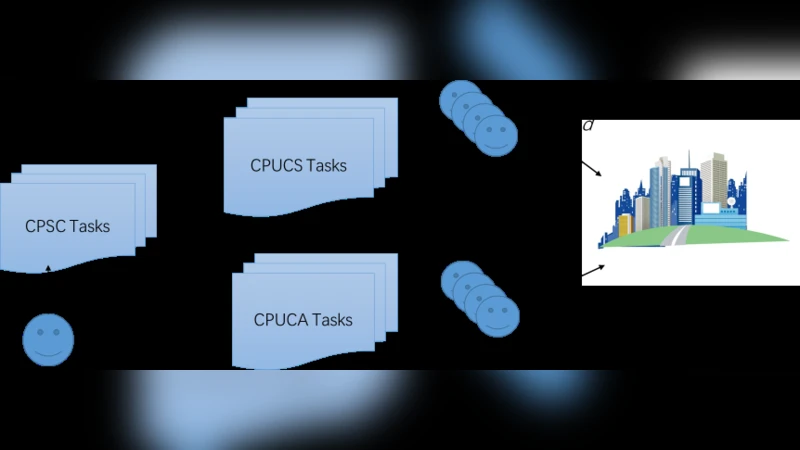
With the advent of seamless connection of human, machine, and smart things, there is an emerging trend to leverage the power of crowds (e.g., citizens, mobile devices, and smart things) to monitor what is happening in a city, understand how the city is evolving, and further take actions to enable better quality of life, which is referred to as Crowd-Powered Smart City (CPSC). In this article, we provide a literature review for CPSC and identify future research opportunities. Specifically, we first define the concepts with typical CPSC applications. Then, we present the main characteristics of CPSC and further highlight the research issues. In the end, we point out existing limitations which can inform and guide future research directions.
💡 Research Summary
The paper introduces the concept of a Crowd‑Powered Smart City (CPSC), a paradigm in which humans, mobile devices, and smart objects collectively sense, analyze, and act upon urban phenomena in real time. After defining CPSC, the authors illustrate typical applications such as traffic flow monitoring with adaptive signal control, environmental pollution detection with citizen alerts, disaster response coordination through crowd collaboration, and automated public‑service feedback loops for waste collection or facility management. These use cases share a three‑stage pipeline—sensing, analysis, and actuation—driven by a heterogeneous set of participants.
The authors identify four core characteristics of CPSC. First, data originate from multiple, heterogeneous sources (sensors, smartphones, social media, CCTV, etc.), leading to variability in format, quality, and trustworthiness. Second, the system must operate continuously with low latency, requiring streaming analytics, edge computing, and high‑speed networks. Third, actuation mechanisms rely on incentive design, feedback provision, and automated control (e.g., dynamic traffic lights, adaptive lighting). Fourth, participant diversity spans citizens, enterprises, public agencies, and autonomous agents such as drones or robots, each with distinct goals and constraints, necessitating robust collaboration frameworks and governance structures.
Technical research challenges are examined in depth. Data quality assurance is paramount because crowd‑generated streams are prone to noise, duplication, and malicious manipulation; thus, reliability scoring, anomaly detection, and cleansing pipelines are essential. Privacy and security concerns arise from the inclusion of location and behavioral information; the paper discusses anonymization, differential privacy, encryption, and the need for complementary legal safeguards. Incentive mechanisms are highlighted as a key factor for sustained participation; the authors compare monetary rewards, social recognition, gamification, and personalized feedback, emphasizing the trade‑off between cost efficiency and fairness. Real‑time processing infrastructure is currently dominated by cloud‑centric designs, but the authors argue for hybrid edge‑cloud architectures to improve scalability, energy consumption, and latency, while acknowledging existing bottlenecks.
Beyond technical issues, the paper critiques the current research landscape for being overly technology‑centric and insufficiently attentive to policy, regulation, and societal acceptance. Standardized data interfaces and APIs are called for, alongside clear legal frameworks governing data ownership, usage rights, and liability. The authors stress the importance of citizen education and participatory culture to build trust and encourage long‑term engagement. Public‑private partnership models must be explicitly defined to align incentives and responsibilities across stakeholders.
The limitations identified include the lack of integrated platforms that can seamlessly fuse heterogeneous data streams, the absence of scalable algorithms capable of real‑time city‑wide prediction and control, and insufficient mechanisms to balance privacy protection with data utility. To address these gaps, the authors propose a research roadmap: (1) develop modular, standards‑based CPSC platforms; (2) design scalable streaming analytics and control algorithms; (3) advance privacy‑utility trade‑off techniques such as differential privacy tuned for urban contexts; (4) create sustainable hybrid incentive schemes informed by behavioral economics; and (5) formulate comprehensive policy and legal instruments that codify data governance, accountability, and citizen rights.
In conclusion, the paper argues that realizing the full potential of crowd‑powered sensing and actuation in smart cities requires a multidisciplinary approach that integrates advanced computing, robust privacy safeguards, incentive economics, and forward‑looking governance. Only by harmonizing these technical, social, and regulatory dimensions can cities leverage the collective intelligence of their inhabitants and devices to deliver higher quality of life, resilience, and sustainability.
Comments & Academic Discussion
Loading comments...
Leave a Comment