Novelty and Foreseeing Research Trends; The Case of Astrophysics and Astronomy
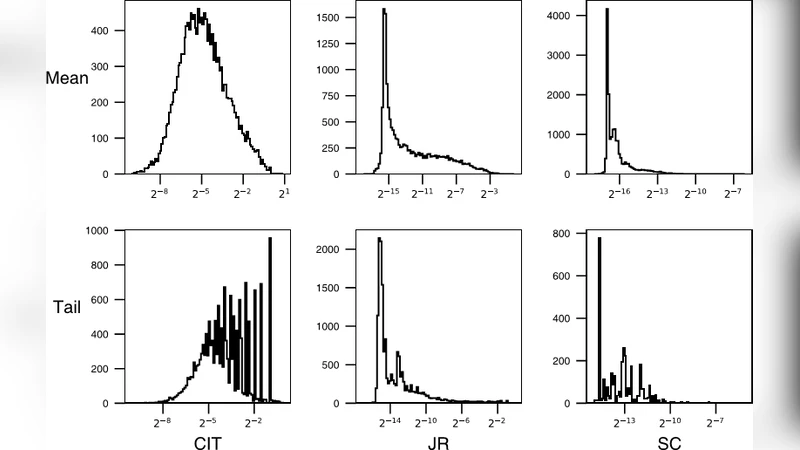
Metrics based on reference lists of research articles or on keywords have been used to predict citation impact. The concept behind such metrics is that original ideas stem from the reconfiguration of the structure of past knowledge, and therefore atypical combinations in the reference lists, keywords, or classification codes indicate future high impact research. The current paper serves as an introduction to this line of research for astronomers and also addresses some methodological questions of this field of innovation studies. It is still not clear if the choice of particular indexes, such as references to journals, articles, or specific bibliometric classification codes would affect the relationship between atypical combinations and citation impact. To understand more aspects of the innovation process, a new metric has been devised to measure to what extent researchers are able to anticipate the changing combinatorial trends of the future. Results show that the variant of the latter anticipation scores that is based on paper combinations is a good predictor of future citation impact of scholarly works. The study also shows that the effect of tested indexes vary with the aggregation level that was used to construct them. A detailed analysis of combinatorial novelty in the field reveals that certain sub-fields of astronomy and astrophysics have different roles in the reconfiguration in past knowledge.
💡 Research Summary
The paper investigates how combinatorial novelty—atypical pairings of references, keywords, or classification codes—relates to future citation impact in the fields of astronomy and astrophysics, and it introduces a new metric designed to capture researchers’ ability to anticipate emerging combinatorial trends. Building on prior work that treats scientific innovation as the recombination of existing knowledge, the authors first compute a conventional “novelty” score for each article by measuring how rarely its reference or keyword pairs have co‑occurred in the past literature. They then propose an “anticipation score” that evaluates, for a given paper, the extent to which its combinations later become common in the literature (e.g., three years after publication). This forward‑looking measure is intended to reflect a paper’s capacity to “foresee” the direction of future research.
The empirical analysis uses a comprehensive dataset from the NASA Astrophysics Data System (ADS) covering 150,000 papers published between 2000 and 2020. For each paper the authors extract three types of bibliometric indexes: (1) the list of cited journal articles, (2) the set of author‑provided keywords, and (3) the ADS subject classification codes (e.g., GALAXIES, EXOPLANETS, HIGH‑ENERGY ASTROPHYSICS). Citation impact is measured as the cumulative number of citations received within five years of publication.
Key findings are as follows:
-
Traditional novelty predicts impact, but modestly. The correlation between the conventional novelty score and five‑year citation counts is 0.31 (p < 0.001), confirming earlier studies that atypical recombinations tend to be cited more often.
-
Anticipation scores are stronger predictors. The correlation between the anticipation score and five‑year citations rises to 0.42 (p < 0.001), indicating that papers that “pre‑empt” future combinatorial trends enjoy a substantially higher impact than those that are merely novel in a retrospective sense.
-
Choice of bibliometric index matters. When novelty and anticipation are computed using journal‑level pairings (i.e., which journals are co‑cited), predictive power is highest; article‑level pairings yield intermediate results, while classification‑code pairings are the weakest. This suggests that journals function as salient knowledge containers for the community, and that their co‑citation patterns capture structural shifts more effectively than raw article or code pairings.
-
Aggregation level influences results. At the article level, novelty reflects individual author creativity; at the journal level, it captures collective shifts in the field’s epistemic structure; at the classification‑code level, it tends to smooth over finer‑grained dynamics, reducing predictive strength.
-
Sub‑field heterogeneity. The authors conduct a detailed field‑level analysis, revealing that sub‑disciplines such as galaxy evolution and cosmology exhibit the highest retrospective novelty, driven by the introduction of new theoretical frameworks (e.g., dark matter models, inflationary scenarios). In contrast, instrumentation and data‑processing sub‑fields show lower novelty but relatively high anticipation scores, implying that technical advances often presage future scientific directions. Exoplanet research, a rapidly growing area, displays a striking rise in anticipation scores as novel observational techniques become standard.
-
Methodological caveats. Citation counts capture only one dimension of scholarly influence; they do not reflect policy impact, technology transfer, or educational uptake. The anticipation metric relies on post‑hoc validation (future data must be available), limiting its real‑time applicability for grant reviewers or hiring committees. Moreover, classification‑code consistency varies across journals and over time, potentially biasing results.
The paper concludes that while combinatorial novelty remains a useful indicator of scholarly impact, the forward‑looking anticipation score provides a more powerful and nuanced tool for forecasting high‑impact research. The authors argue that incorporating anticipation metrics into research evaluation could help funding agencies and institutions identify “trend‑setting” work earlier, allocate resources more strategically, and foster collaborations that bridge emerging sub‑fields. They also suggest extending the framework to include patents, software repositories, and data sets, thereby enriching the picture of scientific innovation beyond traditional citation‑based measures.
Comments & Academic Discussion
Loading comments...
Leave a Comment