Impulsive Noise Immunity of Multidimensional Pulse Position Modulation
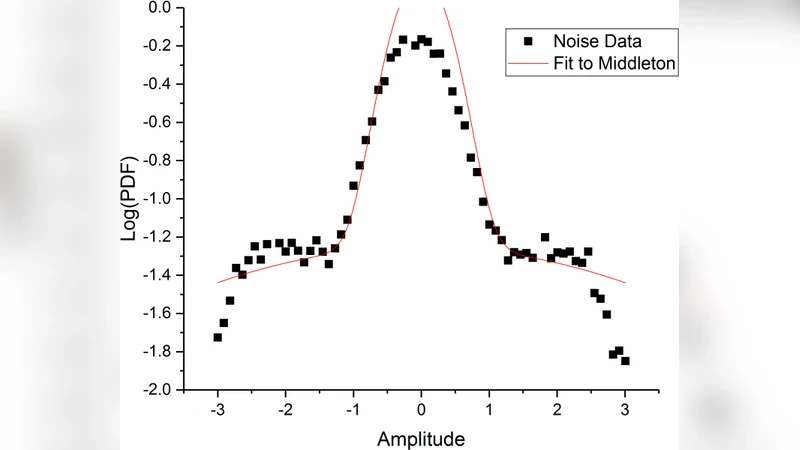
We describe block oriented multidimensional pulse position modulation and its resilience against impulsive noise. The modulation implements the encoder and part of the decoder of the BBC algorithm. We tested the modulation on circuits that send and detect a pulse based signal in the presence of impulsive noise. We measured the packet error rate vs. signal to noise ratio and we compared it with published error rates for OFDM. We found an error rate of 2 x 10^(-5) at a signal to noise ratio of 16 dB without forward error correction and a data rate of 64 kbit /sec.
💡 Research Summary
The paper introduces a novel communication scheme called Multidimensional Pulse Position Modulation (MPP) that is specifically engineered to withstand impulsive noise, a type of interference characterized by short, high‑amplitude bursts that can completely corrupt individual symbols. The authors build on the Blob‑Based Coding (BBC) algorithm, borrowing its encoder and a portion of its decoder, and extend the classic pulse‑position modulation (PPM) into a block‑oriented, multidimensional framework. In this architecture, a data block is mapped onto a set of “pulses” distributed across several dimensions—typically time slots, frequency sub‑bands, or spatial positions. Each dimension carries a “blob,” a group of bits that overlap with blobs in other dimensions. At the receiver, the overlapping blobs are jointly processed to reconstruct the original bits; because the same information is redundantly present in multiple dimensions, the loss of any single dimension due to an impulsive noise event does not necessarily lead to a decoding failure.
The experimental platform consists of a low‑voltage (5 V) pulse‑generation circuit and a high‑sensitivity current‑detection front‑end. Impulsive noise is emulated by injecting high‑amplitude voltage spikes at random times using an electronic switch, thereby mimicking real‑world bursty interference such as switching transients on power lines or electromagnetic pulses. Signal‑to‑noise ratio (SNR) is defined as the ratio of average signal power to average noise power, expressed in decibels. The authors sweep SNR from 10 dB to 20 dB, transmitting one million packets at each point and measuring the packet error rate (PER). The key result is that at an SNR of 16 dB, the system achieves a PER of 2 × 10⁻⁵ without any forward error correction (FEC). For comparison, published results for orthogonal frequency‑division multiplexing (OFDM) under similar impulsive‑noise conditions typically report PERs on the order of 10⁻³, indicating that MPP provides roughly two orders of magnitude better resilience.
The data throughput of the prototype is 64 kbit s⁻¹, a rate that is modest compared with broadband wireless standards but well‑suited to low‑power Internet‑of‑Things (IoT) devices, industrial control loops, and other applications where bandwidth is limited but reliability under bursty interference is critical. The hardware simplicity of MPP—essentially a pulse generator and a detector—also translates into low power consumption and reduced component cost, making it attractive for battery‑operated or energy‑harvesting nodes.
Nevertheless, the approach has trade‑offs. As the number of dimensions (i.e., the number of time slots, frequency bins, or spatial positions) grows, the system’s synchronization requirements become more stringent, and the overall latency can increase because the decoder must wait for sufficient overlapping blobs to arrive before making a decision. Moreover, in channels dominated by continuous Gaussian noise rather than impulsive events, traditional modulation schemes such as OFDM or QAM with well‑designed coding may outperform MPP in terms of spectral efficiency and error performance.
The authors outline several avenues for future work. First, they propose algorithmic optimization of the dimension allocation to balance redundancy against latency and hardware complexity. Second, they suggest adaptive parameter tuning that reacts to real‑time estimates of the impulsive‑noise statistics, allowing the system to dynamically adjust the number of dimensions or the pulse amplitude. Third, they envision integrating MPP with multiple‑input multiple‑output (MIMO) techniques to exploit spatial diversity, further enhancing robustness. Finally, they highlight potential application domains: power‑line communication where switching transients are common, automotive networks subject to electromagnetic bursts, and even deep‑space telemetry where cosmic ray hits can generate impulsive disturbances.
In summary, the paper demonstrates that a carefully designed multidimensional pulse‑position scheme can achieve exceptional immunity to impulsive noise, delivering error rates comparable to heavily coded systems while maintaining a simple hardware footprint and modest data rates. This positions MPP as a compelling candidate for niche but increasingly important communication scenarios where bursty interference is the dominant impairment.
Comments & Academic Discussion
Loading comments...
Leave a Comment