A new class of SETI beacons that contain information (22-aug-2010)
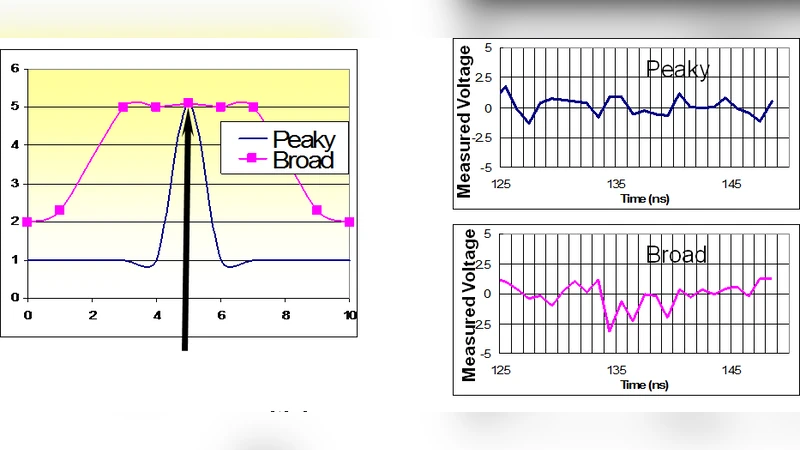
In the cm-wavelength range, an extraterrestrial electromagnetic narrow band (sine wave) beacon is an excellent choice to get alien attention across interstellar distances because 1) it is not strongly affected by interstellar / interplanetary dispersion or scattering, and 2) searching for narrowband signals is computationally efficient (scales as Ns log(Ns) where Ns = number of voltage samples). Here we consider a special case wideband signal where two or more delayed copies of the same signal are transmitted over the same frequency and bandwidth, with the result that ISM dispersion and scattering cancel out during the detection stage. Such a signal is both a good beacon (easy to find) and carries arbitrarily large information rate (limited only by the atmospheric transparency to about 10 GHz). The discovery process uses an autocorrelation algorithm, and we outline a compute scheme where the beacon discovery search can be accomplished with only 2x the processing of a conventional sine wave search, and discuss signal to background response for sighting the beacon. Once the beacon is discovered, the focus turns to information extraction. Information extraction requires similar processing as for generic wideband signal searches, but since we have already identified the beacon, the efficiency of information extraction is negligible.
💡 Research Summary
The paper revisits the classic SETI strategy of searching for narrow‑band continuous‑wave (CW) beacons in the centimeter‑wave regime and points out a fundamental limitation: while a pure sine wave is easy to detect, it carries virtually no information. To overcome this, the authors propose a novel class of beacons that transmit multiple delayed copies of the same wide‑band waveform over the same frequency band. Because each copy experiences the same interstellar medium (ISM) dispersion and scattering, the delays cancel out when the received signal is processed with an autocorrelation algorithm. In practice the detection pipeline consists of a standard Fourier‑based narrow‑band search followed by a simple autocorrelation of the voltage time series. The computational cost rises only by a factor of two (Ns log Ns for the FFT plus an additional Ns for the autocorrelation), which is well within the capabilities of current SETI computing clusters.
The key insight is that the autocorrelation peak reveals both the presence of the beacon and the exact time offset between the copies. This offset allows the receiver to reconstruct the original waveform, effectively undoing ISM‑induced smearing without any prior knowledge of the dispersion measure. Consequently, the beacon is simultaneously a “high‑visibility” signal—easy to spot against the noise background—and a high‑capacity information carrier, limited only by the atmospheric transparency window up to roughly 10 GHz. Within this window, the theoretical information rate can reach hundreds of megabits per second or even gigabits per second, far exceeding the data rates of traditional CW beacons.
Signal‑to‑noise analysis shows that the autocorrelation process provides a quadratic gain in signal strength relative to the noise, because the noise contributions from the two copies are uncorrelated while the signal contributions add coherently. This dramatically improves detection sensitivity, especially for weak, distant sources. The authors also discuss the optimal frequency range (≈1–10 GHz) where Earth’s atmosphere is most transparent and where ISM effects are minimal, making the proposed beacons practical for both transmission and reception.
Once a beacon is identified, the extraction of the embedded message proceeds exactly as for any wide‑band communication signal: demodulation, error‑correction decoding, and data reconstruction. Since the beacon’s existence and its delay structure are already known, the additional processing overhead is negligible compared to the initial discovery stage.
The paper concludes with a roadmap for experimental validation. Modern radio transmitters can easily generate delayed copies of a baseband signal, and existing radio telescopes equipped with high‑speed digitizers can perform the required autocorrelation in real time. A coordinated, global network of observatories could monitor the 1–10 GHz band continuously, dramatically increasing the probability of detecting such information‑rich beacons. If an extraterrestrial civilization adopts this scheme, it would provide a robust, scalable method for both announcing its presence and transmitting complex data across interstellar distances.
Comments & Academic Discussion
Loading comments...
Leave a Comment