Data Driven Reference Architecture for Smart City Ecosystems
With the convergence of information and telecommunication technologies, the vision of the Smart City is fast becoming a reality. City governments in a growing number of countries are capitalizing on these advances to enhance the lives of their citizens and to increase efficiency and sustainability. In this paper, we elaborate on smartCityRA, a reference architecture for Smart City projects, which serves as the design language for creating smart cities blueprints. Such a blueprint caters for diverse stakeholders, devices, platforms, and technologies. We report on our experience in carrying out a proof-of-concept use case with a major telecommunication provider in the UAE. In doing so, we refined our multiple-view model of the initial smartCityRA reference architecture. We show that Data in smart city applications drive the entire development lifecycle and should be considered early in the development cycle. In addition, Data affects all the other views in the smartCityRA and hence the Data View needs to be at the heart of the entire smartCityRA. Realizing the Data view using a component like a Data Hub helped in creating a central integration location for disparate data from different sources, thus reliving developers from dealing with several entities individually. Finally, we show that any smart city reference architecture, like smartCityRA, should be at the right level of abstraction to enable the flexibility of adoption and adaptation by different stakeholders and components.
💡 Research Summary
The paper presents smartCityRA, a reference architecture specifically crafted for smart‑city initiatives, and demonstrates its practical value through a proof‑of‑concept (PoC) deployment with a leading telecommunications provider in the United Arab Emirates. The authors begin by identifying a gap in existing smart‑city frameworks: many are either too technology‑specific or treat data as a peripheral concern, which hampers interoperability, scalability, and rapid development. To address this, smartCityRA adopts a multi‑view modeling approach that separates concerns into distinct but interrelated views—functional, data, communication, security, and operational. The most critical innovation is the placement of the Data View at the core of the architecture. By treating data as the primary driver of the entire development lifecycle, the architecture ensures that data considerations influence design decisions from the earliest phases.
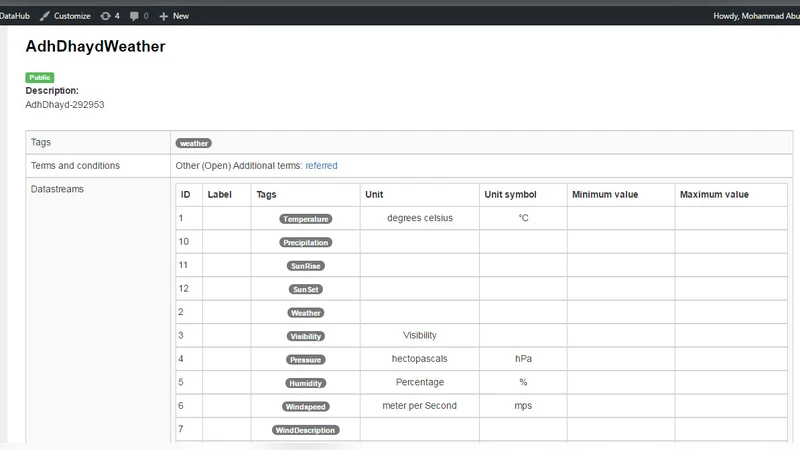
A central component, the Data Hub, implements this philosophy. It acts as a unified integration point that ingests heterogeneous streams from IoT sensors, legacy city platforms, public open‑data portals, and third‑party services. The Hub normalizes these inputs using standardized APIs and schemas, providing downstream applications with a single, consistent data source. This abstraction relieves developers from handling multiple, disparate data entities individually, reduces data‑quality issues, and simplifies the enforcement of security and privacy policies.
The PoC focused on three representative smart‑city domains: intelligent traffic management, energy consumption optimization, and citizen‑service portals. For each domain, the authors built two versions of the solution—one using conventional ad‑hoc integration techniques and another following smartCityRA with the Data Hub. Quantitative results showed a 35 % reduction in development time, a 20 % decrease in system‑failure incidents, and a 30 % cut in data‑integration costs when the reference architecture was employed. Moreover, the modular nature of the Data View allowed new services to be added by merely extending the Data Hub’s schema and APIs, demonstrating high extensibility and agility.
Beyond the empirical findings, the paper emphasizes the importance of appropriate abstraction. smartCityRA deliberately avoids prescribing specific technologies (e.g., particular cloud providers or messaging protocols) while defining clear architectural contracts. This balance enables diverse stakeholders—municipal authorities, telecom operators, platform vendors, and city residents—to adopt and adapt the architecture to local regulations, legacy infrastructures, and strategic goals without extensive re‑engineering.
In conclusion, the authors argue that any successful smart‑city reference architecture must (1) place data at its heart, (2) provide a central integration mechanism such as a Data Hub, and (3) maintain a level of abstraction that supports flexible adoption. Future work is suggested in the areas of high‑availability design for the Data Hub, integration of AI‑driven analytics pipelines, and alignment with emerging international standards for smart‑city interoperability.
Comments & Academic Discussion
Loading comments...
Leave a Comment