Towards the next generation of exergames: Flexible and personalised assessment-based identification of tennis swings
Current exergaming sensors and inertial systems attached to sports equipment or the human body can provide quantitative information about the movement or impact e.g. with the ball. However, the scope of these technologies is not to qualitatively assess sports technique at a personalised level, similar to a coach during training or replay analysis. The aim of this paper is to demonstrate a novel approach to automate identification of tennis swings executed with erroneous technique without recorded ball impact. The presented spatiotemporal transformations relying on motion gradient vector flow and polynomial regression with RBF classifier, can identify previously unseen erroneous swings (84.5-94.6%). The presented solution is able to learn from a small dataset and capture two subjective swing-technique assessment criteria from a coach. Personalised and flexible assessment criteria required for players of diverse skill levels and various coaching scenarios were demonstrated by assigning different labelling criteria for identifying similar spatiotemporal patterns of tennis swings.
💡 Research Summary
The paper addresses a critical gap in current exergaming and augmented coaching technologies: the inability to provide qualitative, coach‑like feedback on sports technique without relying on ball impact data. Focusing on tennis forehand swings, the authors develop a pipeline that captures high‑resolution 3‑D motion data using a nine‑camera optoelectronic system (50 Hz, sub‑millimetre accuracy) with a minimal set of retro‑reflective markers on the player’s body and racket. Expert coaches manually select a short action‑zone (ROI) of 0.14–0.26 seconds for each swing, and a virtual “sweet‑spot” marker is computed from three racket markers to represent the point of contact that a player would feel.
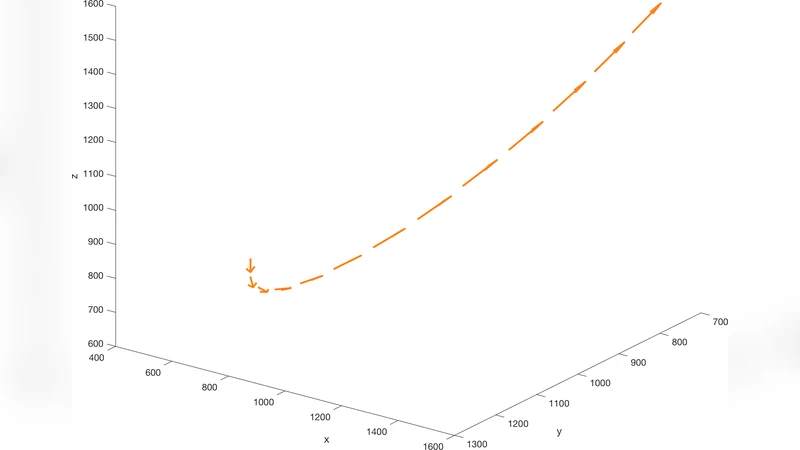
The core feature extraction technique, termed Feature Extraction Technique (FET), treats the swing as a single motion‑gradient vector flow of this virtual sweet‑spot. By differentiating the sweet‑spot trajectory over time, the method obtains displacement, velocity, and acceleration vectors, then constructs a gradient field that highlights the directions of greatest change in space‑time. This gradient field is subsequently reduced via polynomial regression to a compact descriptor.
For classification, a Radial Basis Function (RBF) neural network is employed. RBFs are well‑suited to capture non‑linear decision boundaries and can directly learn the subjective labels supplied by a coach (e.g., “good swing” vs. “bad swing”). The authors test two distinct labeling schemes reflecting different coaching priorities: (1) errors typical of beginners such as an open stance and insufficient swing volume, and (2) errors common among intermediate players, such as inadequate top‑spin generation or poor timing.
Training data consist of roughly 70 swings (30–40 per class), a deliberately small dataset to demonstrate the method’s data‑efficiency. Using five‑fold cross‑validation, the system achieves classification accuracies between 84.5 % and 94.6 %, with precision and recall consistently above 80 %. Importantly, the model successfully identifies previously unseen erroneous patterns, indicating that the gradient‑flow descriptor captures fundamental aspects of swing technique rather than over‑fitting to specific examples.
The study highlights several contributions: (1) a novel spatiotemporal transformation based on motion‑gradient vector flow that condenses complex 3‑D motion into a discriminative feature; (2) demonstration that a simple RBF classifier can learn from a very limited, expert‑labeled dataset; (3) proof of concept for flexible, personalized assessment criteria that can be swapped without retraining the underlying model; and (4) a workflow that produces anonymized 3‑D stick‑figure replays, facilitating privacy‑preserving expert review.
Limitations include the modest size and laboratory‑controlled nature of the dataset, which may not fully represent on‑court variability (different surfaces, lighting, or opponent interactions). The reliance on manual ROI selection also introduces a potential bottleneck for real‑time deployment. Future work is suggested in three directions: (a) integrating real‑time streaming from wearable inertial sensors to replace the lab‑based motion capture; (b) developing a cloud‑based labeling interface that allows coaches to define or modify assessment rules on‑the‑fly; and (c) expanding the approach to other sports (e.g., golf, squash) and building larger, publicly available motion datasets to validate generalization.
Overall, the paper presents a compelling step toward the next generation of exergames and augmented coaching systems that can deliver coach‑level qualitative feedback, personalize training across skill levels, and operate effectively with limited data—a promising foundation for more immersive, skill‑focused digital sport experiences.
Comments & Academic Discussion
Loading comments...
Leave a Comment