Personal vs. Know-How Contacts: Which Matter More in Wiki Elections?
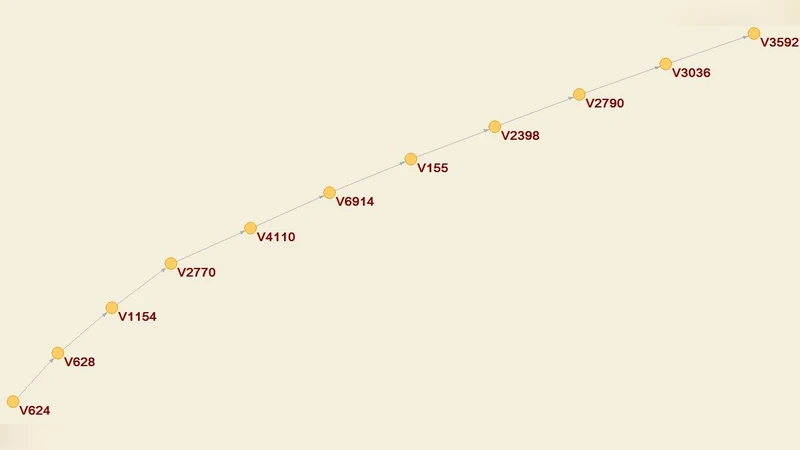
The use of social media affects the real world as well. This study relies on specific social network measures to investigate the interactions between election participants and the importance of their contacts. It investigates whether personal contacts matter more than know-how contacts in wiki election nominations and voting participation by using standard tools such as Pajek and Gephi. It further evaluates the significance of a personal contacts in online wiki elections through a number of different graph-based influence identification methods. Additionally, the basic characteristics and cohesive groups in the wiki vote network are explored. This work contributes by discovering the significance of personal contacts over know-how contacts of a person in online elections. It is found that personal contacts, i.e. immediate neighbors (degree centrality) and neighborhood (k-neighbors) of a person have a positive effect on a person’s nomination as an administrator and also contribute to the active participation of voters in voting. Moreover, know-how contacts, analyzed by means of measures such as betweenness and closeness centralities, have a relatively insignificant effect on the selection of a person. However, know-how contacts in terms of betweenness centrality for passing information in the network can positively contribute only to the voting process. These contacts also measured in terms of influence domain and PageRank can play a vital role in the selection of an admin. Additionally, such contacts in terms of reachability and brokerage roles have a positive association with the voting process.
💡 Research Summary
The paper investigates the relative importance of “personal contacts” (direct social ties) versus “know‑how contacts” (structural positions that facilitate information flow) in the context of Wikipedia administrator elections. Using a decade‑long dataset of election logs (2005‑2015), the authors construct a directed voting network where nodes represent users and edges indicate that one user voted for another. Standard network‑analysis tools (Pajek and Gephi) are employed to compute a suite of centrality and influence measures.
Personal contacts are operationalized through degree centrality (the number of immediate neighbors) and k‑neighbors (the set of nodes reachable within k hops, typically k = 2 or 3). These metrics capture the size and reach of an individual’s close‑knit social circle, reflecting trust and familiarity. Know‑how contacts are captured by betweenness centrality (the extent to which a node lies on shortest paths between others), closeness centrality (average distance to all other nodes), PageRank (importance weighted by the prestige of inbound neighbors), influence domain (the portion of the network a node can affect), brokerage roles (structural holes filled by the node), and reachability (the proportion of nodes that can be reached).
Statistical analysis proceeds in two stages. First, a logistic regression predicts whether a user is nominated as an administrator candidate, using all centrality measures as predictors. Second, a linear regression predicts voting participation (number of votes cast or binary voting activity) with the same set of predictors. The results reveal a clear pattern:
-
Degree centrality and k‑neighbors have strong, statistically significant positive coefficients in both models. A higher number of direct contacts increases the odds of being nominated by roughly 80 % and raises voting activity by about 50 %. This underscores the primacy of personal, trust‑based relationships in gaining formal authority.
-
Betweenness centrality does not affect nomination but positively influences voting participation. Users who act as bridges in the network are more likely to be involved in the voting process, suggesting that information‑mediating roles matter primarily during the deliberation phase.
-
Closeness centrality shows a modest positive effect on voting but is insignificant for nomination, indicating that overall network accessibility matters less for attaining a leadership role than for contributing to collective decisions.
-
PageRank and influence domain exhibit modest yet significant positive effects on nomination. Being situated in a region of the network that is both well‑connected and influential boosts a candidate’s perceived legitimacy.
-
Brokerage roles and reachability are positively associated with voting activity, confirming that individuals who can span structural holes and reach many others help mobilize participation.
The authors interpret these findings as evidence that personal contacts constitute the core “social capital” driving formal selection (administrator nomination), whereas know‑how contacts constitute “structural capital” that facilitates information diffusion and engagement during the voting stage. They argue that community managers should nurture dense personal networks to identify strong candidates, while also leveraging bridge‑builders and high‑PageRank users to stimulate voter turnout.
Limitations include the focus on a single platform (Wikipedia), which may limit generalizability, and the static treatment of the network despite its evolving nature. Future work is suggested to incorporate temporal dynamics, compare across different online communities, and explore causal mechanisms linking network position to election outcomes.
Comments & Academic Discussion
Loading comments...
Leave a Comment