A Provenance Framework for Policy Analytics in Smart Cities
Sustainable urban environments based on Internet of Things (IoT) technologies require appropriate policy management. However, such policies are established as a result of underlying, potentially complex and long-term policy making processes. Consequently, better policies require improved and verifiable planning processes. In order to assess and evaluate the planning process, transparency of the system is pivotal which can be achieved by tracking the provenance of policy making process. However, at present no system is available that can track the complete cycle of urban planning and decision making. We propose to capture the complete process of policy making and to investigate the role of IoT provenance to support design-making for policy analytics and implementation. The environment in which this research will be demonstrated is that of Smart Cities whose requirements will drive the research process.
💡 Research Summary
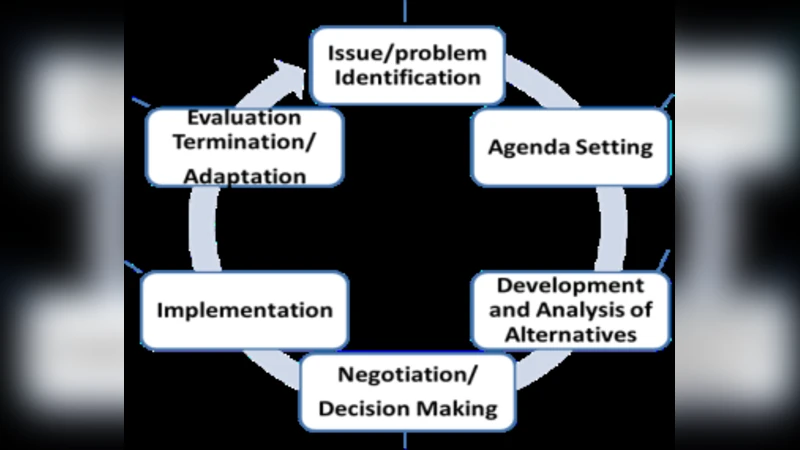
The paper addresses the growing challenge of managing complex, multi‑stakeholder urban policy processes in the context of Smart Cities, where Internet‑of‑Things (IoT) devices generate massive streams of heterogeneous data. The authors argue that current governance models lack a comprehensive mechanism to record the entire policy life‑cycle—from problem identification through agenda setting, analysis, negotiation, implementation, and evaluation—thereby limiting transparency, accountability, and the ability to learn from past decisions.
To fill this gap, they propose a provenance‑based framework that captures “who, what, when, where, why, and how” for every datum and activity involved in policy making. The technical backbone combines Model‑Driven Engineering (MDE) with the description‑driven CRISTAL system. MDE is used to define a domain‑specific language (DSL) that models each phase of the policy cycle as a set of inputs, outputs, tasks, and stakeholder roles. CRISTAL then dynamically generates and extends a provenance schema based on this meta‑model, storing detailed lineage information in a centralized repository. This approach enables automatic, fine‑grained logging of data sources (e.g., IoT sensors, city databases, surveys), analytical methods (statistical models, machine‑learning algorithms), stakeholder opinions, and decision rationales.
The authors illustrate the framework with a concrete case study on air‑quality management in a hypothetical “City A.” High concentrations of CO and NO are detected by IoT air‑monitoring stations. Sensor data, traffic flow records, and vehicle registration information are collected and fed into analytical pipelines that identify traffic as a primary pollutant source. All provenance artifacts—raw measurements, preprocessing steps, algorithmic parameters, expert comments, and citizen feedback—are recorded. The resulting evidence informs a negotiation among city planners, environmental agencies, and the public, leading to a policy that reroutes traffic during peak pollution periods. Implementation metrics (e.g., percentage of diverted vehicles) and evaluation criteria (e.g., reduction in pollutant levels) are continuously monitored and logged, providing a full audit trail.
Beyond traceability, the stored provenance is positioned as a rich data source for “policy analytics.” By applying data‑mining, machine‑learning, and value‑driven analysis techniques to the provenance repository, policymakers can uncover patterns of success or failure, assess the impact of stakeholder values, and predict outcomes of alternative policy scenarios. The paper also notes that provenance can support opinion mining, conflict resolution, and social learning, thereby enhancing participatory governance.
Security and privacy concerns related to provenance data are acknowledged but deliberately left out of scope, with a future research agenda that includes access‑control mechanisms and anonymization techniques. The conclusion emphasizes that the proposed framework can substantially improve the transparency, legitimacy, and evidence‑based nature of Smart City policy making. Future work will involve empirical validation across multiple urban domains (transport, waste, health), scalability testing, and integration of robust security safeguards.
Comments & Academic Discussion
Loading comments...
Leave a Comment