Defining Pathway Assembly and Exploring its Applications
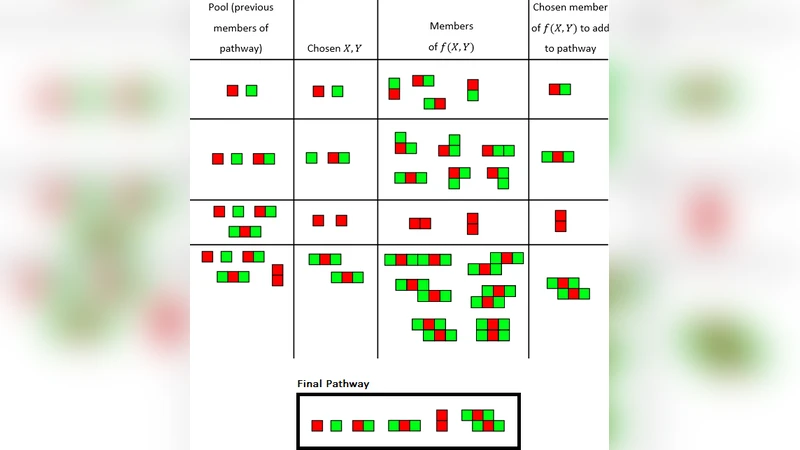
How do we estimate the probability of an abundant objects’ formation, with minimal context or assumption about is origin? To explore this we have previously introduced the concept of pathway assembly (as pathway complexity), in a graph based context, as an approach to quantify the number of steps required to assembly an object based on a hypothetical history of an objects formation. By partitioning an object into its irreducible parts and counting the steps by which the object can be reassembled from those parts, and considering the probabilities of such steps, the probability that an abundance of identical such objects could form in the absence of biological or technologically driven processes can be estimated. Here we give a general definition of pathway assembly from first principles to cover a wide range of case, and explore some of these cases and applications which exemplify the unique features of this approach.
💡 Research Summary
The paper introduces a generalized theoretical framework called “pathway assembly” that extends the earlier notion of pathway complexity to quantitatively assess how likely an object could arise in a non‑biological, non‑technological context. The authors begin by formalizing the decomposition of any complex object into a set of irreducible parts—components that cannot be meaningfully subdivided further. Each part may appear multiple times, and its multiplicity is explicitly recorded. The next step is to model the possible ways these parts can be combined as operations; each operation (e.g., a chemical bond, a mechanical joint, a logical link) is represented as an edge in a directed graph. Crucially, a prior probability is assigned to every edge, reflecting the physical, chemical, or informational likelihood of that specific combination occurring in the environment under consideration.
A complete assembly pathway is defined as a directed walk from the start node (the multiset of all basic parts) to the target node (the fully assembled object). For a given pathway i consisting of steps j, the probability of that pathway is the product of the step probabilities, Π_j p(e_{ij}). The overall probability that the object could be produced in abundance is the sum over all feasible pathways, Σ_i Π_j p(e_{ij}). This formulation captures two essential features: (1) the number of distinct assembly routes typically grows explosively with object complexity, and (2) the probability of each route is modulated by the intrinsic ease or difficulty of the underlying operations. Consequently, objects with high “assembly complexity” have vanishingly small natural occurrence probabilities unless special catalysts or environmental conditions dramatically raise the stepwise probabilities.
To illustrate the versatility of the framework, the authors apply it to four representative domains.
-
Simple chemical molecules (e.g., H₂O, CH₄). Here, atoms are the parts and covalent bonds are operations. Probabilities are derived from elemental abundances and bond energies. The model reproduces the intuitive result that such molecules have low assembly complexity and high natural prevalence.
-
Biological macromolecules such as proteins and DNA. Amino acids or nucleotides serve as parts, while peptide or phosphodiester bonds are operations. Enzymatic catalysis and templated replication are incorporated as probability‑boosting factors, showing that biologically relevant sequences can be assembled in relatively few steps with comparatively high probabilities—supporting the argument that life exploits pathways that are statistically favored.
-
Engineered artifacts (e.g., 3D‑printed components, electronic circuits). Standardized modules (plastic bricks, resistors, chips) are the parts, and mechanical fastening, soldering, or software integration are the operations. Human design and manufacturing dramatically increase the stepwise probabilities, but the same pathways would be astronomically unlikely to arise spontaneously, illustrating the discriminative power of the method for distinguishing natural from artificial origins.
-
Information structures such as algorithmic trees or database schemas. Logical operations (function calls, data joins) constitute the edges, and the prior probabilities are derived from programming language rules and typical software development practices. The analysis confirms that complex informational architectures have negligible spontaneous emergence probabilities, reinforcing the need for intentional design.
Across all cases, the authors demonstrate that pathway assembly captures a dynamic aspect of complexity—how an object could be built—whereas traditional complexity measures (Kolmogorov complexity, Shannon information, etc.) only quantify static description length. By integrating both the number of possible routes and the likelihood of each elementary step, the framework yields a more nuanced “origin probability” that can be directly compared across chemical, biological, engineered, and informational domains.
The paper concludes with several forward‑looking proposals. First, the creation of empirical databases that catalog reaction rates, catalytic efficiencies, and environmental frequencies to feed realistic prior probabilities into the model. Second, the development of scalable algorithms capable of enumerating and evaluating assembly pathways for large‑scale systems such as ecosystems or social networks. Third, the exploration of security and anti‑forgery applications, where the improbability of a complex token’s spontaneous assembly could serve as a quantitative proof of authenticity (e.g., DNA steganography, cryptographic hardware).
In sum, this work provides a rigorous, probabilistic tool for estimating the plausibility of abundant object formation without invoking biological or technological agency. Its capacity to differentiate between naturally probable and artificially engineered structures makes it a valuable addition to fields ranging from origin‑of‑life research and synthetic biology to materials science, information security, and beyond.
Comments & Academic Discussion
Loading comments...
Leave a Comment