Scheduling Intelligent System for Time Shortening
The paper presents a scheduling intelligent system intended for the project management and for the operation management as well, having integrated a planner time buffer method combined with the PERT (Programme Evaluation and Review Technique) method which can drastically short the planned time. The system also adjusts if necessary the duration for the un-expecting situations during the evolution of the planner recalculating the probability to reach the deadline. The system is developed with a friendly graphical interface, which guide the user during the progress of the project providing warnings and suggestions for adjusting in real time the planner. Once the scheduling intelligent system is launched in progress, its functions are combined at the different levels, depending of the user needs. The base functions of the system are: planning, diagnosis, supervising and forecast. A real implementation is showed as a study case, is related to a software development planner.
💡 Research Summary
The paper introduces “PManager,” an intelligent scheduling system that combines the classic PERT technique with a novel “time‑buffer” concept to significantly shorten project durations. The time‑buffer is calculated as half the sum of the safety margins (the differences between pessimistic and optimistic estimates) of all tasks on the critical path, an idea inspired by Goldratt’s Theory of Constraints. By concentrating all schedule slack into a single reserve, the system can reallocate time instantly when unexpected delays occur, while still providing a probabilistic assessment of meeting the deadline using the PERT Z‑factor.
PManager is built in C++ (Visual Studio) and tightly integrates with Microsoft Project, importing task identifiers, predecessor‑successor nodes, three‑point estimates (optimistic, most‑likely, pessimistic), and budgeted cost (BCWS). Its architecture consists of five functional modules:
- Project Management Engineering – uses a knowledge base (selected by the user according to project type, constraints, etc.) to generate an initial schedule and allocate financial resources.
- Progress Supervising – continuously compares actual progress against the optimistic schedule, detects deviations, and, if necessary, draws time from the buffer. It updates the critical path and the overall completion probability in real time, issuing visual and auditory warnings such as “Too much waste of time” or “Great risk of non‑completion.”
- Time‑Buffer – implements the buffer calculation rule, displays a “Buffer Time Transfer” button, and records the reason for each transfer in the knowledge base.
- Experience – stores exceptional events and their causes as frames, enabling the system to anticipate similar problems in future projects.
- Updating – after project closure, the user can review the captured experiences, accept or reject them, and thereby refine the knowledge base for subsequent use.
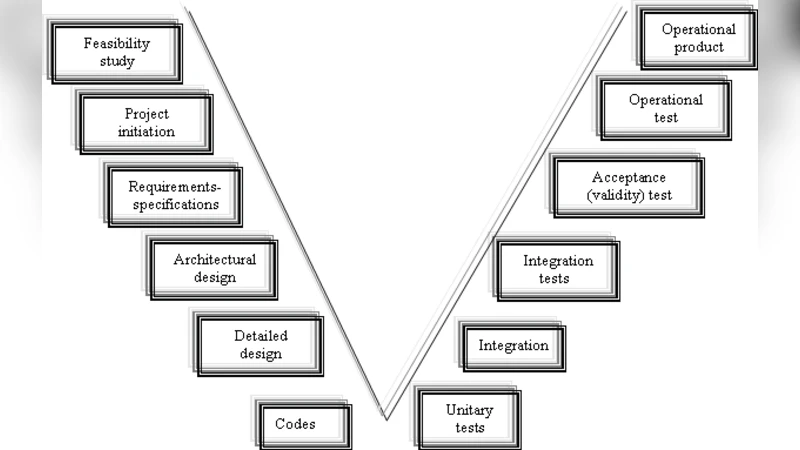
The authors demonstrate the system with a software‑development case that follows a traditional “V” life‑cycle. The workflow comprises twelve steps: (i) create a baseline schedule in Microsoft Project, (ii) generate a PERT network, (iii) activate Earned Value analysis, (iv) import data into PManager, (v) compute critical paths for all three‑point estimates and derive the time‑buffer, (vi) synchronize the schedule (start date, work program, time unit), (vii) monitor tasks in real time, (viii) apply buffer transfers for tasks delayed due to requirement misunderstandings, interface redesign, or synchronization errors, (ix) update Microsoft Project with the shortened optimistic durations, (x) collect cost data via Earned Value, (xi) provide diagnostic trees for individual tasks, and (xii) optionally invoke an interactive assistant.
Key results show that many tasks could be forced to follow their optimistic durations, leading to a noticeable compression of the overall schedule. For the “planning & tracking” activity, the number of repetitions dropped from 13 to 11, reducing the budgeted cost from 1,950,000 ROL to 1,650,000 ROL, while the actual cost settled at 1,237,500 ROL—a total saving of 712,500 ROL. The buffer was dynamically adjusted (e.g., a 30‑minute transfer for a requirement‑misunderstanding) and the knowledge base was enriched with the causes of each adjustment.
The paper’s main contributions are: (1) a centralized time‑buffer mechanism that provides flexibility without inflating the overall schedule, (2) a real‑time supervision loop that continuously updates completion probabilities and warns users of risk, and (3) an experience‑driven knowledge base that learns from each project, improving future planning accuracy. By focusing on optimistic durations and leveraging a shared buffer, PManager offers a practical way to mitigate the “time‑cost” trade‑off that plagues traditional project management, making it especially suitable for industries where product life cycles are shrinking and rapid market entry is critical.
Comments & Academic Discussion
Loading comments...
Leave a Comment