Application of the Ranking Relative Principal Component Attributes Network Model (REL-PCANet) for the Inclusive Development Index Estimation
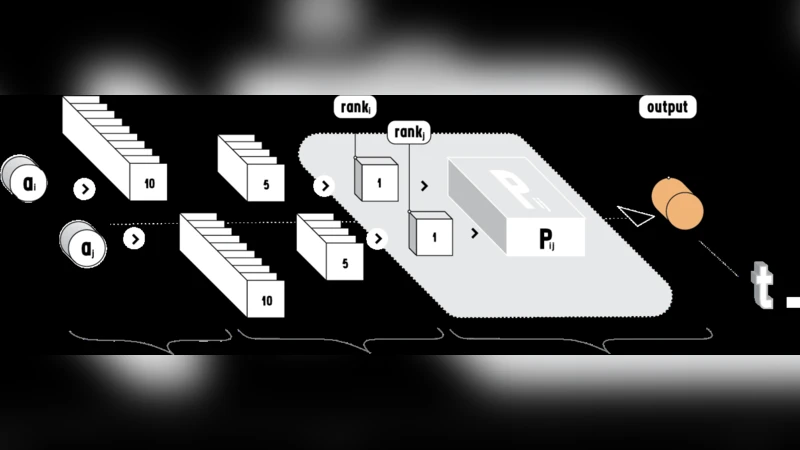
In 2018, at the World Economic Forum in Davos it was presented a new countries’ economic performance metric named the Inclusive Development Index (IDI) composed of 12 indicators. The new metric implies that countries might need to realize structural reforms for improving both economic expansion and social inclusion performance. That is why, it is vital for the IDI calculation method to have strong statistical and mathematical basis, so that results are accurate and transparent for public purposes. In the current work, we propose a novel approach for the IDI estimation - the Ranking Relative Principal Component Attributes Network Model (REL-PCANet). The model is based on RELARM and RankNet principles and combines elements of PCA, techniques applied in image recognition and learning to rank mechanisms. Also, we define a new approach for estimation of target probabilities matrix to reflect dynamic changes in countries’ inclusive development. Empirical study proved that REL-PCANet ensures reliable and robust scores and rankings, thus is recommended for practical implementation.
💡 Research Summary
The paper addresses the methodological shortcomings of the Inclusive Development Index (IDI), a composite metric introduced at the 2018 World Economic Forum that combines twelve economic and social indicators to assess both growth and inclusiveness. Existing calculations rely on a simple weighted sum, which fails to capture inter‑indicator correlations, structural reforms, and dynamic policy effects. To overcome these limitations, the authors propose the Ranking Relative Principal Component Attributes Network (REL‑PCANet), a hybrid model that merges the Relative Attribute Ranking Model (RELARM) with the learning‑to‑rank framework of RankNet, while also borrowing techniques from image‑recognition deep learning.
The workflow begins with standard data preprocessing: logarithmic transformation, z‑score normalization, and imputation of missing values for each of the twelve indicators across a panel of 30 countries (both advanced and emerging) spanning 2015‑2020. Principal Component Analysis (PCA) is then applied to extract a small set of orthogonal components that retain the majority of variance, effectively reducing dimensionality and filtering noise. These components serve as the “features” fed into RELARM, which represents each country as a vector of relative attributes rather than absolute scores.
The core of REL‑PCANet is a pairwise ranking neural network inspired by RankNet. For every ordered pair of countries (i, j), the model predicts the probability that i should rank higher than j. Unlike classic RankNet, which uses static binary labels, the authors construct a dynamic target‑probability matrix P. Each element Pij is computed from the year‑over‑year changes in the underlying indicators, weighted by policy‑reform intensity and external shock adjustments, yielding a probability in the interval
Comments & Academic Discussion
Loading comments...
Leave a Comment